 Stefani Rindus
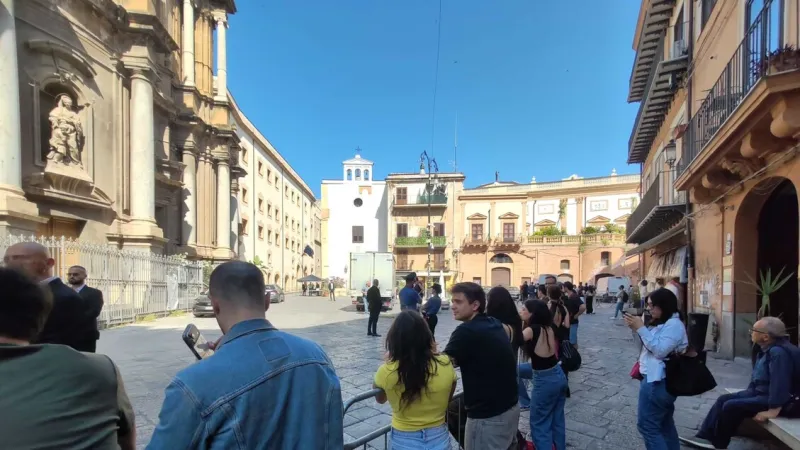
In Palermo, a high-profile gathering featuring celebrities Lipa and Turner ignited controversy recently as stringent security measures transformed a historic public piazza into an exclusionary zone, barring ordinary citizens and members of the press from accessing the event space in front of the revered Palazzo del Gattopardo. The robust security presence, marked by extensive barricades and personnel, provoked public outcry and raised concerns about the privatization of public spaces.
Local authorities, in conjunction with private security firms, erected formidable barriers around the perimeter of the piazza, effectively creating a sterile cordon. This preventative action, reportedly aimed at ensuring the safety and privacy of the celebrated attendees, drastically altered the character of the traditional public square.
The extraordinary measures were not met without resistance from the local populace. Residents and passersby expressed palpable frustration over their sudden exclusion from a customary public thoroughfare. Manifestos protesting against “blinded squares” — a term referring to public spaces rendered inaccessible — appeared in the vicinity, only to be promptly torn down by security personnel.
Journalists attempting to cover the high-profile affair found themselves systematically barred from the event. Despite presenting credentials, numerous reporters and photographers were actively prevented from entering the cordoned-off area or even approaching closely enough to document the proceedings effectively.
This systematic exclusion of the press sparked immediate concerns regarding transparency and journalistic freedom. Media organizations argued that restricting access to a public event, even one featuring celebrities, undermines the public's right to information and sets a worrying precedent for future high-profile gatherings in Italian cities.
The chosen venue, the piazza adjacent to the Palazzo del Gattopardo, carries profound cultural and historical significance. These public squares are integral to Italian civic life, serving as communal hubs for social interaction, cultural expression, and public discourse, traditions seemingly disregarded by the event's organizers and security protocols.
The incident underscores a persistent tension between the demands of high-security celebrity events and the fundamental principles of public access and democratic transparency. Organizers often cite security threats and crowd control as paramount, while critics emphasize the erosion of shared civic spaces.
While no official statements from the event organizers or the celebrities themselves were immediately available, the scale of the security deployment indicated a clear intent to maintain strict control over access, prioritizing an exclusive atmosphere.
Local authorities defended the security measures, asserting they were implemented following comprehensive risk assessments and in cooperation with event organizers to prevent potential disturbances and ensure public order. However, they faced questions regarding the extent of public space appropriation.
The episode in Palermo contributes to a wider European debate concerning the increasing securitization of urban areas, particularly during large-scale events. Critics argue that such measures, while sometimes necessary, must be carefully balanced against the public's right to their own spaces.
This incident will likely prompt increased scrutiny of future events seeking to occupy significant public piazze in Italy. Advocacy groups are expected to pressure municipal councils to implement stricter guidelines that safeguard public access while accommodating necessary security provisions.
The events surrounding the Lipa and Turner gathering leave unresolved questions about the precise demarcation between private security needs and public entitlements. The tearing down of protest manifestos, in particular, highlights the suppression of dissenting voices amidst the spectacle.
The Palazzo del Gattopardo, itself a symbol of Sicilian aristocracy and societal change, ironically witnessed a modern spectacle that, for many, signified a step backward in equitable urban access. The event's lavishness contrasted sharply with the public's inability to participate, even as observers.
Many observers suggest that a more inclusive approach, involving earlier public consultation and clearer communication about temporary access restrictions, could mitigate such controversies in the future. A balance, they argue, must be struck to respect both security imperatives and civic traditions.