 Chris Robert
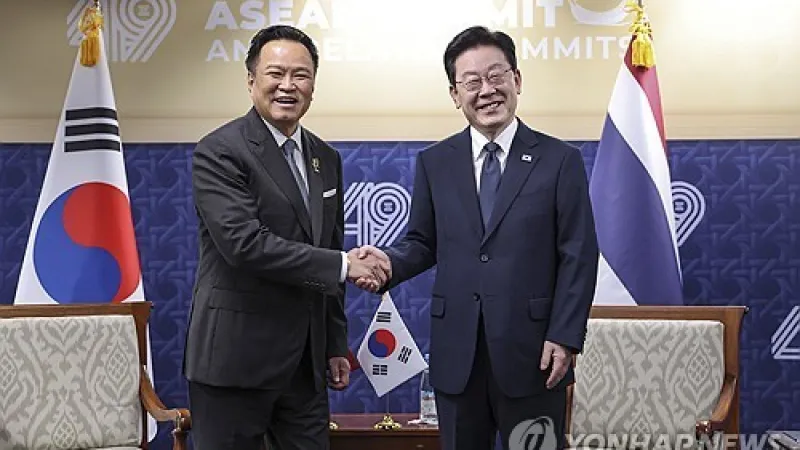
MANILA, Nov. 16, 2026 (Yonhap) – South Korea and Thailand on Monday agreed to accelerate negotiations aimed at establishing a comprehensive bilateral economic partnership agreement (EPA). The commitment, forged during discussions held in the Philippine capital, underscores a mutual desire to deepen trade ties, foster investment, and enhance economic cooperation between the two pivotal Asian nations.
The accelerated push for the economic partnership agreement reflects a strategic move by both governments to fortify their economic resilience and explore new avenues for growth amid evolving global trade dynamics. This pact is envisioned to systematically dismantle trade barriers, streamline customs procedures, and create a more predictable and favorable investment climate.
Key areas of focus within the proposed economic partnership agreement include significant tariff reductions across a broad spectrum of goods, enhanced market access for services, and robust provisions for intellectual property rights protection. Both sides also seek to facilitate greater collaboration in digital trade, green technologies, and supply chain resilience.
South Korea views Thailand as a crucial partner in Southeast Asia, given its strategic location, burgeoning consumer market, and growing manufacturing base. For Seoul, securing this agreement means diversifying its export markets beyond traditional partners and strengthening its footprint in a dynamic regional economy.
Conversely, Thailand stands to benefit substantially from increased South Korean investment, particularly in advanced manufacturing, infrastructure development, and innovation-driven sectors. The agreement is expected to foster technology transfers and elevate Thailands position in global value chains.
The current bilateral trade volume between South Korea and Thailand, while significant, holds considerable untapped potential. Analysts suggest that a comprehensive economic partnership agreement could unlock billions of dollars in new trade and investment flows, providing a much-needed stimulus to both economies.
Negotiations are anticipated to address sensitive sectors, ensuring that the agreement is mutually beneficial and accounts for the specific economic structures of both nations. Discussions will likely delve into agriculture, automotive parts, and various service industries, requiring careful balancing of national interests.
This initiative follows previous efforts to deepen economic engagement, building upon the framework of the ASEAN-Korea Free Trade Agreement (AKFTA), which has already facilitated substantial trade over the years. The new EPA aims to go beyond the existing provisions, offering deeper liberalization and broader cooperation mechanisms tailored to the unique bilateral relationship.
The commitment made in Manila also aligns with broader regional diplomatic and economic strategies. President Lee Jae Myung of South Korea has consistently championed enhanced engagement with Southeast Asian nations, a strategy evident in his administration's focus on strengthening alliances and economic partnerships across the region. Indeed, the President Lee Jae Myung Forges Path for Enhanced South Korea-Thailand Alliance initiative underscores this sustained diplomatic drive.
Such bilateral agreements are increasingly vital in a geopolitical landscape marked by shifting trade alliances and a renewed emphasis on economic sovereignty. They allow countries to tailor trade rules to their specific needs, fostering stronger bilateral ties that complement multilateral trade systems.
Officials from both nations have expressed optimism regarding the swift conclusion of the negotiations, signaling a strong political will to overcome potential hurdles. They emphasized the importance of a timely agreement to capitalize on current economic opportunities and mitigate external uncertainties.
The working groups from South Korea and Thailand are expected to intensify their meetings in the coming months, with a clear mandate to expedite progress toward a definitive accord. This accelerated timeline reflects the urgency both governments attach to realizing the full economic potential of their partnership.
The anticipated economic partnership agreement is expected to cover a wide array of sectors, including digital economy, e-commerce, and collaboration on emerging technologies. This forward-looking approach aims to future-proof the bilateral relationship against evolving global economic trends.
Ultimately, the successful implementation of this economic partnership agreement will not only enhance the prosperity of South Korea and Thailand but also contribute to the overall economic stability and integration of the broader Asian region. It signifies a robust commitment to open markets and collaborative growth.