 Stefani Rindus
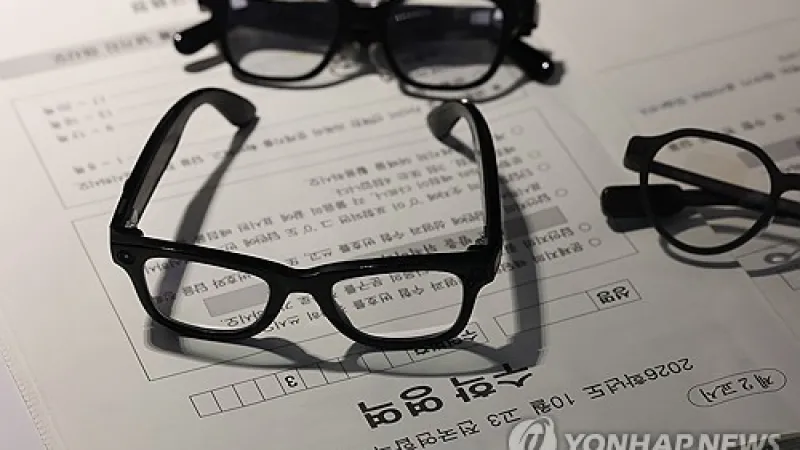
SEOUL, South Korea – The South Korean government on Friday, November 13, 2026, pledged an uncompromising stance against academic dishonesty, specifically targeting the illicit use of artificial intelligence-powered devices, such as smart glasses, during examinations. This declaration underscores a growing global concern over technology-assisted cheating, prompting authorities to implement stringent new protocols to safeguard educational integrity.
Officials articulated a clear policy of zero tolerance, emphasizing that any individual caught employing sophisticated AI tools for unfair advantage would face severe repercussions. The move comes as educators grapple with increasingly sophisticated methods of deception, where discreet gadgets can provide real-time information, compromising the fairness and validity of test results across various educational levels.
The rise of miniaturized AI devices capable of instantaneous data processing and discrete communication has presented an unprecedented challenge to traditional proctoring methods. These advanced tools can interpret questions, access vast databases, and even generate answers, often without overt physical cues, making detection particularly difficult.
A spokesperson from the Ministry of Education, speaking on condition of anonymity, stated that the government recognized the critical need to adapt regulatory frameworks to the rapidly evolving technological landscape. “Maintaining the sanctity of our academic institutions and ensuring a level playing field for all students remains paramount,” the official asserted. “We will deploy every resource available to uphold these principles.”
The focus on AI glasses highlights a specific concern. These devices, often resembling ordinary eyewear, can project information directly onto the wearer's retina or inner lens, allowing for discreet access to data. This technology bypasses conventional security checks designed to detect smartphones or other obvious electronic aids.
While traditional cheating methods persist, the advent of AI represents a qualitatively different threat. Unlike notes or concealed phones, AI systems can process complex queries and offer solutions in real time, transforming the act of cheating into a highly efficient, automated process. This shift necessitates a proportional governmental response.
Globally, educational institutions are grappling with similar issues. Universities and testing centers in several nations have reported incidents involving advanced technology, prompting a re-evaluation of examination security protocols. South Korea's firm stance positions it among countries taking proactive measures against this emerging form of academic fraud.
Although specific punitive measures were not fully detailed in the initial announcement, the phrase “zero tolerance” typically implies consequences ranging from immediate exam disqualification and course failure to academic suspension or expulsion. Legal ramifications for manufacturing or distributing such devices for illicit purposes could also be explored.
For students, this policy reinforces the importance of ethical conduct and honest academic pursuit. For educators and examination bodies, it signals a renewed commitment from the government to support their efforts in maintaining academic integrity, potentially leading to investments in advanced detection technologies and revised examination procedures.
This government directive also serves as a warning to developers and distributors of AI-powered gadgets, indicating that technologies with potential for academic misuse will face intense scrutiny. The decision marks a critical juncture in the ongoing battle to prevent technological innovation from undermining the fundamental principles of fairness in education.
The broader ethical implications of artificial intelligence continue to be a subject of intense debate. While AI offers immense benefits across industries, its potential for misuse, as highlighted by the AI exam cheating concern, necessitates careful regulatory oversight. Discussions around AI ethics extend to areas like privacy, data security, and the impact of automation on various sectors. The recent news regarding Nvidia CEO Jensen Huangs Alleged Spy Affair Rocks AI Industry underscores the complex and often controversial landscape surrounding AI development and its associated societal impacts.
The government reiterated its commitment to working closely with educational institutions and technology experts to develop strategies that effectively counter these evolving threats without stifling legitimate technological advancements. This collaborative approach aims to strike a balance between innovation and responsible application.
Ultimately, Seoul's decisive action against AI exam cheating reflects a broader commitment to preserving the integrity of its education system in an era increasingly defined by rapid technological change. The proactive measures aim to ensure that academic merit remains the sole determinant of success, uncompromised by technological circumvention.