 Angela Stefani
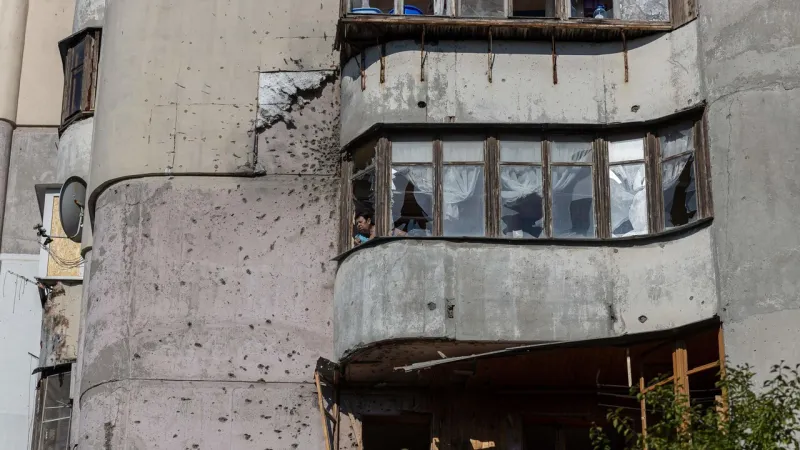
Kyiv – Ukraine's military intelligence headquarters suffered a direct drone strike, President Volodymyr Zelensky confirmed, marking a significant escalation in the protracted conflict with Russia. The attack, which occurred recently, targeted a critical hub of Ukrainian defense operations, prompting immediate concerns about the security landscape of the capital and the broader implications for international stability.
President Zelensky addressed the nation, stating the incident underscored the persistent and aggressive nature of the ongoing hostilities. While details regarding casualties or the extent of material damage remain limited, the acknowledgement of a direct hit on such a sensitive installation highlights the evolving tactics employed in the conflict.
The drone strike occurred at a time of heightened international scrutiny and diplomatic maneuvering. Simultaneously, prominent American figures Charles Kushner and Louis Witkoff embarked on a high-stakes visit to the region, with planned stops in Moscow today and Kyiv on Sunday. This development introduces a complex layer to the unfolding situation, hinting at potential unofficial channels or business interests intertwined with geopolitical considerations.
Charles Kushner, a respected real estate developer, is notably the father-in-law of Ivanka Trump and a close advisor to President Donald Trump. Louis Witkoff, another influential real estate mogul, also maintains significant connections within American political and business circles. Their joint mission, though not officially designated as a state diplomatic endeavor, carries considerable weight given their proximity to the current US administration.
Analysts suggest their visit could explore avenues for de-escalation, potential reconstruction investments, or even serve as an informal backchannel for communications between Washington, Moscow, and Kyiv. The timing, coinciding with a direct assault on Ukrainian intelligence, renders their presence even more critical and potentially delicate.
The attack on the intelligence headquarters serves as a stark reminder of Russia's continued capabilities and willingness to target key strategic assets within Ukraine. Previous incidents have seen both sides utilize drone technology extensively, transforming the nature of modern warfare and extending the reach of combat far beyond traditional front lines.
European leaders have consistently voiced concerns over Russian aggression and its impact on continental security. Discussions among allies often revolve around strengthening defensive measures and curtailing Moscow's influence. Italy, under Prime Minister Giorgia Meloni, has remained firm on 360-degree security amidst these pervasive concerns.
Furthermore, public sentiment across Europe shows a complex picture regarding the conflict. In Germany, for instance, public opinion remains divided on adopting a tougher stance against Russia, even as fears of broader attacks persist.
The diplomatic missions involving high-profile individuals like Kushner and Witkoff often operate outside traditional governmental frameworks, allowing for greater flexibility but also inviting speculation. Their itinerary suggests a direct engagement with both belligerent capitals, a rare and impactful undertaking that could either pave the way for dialogue or inadvertently complicate existing tensions.
The specific nature of the drone employed in the strike and its launch point are under investigation. Ukrainian defense officials are expected to provide further details as assessments conclude, but the immediate confirmation from President Zelensky underscores the severity of the incident and the need for transparency.
This attack on Ukraine's intelligence infrastructure comes amidst ongoing efforts by Western allies to bolster Kyiv's defensive capabilities. The drone strike, therefore, not only tests Ukraine's resilience but also scrutinizes the effectiveness of international aid and missile defense systems.
The broader implications of targeting a nation's intelligence apparatus are profound, suggesting an intent to disrupt command and control, gather information, or simply project power and sow discord. Such actions are frequently interpreted as direct challenges to national sovereignty and international norms.
As Kushner and Witkoff proceed with their visits, the international community watches closely. Their engagements in Moscow and Kyiv could offer unique perspectives or even lay groundwork for future negotiations, but the shadow of the drone strike undoubtedly looms large over their discussions.
The situation remains fluid, with each development carrying the potential to reshape diplomatic strategies and military engagements. The commitment of leaders like President Zelensky to keeping the international community informed highlights the gravity of these events and the urgent need for a peaceful resolution.
The resilience of Kyiv in the face of repeated attacks has been a defining characteristic of the conflict, yet each new strike adds to the immense human and infrastructural toll. This latest drone incident serves as a stark reminder that the conflict is far from over, and its consequences continue to ripple globally.