 Chandra Wijayanto
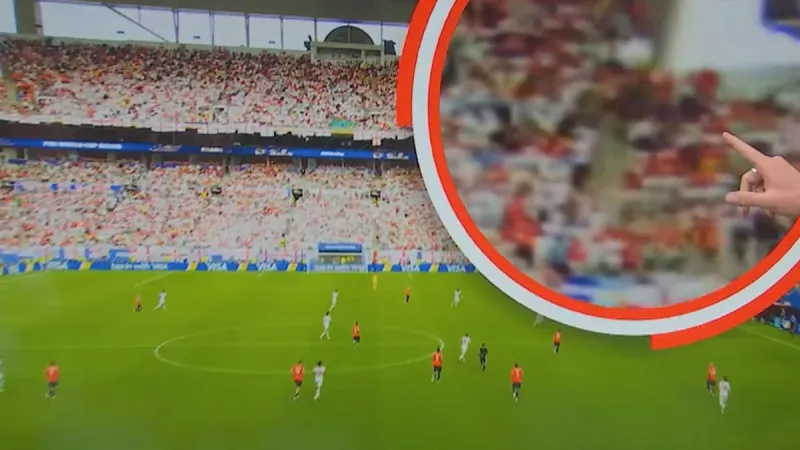
LONDON — A significant controversy has erupted following Englands recent World Cup match against Norway, where Jude Bellinghams crucial equalizer is under intense scrutiny for an alleged interference by a Spidercam cable. The incident, which unfolded during the build-up to the goal, has prompted immediate debate among football aficionados and expert analysts, including German sports commentator Jan Henkel and referee expert Patrick Ittrich, over the goals legitimacy and the integrity of the game.
The contentious moment occurred moments before Bellingham found the back of the net, leveling the score against a formidable Norwegian side. Reports and slow-motion replays suggest the ball may have made contact with the omnipresent Spidercam cable, which hovers above the pitch to provide aerial views, potentially altering its trajectory as it entered the attacking phase.
This unexpected interaction has cast a pall over an otherwise thrilling encounter, shifting focus from the athletic prowess displayed to the technical intricacies of match officiating. The question now looms large: should a goal stand if an external element, such as broadcast equipment, directly influences play?
FIFA regulations explicitly address external interference. According to Law 9, if the ball touches an external object and goes into play, the referee must stop play and restart with a dropped ball. However, the exact interpretation concerning equipment like a Spidercam, which is technically part of the stadium infrastructure and not an object thrown onto the pitch, often leads to nuanced discussions.
Referee expert Patrick Ittrich weighed in on the matter, explaining the complexities. "The crucial element here is whether the contact with the Spidercam cable was deemed to have significantly impacted the play," Ittrich stated in an interview. "If the trajectory or speed of the ball was demonstrably altered, then theoretically, the goal should be invalidated."
Sports commentator Jan Henkel echoed these sentiments, emphasizing the need for clear protocols. "Such incidents underscore the challenges of integrating advanced technology into live sports," Henkel observed. "While the Spidercam enhances viewer experience, it must not compromise the fairness of competition. This creates a difficult precedent."
The ramifications for the World Cup standings could be substantial. Had the goal been disallowed, England would have remained behind, potentially altering the momentum of the match and ultimately its outcome. This would have been particularly crushing for England, who faced a strong challenge from Norway, spearheaded by their star striker. Indeed, recent reports indicate that Norway's Haaland Threatens England's World Cup Dream; Bellingham Responds, highlighting the stakes.
The incident also reignites conversations about the role of the Video Assistant Referee, or VAR, in modern football. While VAR systems are designed to review clear and obvious errors, including offsides and penalty decisions, the detection and assessment of external interference like a Spidercam touch present unique interpretive challenges. It remains unclear whether VAR officials scrutinized this specific moment with the necessary detail or if the alleged contact was even identifiable to them in real time.
The English camp has yet to issue a definitive statement addressing the controversy, likely awaiting official clarification or further review. Conversely, the Norwegian team may feel aggrieved, perceiving a potentially unjust decision that cost them a vital lead against one of the tournaments favorites. Norway's World Cup ambitions have recently seen their share of highs and lows, with Norway's World Cup Dream Shattered by Goalkeeper Error in Extra Time in a prior match.
Previous incidents involving broadcast equipment interfering with play have been rare but not unprecedented. These moments invariably lead to calls for stricter guidelines and fail-safe mechanisms to prevent such occurrences from influencing critical sporting events. The sheer ubiquity of technology, while beneficial for spectators, demands constant vigilance from governing bodies.
The debate extends beyond this singular match, raising broader questions about the escalating reliance on technology in sports. While innovations like the Spidercam offer unparalleled visual experiences, their operational boundaries and potential impact on gameplay must be meticulously defined to maintain competitive integrity.
As the World Cup progresses, all eyes will be on FIFA for any official communication regarding the incident. The sports governing body faces the task of addressing the perceived ambiguity and ensuring transparency, thereby upholding the fairness that is paramount to the global spectacle of football.
This controversy serves as a stark reminder that even with sophisticated technological advancements, the human element of interpretation and decision-making remains central to the beautiful game. The ongoing discussion surrounding Bellinghams equalizer will likely shape future protocols concerning technology in stadium environments.
The integrity of high-stakes matches such as those in the World Cup is constantly under review, with FIFA President Gianni Infantino eyeing monumental expansions for the tournament, which would only increase the complexity of ensuring fair play across more games and venues. Every decision, every rule interpretation, carries significant weight in such a grand setting.
The immediate aftermath of the match saw widespread discussion across social media platforms, with fans and pundits dissecting every frame of the incident. The incident has become a viral talking point, overshadowing other performances and tactical decisions from the gripping contest.
Ultimately, the incident highlights a persistent tension: the drive for enhanced viewership experience through technology versus the absolute necessity of maintaining fair play on the field. Resolving this tension will be crucial for the continued evolution of football.