 Angel Doris
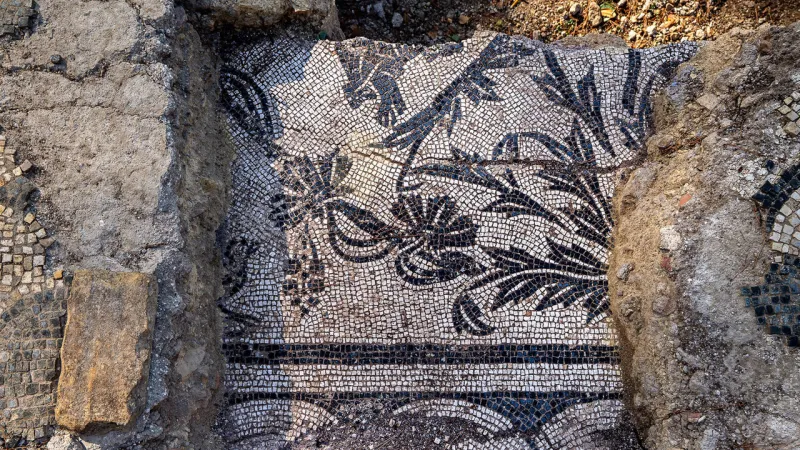
Rome – Archaeologists at the historic Villa Celimontana have unearthed remarkably preserved mosaics from the 2nd century AD, depicting intricate dolphin motifs within what experts identify as the foundations of an ancient Roman fire station. This significant discovery offers a rare glimpse into the daily life and artistic sophistication of Imperial Rome, emerging from ongoing excavation efforts in the heart of the city.
The vibrant mosaics, showcasing a vivid palette and detailed craftsmanship, were discovered during routine infrastructure work that quickly transitioned into a full-scale archaeological investigation. The area, known for its rich historical layers, continues to yield artifacts that challenge and expand contemporary understanding of Roman urban planning and public services.
Villa Celimontana, located on the Caelian Hill, has long been recognized as a site of immense archaeological potential. Its proximity to significant ancient structures, including the Colosseum and the Roman Forum, underscores its importance in the fabric of ancient Roman life. The discovery further solidifies its status as a critical historical locus.
The identification of the structure as an ancient fire station, or *vigiles* barracks, is particularly noteworthy. Roman *vigiles* were responsible not only for firefighting but also for night watch duties and maintaining public order, making their stations vital hubs within the bustling metropolis. This find provides concrete evidence of their facilities.
The dolphin mosaics themselves are a testament to Roman artistic skill and cultural symbolism. Dolphins were frequently depicted in Roman art, often associated with Neptune, the god of the sea, and symbolizing protection, swiftness, and good fortune. Their presence in a public service building suggests a blend of aesthetic appeal and perhaps a subtle invocation of divine protection for the *vigiles*.
The exceptional state of preservation of these Roman mosaics is attributed to the protective layers of earth that accumulated over centuries. This encapsulation shielded the delicate tesserae from environmental degradation and human interference, allowing them to remain largely intact until their recent revelation.
The excavation process involves meticulous work, with archaeologists carefully removing layers of soil and debris to expose the ancient floor. Advanced techniques, including photogrammetry and 3D modeling, are being employed to document the site with unparalleled accuracy before preservation efforts commence.
While mosaics are common finds in Roman archaeology, those of this caliber, found within a structure identified as a *vigiles* barracks, are rarer. Most well-preserved mosaics typically originate from affluent private villas or grand public baths, making this discovery distinct in its context and offering unique historical insights.
The ongoing analysis of these finds is expected to provide invaluable data on Roman construction techniques, material culture, and the daily lives of the *vigiles*. It may also shed light on the architectural styles prevalent in official, non-imperial Roman buildings of the 2nd century AD.
Experts anticipate that further excavations at Villa Celimontana will reveal more about the extent and layout of the fire station and perhaps other structures in the vicinity. Plans for conservation and potential public display of the mosaics are currently being discussed by the Superintendency for Archaeological Heritage of Rome.
This discovery adds to a continuous stream of archaeological revelations in Rome and throughout Italy, constantly reshaping our understanding of the ancient world. Each new find serves as a puzzle piece, gradually completing the vast historical picture of the Roman Empire.
The city of Rome, a living museum, continually presents its ancient past beneath its modern veneer. Such discoveries underscore the perpetual dialogue between past and present, captivating residents and scholars alike with its buried treasures.