 Dodi Irawan
BERLIN – The contentious future of Tempelhofer Feld emerged as a central battleground in Berlins election campaign Tuesday evening, as Christian Democratic Union (CDU) candidate Stefan Evers and Greens challenger Bettina Jarasch engaged in a sharp public debate over the iconic former airport grounds. Their heated exchange underscored profound ideological divisions, even as the prospect of a future coalition government between their parties looms.
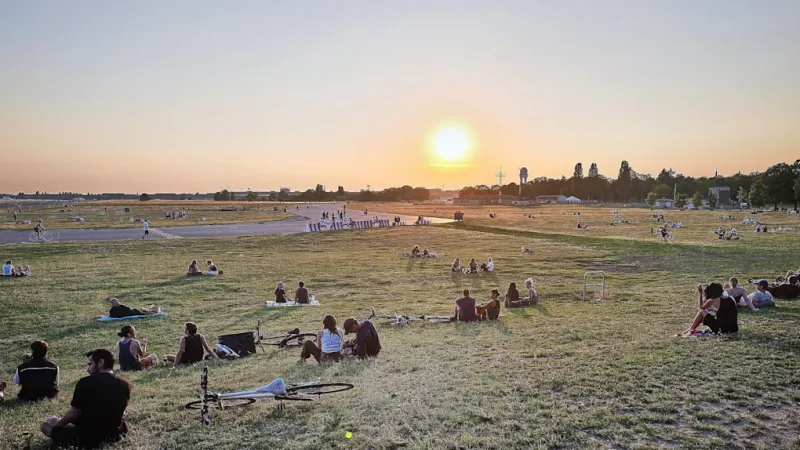
The sprawling urban park, a former airport, symbolizes conflicting visions for Berlins development: preservation versus strategic urbanization. Both candidates articulated vastly different approaches to its management and potential use, highlighting the high stakes for the citys environmental and housing policies.
Evers, representing the CDU, championed a pragmatic approach, suggesting that parts of the vast area could be utilized for addressing Berlins acute housing shortage. He questioned the absolute preservation stance, posing, "I ask you, when was the last time you listened to the skylarks on Tempelhofer Feld?" – a direct challenge to the Greens emphasis on ecological sanctity.
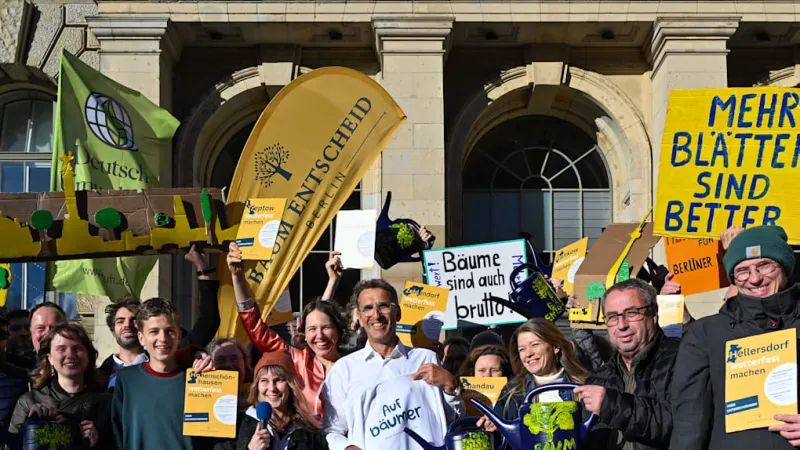
Jarasch, from the Greens, vehemently opposed any development, advocating for the complete retention of Tempelhofer Feld as a public green space and biodiversity haven. Her party views the area as a critical lung for the city and a testament to direct citizen participation, given a previous successful referendum to prevent its development.
Tempelhofer Feld holds unique historical and emotional significance for Berliners. Once the site of Tempelhof Airport, it played a crucial role during the Berlin Airlift. Post-closure, it transformed into a popular recreational area, enshrined in public consciousness as a vast, undeveloped urban wilderness.
A 2014 referendum decisively rejected plans for partial development, solidifying public sentiment against construction on the site. This historical precedent adds another layer of complexity to any renewed discussions about its future, making it a sensitive topic for all political parties.
The debate over Tempelhofer Feld extends beyond environmentalism and housing; it touches on fundamental questions of urban planning, democratic engagement, and the citys identity. It encapsulates the broader ideological clashes defining the current Berlin election cycle.
Despite the sharp disagreements, political analysts observe a pragmatic necessity for potential future cooperation. Both the CDU and the Greens are significant forces in Berlin politics, and a coalition between them after the election remains a plausible, if challenging, scenario. Such an alliance would require substantial compromises on key issues, including the fate of Tempelhofer Feld.
Forming a stable governing coalition in Berlin often involves intricate negotiations and concessions across policy domains. The stark differences evident in the Tempelhofer Feld debate foreshadow the complex bargaining that would define any potential CDU-Green partnership.
Public sentiment surrounding Tempelhofer Feld remains divided, reflecting the citys diverse population and their priorities. How voters perceive the candidates positions on this iconic space could significantly sway outcomes, particularly among swing voters concerned with both housing affordability and green spaces.
This localized debate occurs within a broader German political landscape grappling with significant national issues. Recent discussions, such as those regarding online speech regulations, have seen figures like Friedrich Merz of the CDU emphasize accountability, reflecting a general push for clearer political stances amidst societal challenges. For more on this, see the article: Merz Rejects Anonymity, Dismisses Free Speech Concerns for Online Rules.
The intensity of the Berlin debate also mirrors other recent political skirmishes in Germany, including public outcry over rising fuel prices that have drawn sharp criticism from parties like the SPD, underscoring the economic pressures influencing voter sentiment across the country. Further details can be found in: German SPD Lashes Out at Minister Over Record Fuel Prices.
As the Berlin election campaign progresses, Tempelhofer Feld will undoubtedly remain a potent symbol. The ability of political leaders to bridge their divides on such a foundational issue will not only shape the citys future but also set a precedent for pragmatic governance in a politically diverse landscape.