 Edward DP Situmorang
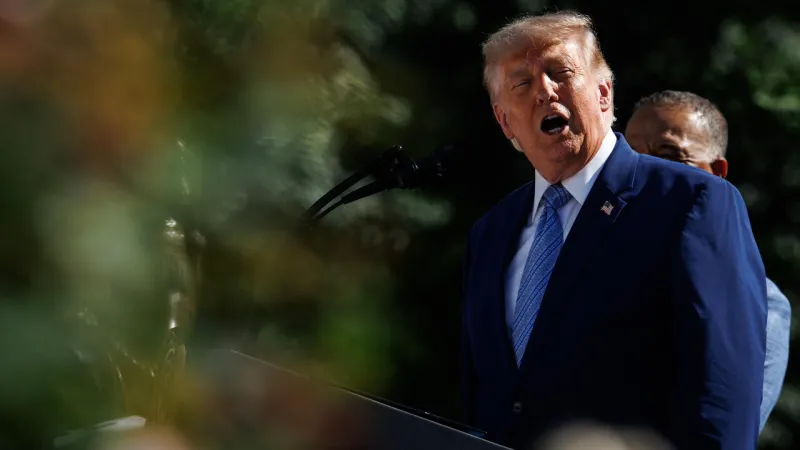
President Donald Trump is reportedly nearing a critical threshold of patience with the prolonged conflict involving Iran, a disposition starkly underscored by recent explosions and visible plumes of smoke observed near a US troop facility at Erbil International Airport in Iraq. The Wall Street Journal reported President Trump's stance had shifted, describing his approach as moving into a revenge mode concerning the escalating regional hostilities.
The incident in Erbil, a significant operational hub for American forces in the Kurdistan Region of Iraq, has intensified concerns about the broader stability of the Middle East. While immediate casualty reports remain unconfirmed, the proximity of the blasts to a military installation housing US personnel signals a dangerous escalation in a volatile geopolitical landscape.
Sources cited by the Wall Street Journal indicated that President Trump's mounting frustration stems from what is perceived as a relentless cycle of provocations and limited progress in de-escalating tensions with Tehran. This alleged shift towards a retaliatory posture could herald a more aggressive phase in US foreign policy regarding the Persian Gulf.
The US military maintains a substantial presence in Iraq, ostensibly to counter remnants of the Islamic State group and support local security forces. However, these deployments have increasingly become flashpoints in the shadow conflict between Washington and Tehran, with various proxy groups often targeting American interests.
This latest development echoes previous periods of heightened tension where US assets and personnel have faced attacks in the region. Analysts suggest that the nature of these incidents often dictates the severity and rapidity of Washington's response, especially under an administration known for its decisive actions.
The precarious situation in Erbil adds another layer of complexity to the already strained relations. For months, Washington has monitored patterns of aggression, linking many to Iranian-backed militias operating within Iraq and Syria. The frequency and sophistication of these attacks have steadily increased, posing a significant challenge to regional security.
President Trump has consistently maintained a firm stance against what he views as Iranian aggression, often demanding accountability for actions affecting American interests. This aligns with previous public statements where he emphasized the need for punitive measures against those targeting US personnel or allies. For instance, he previously insisted that US Strikes Continue; Trump Demands Iran Pay for Ship Damage, reflecting a consistent policy of direct consequence.
International observers are now closely watching for official statements from the White House or the Pentagon that might clarify the extent of the Erbil incident and signal the forthcoming American response. The implications of a more aggressive US posture could reverberate across global oil markets and diplomatic channels.
Diplomatic efforts to de-escalate the broader US-Iran confrontation have largely stalled, leaving military and economic pressures as the primary tools of statecraft. The recent events underscore the fragility of peace in a region already grappling with numerous internal and external conflicts.
Multiple international bodies have repeatedly called for restraint from all parties, fearing a broader conflagration that could destabilize the entire Middle East. However, with reports of President Trump losing patience, the prospect of a more confrontational approach appears increasingly plausible, raising the stakes considerably for regional actors and global powers alike.
The immediate focus remains on assessing the full impact of the Erbil explosions and understanding the precise nature of the threat. The US Central Command will likely provide updates as investigations proceed, shaping the narrative and potential responses in the days to come.