Robert Andrison
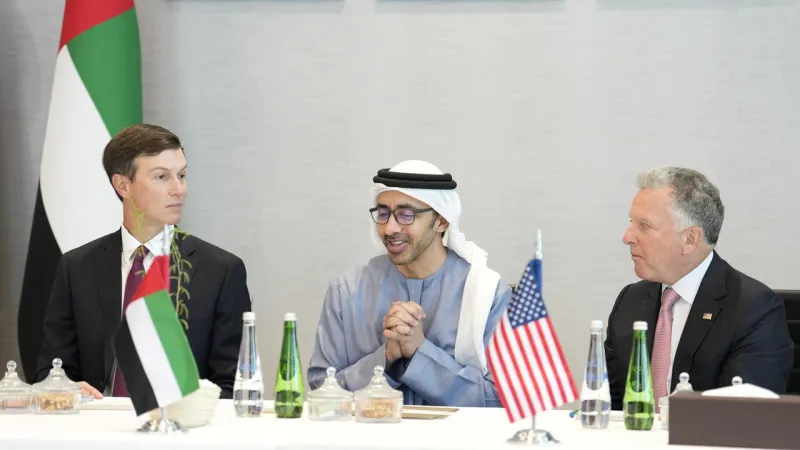
ABU DHABI – High-level trilateral negotiations aimed at de-escalating the protracted conflict in Ukraine concluded recently in Abu Dhabi, setting the stage for subsequent critical engagements with Russian President Vladimir Putin in Moscow and Ukrainian President Volodymyr Zelensky in Dublin. Despite a groundbreaking agreement on a substantial prisoner exchange, officials indicated that “significant divergences” persist, underscoring the formidable challenges remaining on the path to a lasting peace.
The talks, which involved a Ukrainian chief negotiator and Russian representative Medinsky, along with a presumed mediating party, signify an intensifying diplomatic push in early 2026 to thaw the frozen conflict. Jared Kushner, a prominent figure in international diplomacy, reportedly stated that he would meet with President Putin in Moscow tomorrow, followed by a meeting with President Zelensky in Dublin, signaling a concerted effort to bridge the chasm between the warring nations.
A tangible outcome of the Abu Dhabi discussions was the agreement for an “enormous exchange of prisoners,” as confirmed by Medinsky. This humanitarian breakthrough offers a rare glimmer of cooperation amidst the ongoing hostilities, providing hope for hundreds, if not thousands, of families separated by the conflict. Such exchanges often precede broader peace overtures.
However, the Ukrainian chief negotiator cautioned against premature optimism, acknowledging that “significant divergences” continue to plague the negotiation process. These deep-seated disagreements likely encompass core issues such as territorial integrity, reparations, and the future security architecture of the region, which have proven intractable in previous rounds of diplomacy.
The discussions unfold against the backdrop of a grinding conflict that has reshaped geopolitical alliances and caused immense human suffering since its escalation. By 2026, the international community continues to grapple with the economic and humanitarian fallout, intensifying pressure on all parties to find a diplomatic resolution.
The United States, under President Donald Trump, has consistently advocated for diplomatic solutions, often leveraging its influence to facilitate such high-level engagements. While details of America's specific role in these particular trilateral talks remain undisclosed, its broader foreign policy objectives align with efforts to stabilize the volatile Eastern European landscape.
The choice of Abu Dhabi as a neutral ground for these sensitive discussions highlights the growing role of non-traditional mediators in complex international disputes. The Emirati capital offers a discreet and well-connected location, conducive to frank exchanges away from the immediate glare of European capitals.
Kushner's planned itinerary of meeting President Putin in Moscow and subsequently President Zelensky in Dublin underscores a multi-pronged approach to diplomacy. This sequence suggests an attempt to carry specific proposals or clarify positions directly with the heads of state, building upon the foundational work done in Abu Dhabi.
Despite the positive development of a prisoner swap, the path to a comprehensive peace agreement remains fraught with peril. Historical grievances, deeply entrenched mistrust, and competing strategic interests present formidable obstacles that will require sustained diplomatic engagement and significant compromises from all sides.
Previous attempts to mediate a resolution, ranging from the Minsk agreements to various bilateral efforts, have largely stalled, demonstrating the complexity of the Ukraine peace talks. Each diplomatic endeavor, however, contributes to a cumulative understanding of the core demands and red lines of the belligerents.
The economic implications of the ongoing conflict resonate globally, affecting energy markets, food supply chains, and international trade. A cessation of hostilities and a return to stability could alleviate some of these pressures, benefiting not only the immediate region but also the broader world economy.
Humanitarian organizations continue to report dire conditions in affected areas, emphasizing the urgent need for a durable peace. The agreed-upon prisoner exchange, while significant, represents only a fraction of the humanitarian issues at stake, including displaced populations and the need for long-term reconstruction.
The international community watches these developments closely, with many nations urging a peaceful resolution while maintaining sanctions against Russia. The effectiveness of these talks will be measured by their ability to translate preliminary agreements into concrete steps toward de-escalation.
While significant differences persist, the very act of high-level engagement and agreement on a prisoner exchange indicates a potential, however slight, for further breakthroughs. Such moments of limited cooperation can sometimes open doors for broader dialogue.
The coming days, with the scheduled meetings in Moscow and Dublin, will be crucial in determining whether the momentum generated in Abu Dhabi can be sustained and translated into tangible progress toward ending one of the 21st century's most devastating conflicts.