 Chandra Wijayanto
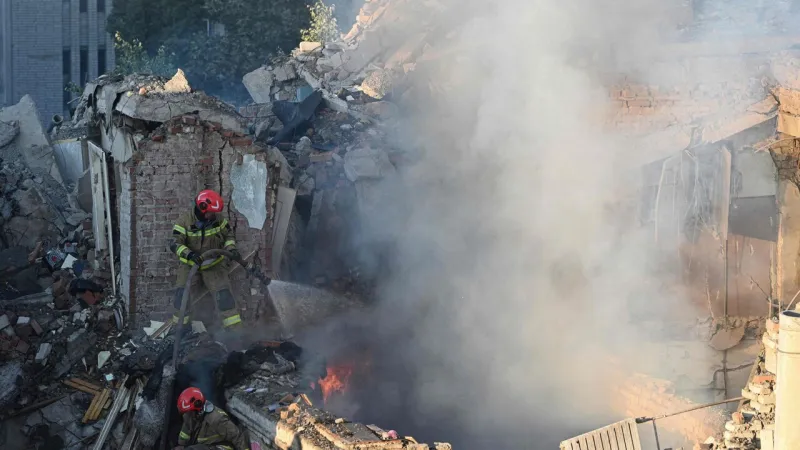
KYIV, UKRAINE – A devastating wave of Russian missile attacks on Ukrainian cities resulted in the deaths of eight civilians, including two young children, while simultaneously prompting concerns in neighboring Poland after its media reported a suspected Russian missile impact near the city of Lublin. The incident escalated regional tensions, drawing swift condemnation and military responses.
Polish Prime Minister Donald Tusk confirmed his countrys airspace had been violated by an unidentified object, leading to the immediate scrambling of an F-16 fighter jet. While details remain under investigation, initial reports from Polish media suggested a Russian missile was responsible for the alleged impact near Lublin, a region close to the Ukrainian border.
The Ukrainian strikes, which Russia described as a “massive attack on Ukrainian military objectives,” exacted a heavy toll. Beyond the eight confirmed fatalities, scores more civilians sustained injuries, and critical infrastructure suffered extensive damage across multiple urban centers.
Among the victims were two innocent children, whose deaths underscore the brutal human cost of the protracted conflict. Local authorities in affected Ukrainian regions launched immediate search and rescue operations, working through rubble to find survivors and recover bodies.
Prime Minister Tusk addressed the nation, stating, “We have evidence that our airspace was violated. Our forces responded swiftly, and investigations are ongoing to determine the full scope of the incident and its perpetrator.” His remarks highlighted the gravity of the situation, especially given the proximity of the alleged impact to Polish territory, a NATO member.
Sources within the Polish military confirmed that the F-16 deployment was a standard defensive measure following the detection of an unauthorized object entering sovereign airspace. The Polish Defense Ministry is coordinating with NATO allies to analyze radar data and debris, if any, from the reported impact site.
Meanwhile, in Moscow, officials maintained that their operations were precision strikes aimed solely at military targets, denying any deliberate targeting of civilians or neighboring territories. These assertions frequently contradict reports from international observers and Ukrainian officials detailing widespread civilian casualties and damage to residential areas.
Ukrainian President Volodymyr Zelenskyy condemned the latest barrages as acts of terrorism. He reiterated calls for increased international support, including advanced air defense systems, to protect his nations populace from unrelenting aerial assaults. This recent escalation follows similar warnings and subsequent bombings in the capital, Kyiv Blasted After Zelenskyy Warning; Poland Scrambles Jets Amid Escalation.
The Russian missile attacks continue a pattern of aggression that has characterized the conflict, with civilians often bearing the brunt. The loss of life, particularly that of children, intensifies international outrage and fuels calls for accountability for those responsible for war crimes.
This incident also rekindles memories of past cross-border missile incidents, which have previously heightened anxieties along NATOs eastern flank. The alliance remains vigilant, continuously monitoring the airspace and borders of its member states adjoining Ukraine.
Analysts suggest that such incidents, whether intentional or accidental, pose significant risks for broader regional destabilization. The delicate balance in Eastern Europe is perpetually tested by the ongoing conflict, demanding careful diplomatic navigation from all parties.
The international community, including President Donald Trump, has consistently urged for a peaceful resolution and condemned attacks on civilian populations. The United Nations Security Council is expected to convene to discuss the latest developments and their implications for global security. For more on the humanitarian impact, read Russian Missiles Devastate Ukraine: Eight Dead, Children Among Victims.
The constant threat of aerial bombardment leaves millions of Ukrainians living in fear, disrupting daily life and hindering recovery efforts. Infrastructure, including power grids and housing, faces constant threats, exacerbating the humanitarian crisis. The sheer scale of destruction continues to mount.
The reported Russian missile incident near Lublin adds a critical new dimension, underscoring the potential for the conflict to spill beyond Ukrainian borders. The coming days will be crucial in understanding the full implications of Polands airspace violation and the international response.