Chandra Wijayanto
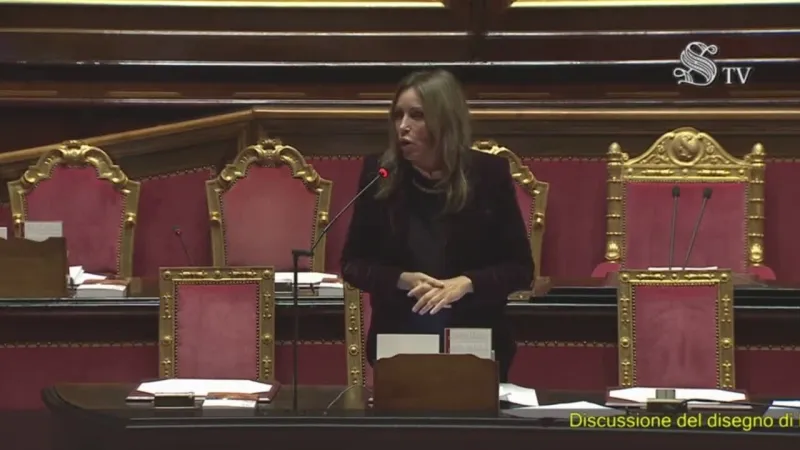
ROME – Italian Undersecretary for Culture Lucia Borgonzoni caused an unexpected stir in the Senate on November 4, 2026, when a slip of the tongue led her to thank i fratelli Pupiavati instead of her own party, the Brothers of Italy (Fratelli dItalia), during a debate on a crucial cinema bill. The brief, unintentional mispronunciation was captured on video and rapidly became a viral sensation across social media platforms.
The incident unfolded during a particularly focused discussion surrounding proposed amendments to the national cinema and audiovisual law. Borgonzoni, a prominent member of the League party within the ruling coalition, was addressing the chamber, ostensibly acknowledging her governmental allies.
The phrase i fratelli Pupiavati translates literally to the Pupiavati brothers, a non-existent entity. Her intended reference was unmistakably to Fratelli dItalia, the right-wing party led by Prime Minister Giorgia Meloni, a key partner in the governing majority.
While the gaffe itself lasted mere seconds, its public exposure was prolonged by the instantaneous nature of online sharing. Clips of the misstatement quickly circulated, amplified by users who found humor and irony in the senior official's momentary linguistic lapse.
Social media users engaged enthusiastically, creating memes and witty commentary around the newly imagined Pupiavati brothers. The incident became a lighthearted diversion from the often-intense political discourse in Italy, drawing attention away from the serious legislative work at hand.
This episode underscores the heightened scrutiny faced by public figures in the digital era. Every word uttered in official capacities is now subject to immediate recording, analysis, and widespread dissemination, often outside its original context.
For Borgonzoni, the gaffe represented a momentary lapse that, while potentially embarrassing, is unlikely to have significant long-term political repercussions. Such slips of the tongue are not uncommon in the demanding environment of parliamentary debate, where officials often speak for extended periods under pressure.
Nevertheless, the viral spread of the video highlights the unpredictable ways in which public perception can be shaped. A single mispronounced word can overshadow days of policy discussion, becoming the defining image of an otherwise routine parliamentary session.
Political commentators suggested the incident offers a glimpse into the human element of governance, reminding the public that even seasoned politicians are susceptible to verbal missteps. This humanization can sometimes endear politicians to the public, or conversely, be seized upon by critics.
The rapid ascent of the Pupiavati clip to viral status also serves as a potent reminder of the power of internet culture to transform fleeting moments into enduring digital phenomena, illustrating how traditional political communication now coexists with, and is often overshadowed by, viral content.
This particular gaffe, devoid of malice or significant policy implications, largely elicited amusement rather than outrage. It stood in contrast to other political misstatements that carry more substantial weight or reveal deeper ideological divides.
The incident prompts a broader discussion about the media landscape, where short, shareable clips often gain more traction than lengthy policy analyses. The attention economy frequently rewards brevity and novelty, even if it means simplifying or trivializing complex issues.
While no official statement from Undersecretary Borgonzoni directly addressed the gaffe, the widespread coverage ensured that the moment became a notable, albeit minor, highlight of the legislative session.
In the intricate world of Italian politics, where coalition dynamics are perpetually under observation, such an innocent error inadvertently shone a spotlight on the linguistic nuances of political affiliation.
This viral episode is distinct from the more deliberate rhetorical clashes often observed in parliamentary settings, such as those that might spark anti-left protests in Germany. Borgonzoni's gaffe was purely an accidental utterance.
The event reinforces the notion that in the age of constant connectivity, public figures operate under an unprecedented level of surveillance, where an offhand remark can travel globally within minutes.
The lighthearted reception of the Pupiavati brothers saga, however, suggests that not every political misstep leads to a crisis. Sometimes, it simply provides a moment of shared amusement for the populace.
Ultimately, Undersecretary Borgonzoni's memorable phrasing will likely be remembered as a quirky footnote in the ongoing legislative process, a testament to the unpredictable nature of live parliamentary proceedings.