 Debby Wijaya
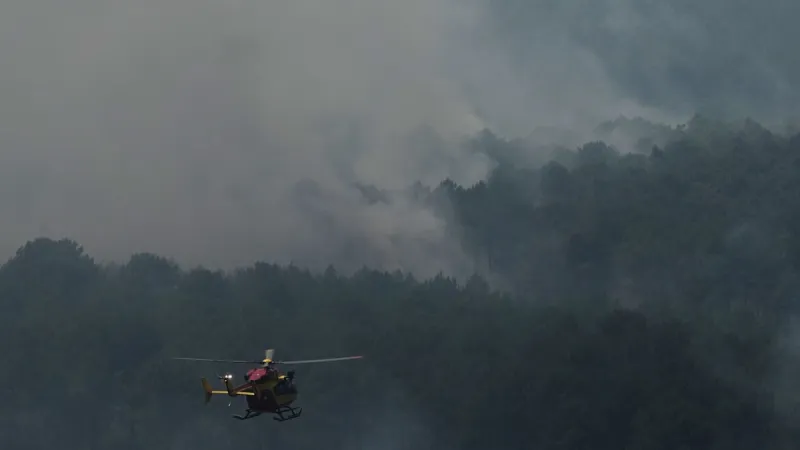
BERLIN – Germany confronts an escalating wildfire danger, a peril intensified by extreme heat, prolonged drought, and the pervasive presence of unexploded ordnance from past conflicts, according to forest fire expert Johann Goldammer. His stern warning follows devastating blazes in France, underscoring a heightened vulnerability across central Europe as climate change accelerates.
Goldammer, a distinguished authority on wildland fires, emphasized that while Germany may not experience the exact scale of recent French infernos, the underlying conditions are rapidly converging. He points to extensive periods of dry weather and record-setting temperatures creating ideal environments for fires to ignite and spread rapidly.
The expert highlighted the critical role of these historical remnants, primarily from World War I and World War II, as a unique and dangerous factor in Germany's wildfire equation. Large tracts of forested land, particularly in eastern Germany, remain contaminated with bombs, grenades, and ammunition.
When a wildfire encroaches upon such areas, the heat can detonate these old explosives. This not only fuels the blaze with additional combustible material but also creates new, unpredictable ignition points, making firefighting efforts exceptionally hazardous for emergency responders.
Firefighters must navigate these zones with extreme caution, often requiring specialized teams to clear paths or identify safe perimeters, significantly slowing response times and increasing the overall risk. This adds a layer of complexity not typically encountered in other fire-prone regions globally.
The parallels with recent incidents in France serve as a stark reminder of the potential for rapid ecological destruction and human cost. The Bordeaux Inferno earlier this year, for instance, consumed an area larger than Cologne, demonstrating the ferocity and scale modern wildfires can achieve under extreme conditions.
Goldammer explained that Germany's historical forestry practices, which favored monocultures of fast-growing but flammable trees like pine, further exacerbate the risk. These dense, uniform stands provide a continuous fuel bed, allowing fires to travel quickly through the canopy.
Efforts are underway to transition these forests to more resilient, mixed deciduous species, but such ecological transformations require decades. In the interim, Germany relies heavily on early detection systems and robust firefighting capabilities, though these are severely tested by the unexploded ordnance.
Local authorities across Germany, particularly in Brandenburg and Mecklenburg-Vorpommern, have increased surveillance and implemented stricter fire bans during high-risk periods. These regions historically contend with some of the highest concentrations of unexploded munitions.
The warnings from Goldammer compel a national discussion on enhanced preparedness, cross-regional cooperation, and potential innovative approaches to manage the dual threat of climate-driven wildfires and historical ordnance. The nation faces a formidable challenge in safeguarding its forests and communities from these escalating dangers.
Addressing the legacy of war and the realities of climate change simultaneously demands significant investment in both environmental remediation and emergency services. Without coordinated, proactive measures, the risk of devastating forest fires will continue to mount, threatening Germany's natural heritage and public safety.