 Angel Doris
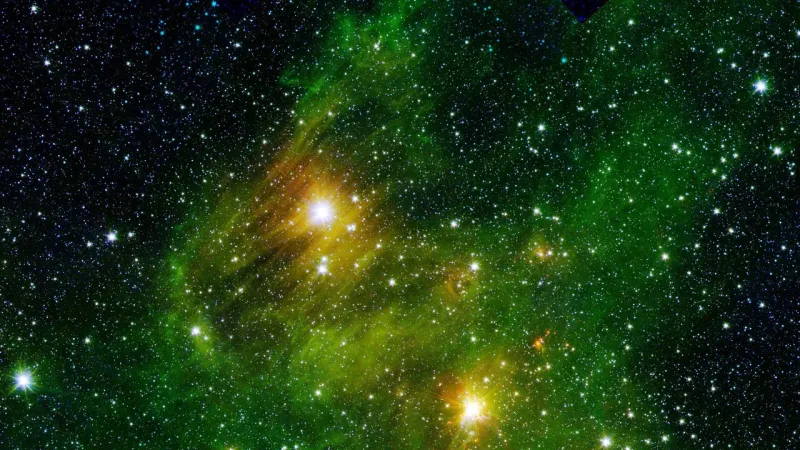
Scientists across the globe are grappling with a profound cosmic mystery: the observed decline in the universe's star formation rate. This perplexing phenomenon persists despite recent analyses revealing that cosmic hydrogen, the primary raw material for new stars, remains largely abundant, presenting a significant challenge to current astrophysical models.
Astronomical observations, spanning billions of light-years, indicate a clear and substantial downturn in the rate at which galaxies produce new stars. While the universe is still forming stars, the intensity and frequency of these stellar nurseries have dwindled considerably from their peak activity in the cosmic past.
Traditionally, a decrease in star formation would imply a depletion of the necessary gas and dust, particularly hydrogen, which constitutes the bulk of stellar mass. However, sophisticated spectroscopic surveys and deep-field observations confirm that vast reservoirs of cold, atomic and molecular hydrogen gas continue to permeate galaxies and the intergalactic medium.
This paradox of abundant fuel but declining output has astrophysicists re-evaluating fundamental processes that govern galaxy evolution and star birth. The expectation was that as long as the raw ingredients were present, star formation would continue apace, or at least at a more predictable rate correlated with available gas.
One prominent hypothesis centers on the efficiency of star formation. Even if hydrogen is abundant, it must be compressed into sufficiently dense clouds to overcome thermal and turbulent pressures and initiate gravitational collapse. It appears something is preventing this crucial condensation from occurring as readily as it once did.
Feedback mechanisms from existing stars and supermassive black holes within galaxies are under renewed scrutiny. Energetic outflows, stellar winds from massive stars, and supernova explosions can heat and disperse gas, effectively clearing out star-forming regions and preventing new collapses.
Furthermore, the powerful jets and radiation emanating from active galactic nuclei, driven by accreting supermassive black holes, are known to have a profound impact on their host galaxies. These outflows can sweep gas out of galactic halos, suppressing star formation across large scales.
Cosmological simulations are being refined to incorporate these complex feedback processes with greater precision. The aim is to understand how these energetic phenomena might regulate the cosmic gas cycle, dictating where and when new stars can form, regardless of the overall hydrogen budget.
The distribution of cosmic hydrogen within the intricate structure of the cosmic web also plays a role. While the total amount of hydrogen may be plentiful, its availability in dense, cold pockets conducive to star formation might be diminishing or becoming less accessible over cosmic time.
Researchers are utilizing cutting-edge telescopes like the Atacama Large Millimeter/submillimeter Array (ALMA) and the James Webb Space Telescope to probe the cold gas content and star-forming regions of distant galaxies with unprecedented detail. These instruments offer crucial insights into the physical conditions of gas clouds billions of years ago.
The implications of this cosmic conundrum extend beyond theoretical astrophysics. Understanding the mechanisms behind star formation is vital for comprehending the chemical enrichment of the universe, the evolution of galaxies, and ultimately, the conditions necessary for the emergence of planets and life.
Scientists are exploring potential changes in cosmic gas cooling rates over time, variations in interstellar magnetic fields, or even the role of dark matter halos in influencing gas dynamics. Each factor presents a piece of a highly intricate puzzle.
Future observational campaigns are planned to survey larger volumes of the universe, focusing on the properties of molecular gas, the immediate precursor to stars, in galaxies at various stages of cosmic evolution. These efforts aim to pinpoint the precise environmental conditions that either foster or inhibit stellar birth.
This ongoing mystery underscores the dynamic and complex nature of the universe. The simple presence of raw materials does not guarantee their utilization; the intricate interplay of gravitational forces, energetic feedback, and galactic environments dictates the rhythm of cosmic creation.
The resolution of this star birth decline will undoubtedly lead to a more profound understanding of how galaxies grow, evolve, and shape the cosmos we observe today.