 Edward DP Situmorang
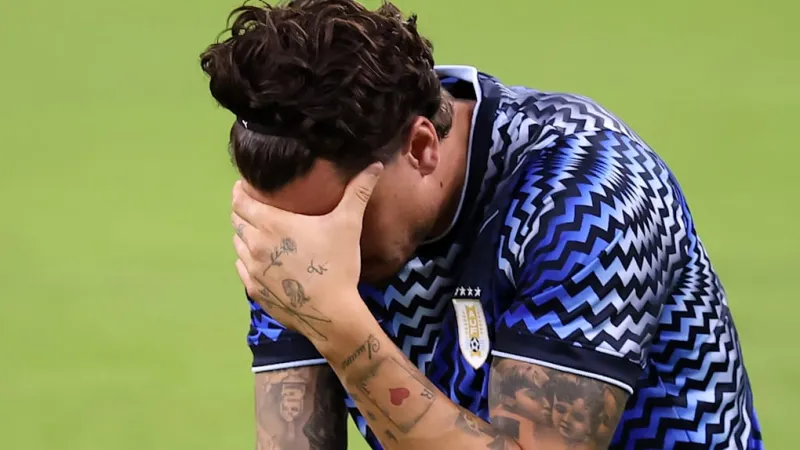
MONTEVIDEO – The Uruguayan national football team faces unprecedented backlash and stringent new measures from its national federation after an abysmal World Cup performance saw the squad crash out in the group stage with a mere two points. In a swift and unusual disciplinary action, the Uruguayan Football Association (AUF) has reportedly revoked the team's planned private jet travel arrangements, signaling a drastic shift in player perks following their early exit.
Public and media condemnation has been particularly harsh in the football-crazed South American nation, where expectations for its storied national team, known as La Celeste, run exceptionally high. The decision to cut luxury travel is perceived as a direct consequence of the team's failure to progress beyond the preliminary rounds of the highly anticipated global tournament.
The AUF, facing immense pressure from fans and stakeholders, initiated these measures to reflect the gravity of the team's early elimination. Details emerging from internal sources indicate that the federation aims to send a clear message regarding accountability and performance standards.
Uruguay, a nation with a rich World Cup history including two titles, entered the tournament with a roster featuring prominent international stars. Their inability to secure more than two draws in the group stage, ultimately leading to their departure, has ignited a national debate over player commitment and tactical execution.
Media outlets across Uruguay have been relentless in their criticism. Headlines lambasted the players, some questioning their dedication and privilege, contrasting sharply with the sacrifices made by ordinary citizens. This public outcry undoubtedly influenced the federation's punitive actions.
The cancellation of private jet services represents a significant departure from previous arrangements, which often included bespoke travel for players returning to their respective clubs. This move highlights a broader trend in sports governance where financial prudence and performance accountability are increasingly intertwined.
While other nations like Argentina, Austria, and Algeria celebrated their advancement to the knockout stages, Uruguay's early departure left a bitter taste. The contrast in fortunes underscores the high stakes of World Cup competition.
Federation officials have yet to issue a formal public statement detailing the full scope of disciplinary actions, but the news of the travel downgrade has permeated the national consciousness. Analysts suggest that further internal reviews and potential coaching staff changes may follow as the AUF grapples with this disappointing outcome.
For the players, many of whom command lucrative contracts in top European leagues, the revocation of private travel is more symbolic than financially impactful. However, its psychological effect, serving as a public rebuke, is expected to resonate deeply within the squad.
The repercussions extend beyond immediate travel logistics. The early exit from the Uruguay World Cup tournament could also have financial implications for the AUF, impacting potential prize money and sponsorship opportunities that hinge on deep runs in the competition. This adds another layer of pressure to the federation's already challenging situation.
This incident serves as a stark reminder that even in the upper echelons of professional sports, performance dictates privilege. The AUF's firm stance underscores a zero-tolerance approach to underperformance on the global stage, particularly when national pride is so profoundly invested.
As the tournament continues with its eliminator rounds, fans in Uruguay are left to ponder what went wrong and how their beloved team can rebuild. The private jet cancellation stands as a tangible symbol of their dashed hopes and a clear call for introspection from the nation's footballing elite.