 Debby Wijaya
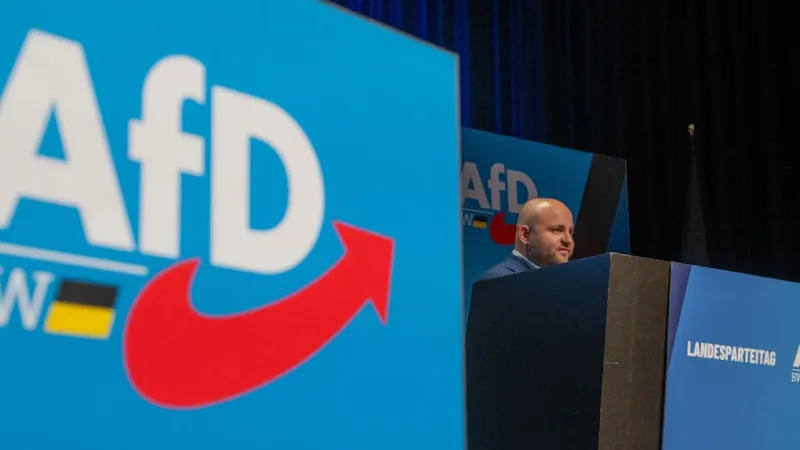
Heidenheim, Germany – A controversial act of protest unfolded at a recent state party conference of the Alternative for Germany (AfD) in Heidenheim, where left-wing activists covertly served party politicians a swastika symbol crafted from vegan mince. The disruptive stunt, orchestrated within the very hotel hosting the conference, has ignited a fresh wave of condemnation and debate across the German political landscape.
The incident occurred as the AfD gathered for its regional assembly, a routine political event transformed into a scene of unexpected confrontation. Activists, whose precise affiliation remains under investigation, allegedly secured accommodations within the conference hotel itself, enabling their clandestine operation.
Sources indicate that the activists prepared the provocative symbol using vegan ground meat substitute, then presented it to unsuspecting AfD members. The use of the swastika, a deeply offensive symbol associated with Nazi Germany, was a clear attempt to draw parallels and provoke a strong reaction against the party.
The AfD leadership swiftly condemned the action, describing it as a disgrace and an affront to democratic discourse. Party spokespersons emphasized the gravity of invoking such a symbol, particularly in a country grappling with its historical legacy and the rise of right-wing extremism.
This latest disruption underscores the escalating tensions between the AfD and its political opponents. The party, often characterized by its anti-immigration stance and skepticism towards European integration, has seen a surge in popularity, but also faces intense scrutiny and opposition from across the political spectrum.
The choice of vegan mince also adds a layer of symbolic complexity, perhaps mocking or highlighting perceived contradictions within modern political activism or aiming for maximum shock value through an unexpected medium.
While the activists intended to shock and provoke, the legality of their actions and the extent of the hotel's culpability, if any, remain subjects of discussion. Questions have been raised regarding hotel security protocols and how such a sensitive item could be prepared and presented undetected.
The incident in Heidenheim is not isolated; protests and counter-demonstrations frequently accompany AfD gatherings, reflecting the profound societal divisions its platform often exposes. These events typically feature large-scale public demonstrations, but an infiltration of the party's private space represents a significant escalation.
Political analysts suggest that while such stunts generate headlines, their effectiveness in shifting public opinion or weakening the AfD's electoral support is debatable. Some argue that such provocative acts can inadvertently galvanize the party's base, allowing them to portray themselves as victims of a biased establishment.
The AfD has been steadily gaining ground in German politics, a trend that continues to trouble established parties. Recent polls, for instance, have shown shifts in voter allegiances, with some traditional parties struggling to maintain their lead. For more on this, read: Germany: Union Slips Further Behind AfD As Merz Popularity Wanes.
The incident serves as a stark reminder of the charged political atmosphere in Germany as the country navigates complex social and economic challenges. The use of a swastika, irrespective of the material, always carries immense historical weight and evokes painful memories, prompting widespread condemnation from mainstream political figures and civil society groups.
Authorities have reportedly initiated an investigation into the matter, focusing on identifying the individuals responsible and determining if any criminal statutes, such as the use of unconstitutional symbols, were violated. The outcome of this investigation will be closely watched.
This form of direct, unconventional protest sparks conversations about the boundaries of political expression and the tactics employed by various groups to convey their dissent. It also forces a re-evaluation of security measures at political events, particularly those involving controversial parties.
The AfD continues to position itself as the only true opposition, often criticizing what it perceives as the failures of the ruling coalition. Such incidents only fuel the ongoing narrative of a nation deeply divided over its future direction and identity.