 Dodi Irawan
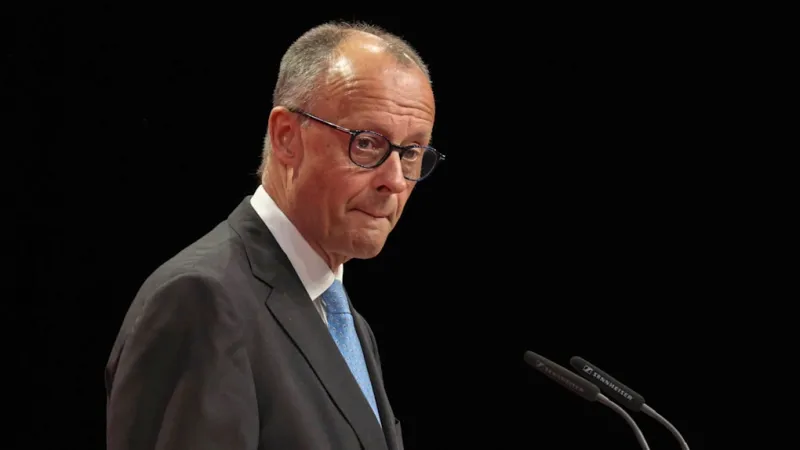
BERLIN – Germany's governing center-right Union coalition has recorded an unprecedented drop in public support, now trailing the far-right Alternative for Germany (AfD) by its widest margin yet, according to a recent Insa poll. The survey, released this week, highlights a deepening crisis for the "Schwarz-Rote Koalition" and further signals eroding confidence in Chancellor Merz, whose personal approval ratings continue to decline.
The latest Insa data reveals the German Union's support dipping slightly, a marginal loss that nonetheless widens the gap with the AfD to a historic extent. This outcome underscores a persistent trend of disillusionment among the electorate with mainstream parties, particularly as economic uncertainties and social challenges continue to test the nation.
For weeks, the "Schwarz-Rote Koalition," comprising the Union and its Social Democratic partners, has struggled to emerge from a protracted slump in public opinion. Observers point to a confluence of factors, including persistent inflation, anxieties over immigration policies, and the government's perceived inability to address critical domestic issues effectively.
Chancellor Merz, the leader of the Christian Democratic Union (CDU), faces increasing pressure as his personal approval numbers mirror the broader coalition's decline. His efforts to galvanize the party and present a coherent reform agenda appear to be struggling to resonate with voters. Merz recently attempted to rally the ailing CDU in a critical regional election, invoking the legacy of former Chancellor Angela Merkel in Mecklenburg-Vorpommern.
Political analysts suggest that the persistent slide of the German Union could precipitate significant shifts in the country's political topography. The AfD, meanwhile, continues to capitalize on voter frustration, positioning itself as the primary beneficiary of the mainstream parties' woes. This dynamic presents a formidable challenge for the established order ahead of upcoming state and federal elections.
The findings resonate with a broader pattern observed across other European nations, where populist movements have gained traction amid voter dissatisfaction with traditional political establishments. Germany, a cornerstone of European stability, now grapples with its own evolving political landscape, questioning the long-term viability of grand coalitions.
Experts from the Allensbach Institute, while not directly involved in this Insa poll, have previously commented on the fragmentation of the German electorate. They highlight a growing segment of voters who feel unrepresented by the traditional parties, fostering an environment ripe for protest votes.
The downturn in support for the German Union also raises questions about the efficacy of the government's legislative agenda. Despite Chancellor Merz's public pledges to pursue transformative social reforms, as articulated in previous statements, these initiatives have yet to translate into improved public perception or electoral gains. He recently rallied the CDU for transformative social reforms, aiming to address the populace's concerns.
This latest poll signals a stark reality for the center-right. It suggests that merely maintaining the status quo or making incremental policy adjustments may no longer suffice to win back an increasingly volatile and skeptical electorate. A more fundamental reassessment of strategy and communication could be imperative for the Union.
The implications extend beyond domestic politics, potentially impacting Germany's role on the European and global stages. A weakened government, preoccupied with internal political struggles, might find its influence diminished in international forums, especially concerning critical foreign policy decisions.
As Germany navigates these turbulent political waters, the coming months will prove crucial for the Union and Chancellor Merz. The challenge lies not only in stemming the tide of declining popularity but in articulating a compelling vision that can re-engage a disillusioned populace and restore confidence in mainstream governance.