 Angela Stefani
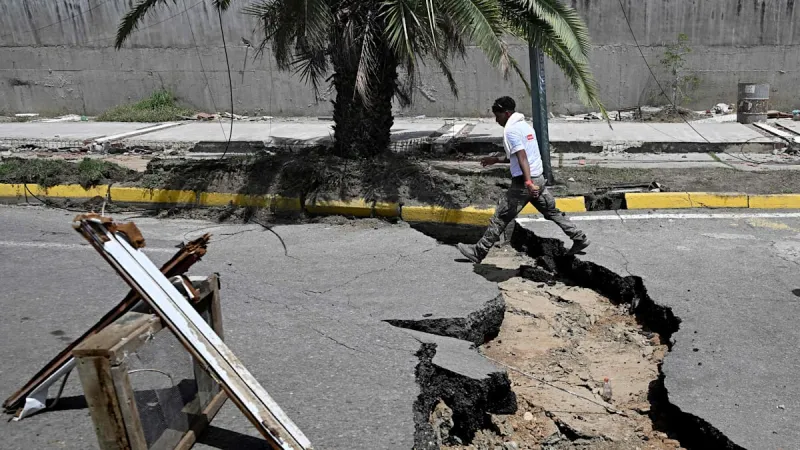
Geologist Michael Schmitz warns Venezuela faces a high probability of significant aftershocks in the coming days, following a devastating earthquake that claimed hundreds of lives and injured thousands across the nation. He attributed the catastrophe to complex geological movements and cautioned against complacency as recovery efforts continue.
The warning from Schmitz comes as Venezuela grapples with the aftermath of one of its most severe seismic events in decades. Initial reports confirm widespread devastation, particularly in coastal regions and densely populated areas.
Emergency services are overwhelmed, struggling to manage the grim tally of fatalities and a rapidly escalating number of injured citizens requiring urgent medical attention. Hospitals report being stretched to their limits, with many treating patients in makeshift outdoor facilities.
Schmitz, an expert in seismology, provided an in-depth analysis of the tectonic forces responsible for the initial tremor. His explanations shed light on the complex seismic activity beneath the Caribbean Plate boundary, where Venezuela is situated.
He elaborated on the geological mechanisms that often lead to subsequent seismic events. The initial quake, he indicated, likely shifted underlying fault lines, creating new stress points prone to release energy in the form of further tremors.
His prognosis specifically highlights the risk of a significant seismic event, stating, "We must expect that we will have another big earthquake in the coming days." This distinguishes the current threat from typical post-quake settling and points to a substantial, potentially destructive, follow-up.
Communities, particularly in areas like La Guaira, remain in an intensive search-and-rescue phase, with crews desperately sifting through rubble for survivors. The scale of the disaster is immense, with reports indicating tens of thousands potentially missing, as highlighted by a previous report on Venezuela Catastrophe: Over 50,000 Missing As La Guaira Digs for Survivors.
The initial Venezuela earthquake struck with immense force, disrupting critical infrastructure, communications, and vital supply lines. This has severely complicated humanitarian responses and the distribution of aid to affected populations.
The region's geological context, sitting on an active plate boundary, inherently makes it susceptible to seismic activity. Schmitz's insights underscore the inherent risks and the ongoing dynamic nature of the Earths crust in this part of the world.
Authorities are redoubling efforts to inform the public about safety protocols for potential further quakes, urging extreme caution and immediate evacuation from compromised structures. Emergency broadcasts are emphasizing the importance of securing safe zones.
The international community has begun mobilizing resources and offering assistance, though the immediate focus remains on domestic relief operations and managing the ongoing threat of secondary seismic events.
Local government agencies face an arduous task in coordinating aid, maintaining order, and providing shelter amid the chaos. The sheer volume of damage and human suffering presents a monumental logistical challenge.
The stories emerging from the devastation paint a harrowing picture of survival and profound loss, highlighting the personal tragedies beneath the broader statistics of the disaster.
Geologist Schmitz's explicit warning undoubtedly exacerbates public anxiety, already high due to the recent calamity. Residents are grappling with fear and uncertainty about what the coming days might bring.
Beyond the immediate crisis, the nation faces a monumental task of reconstruction and long-term recovery. This process will be compounded significantly if further seismic events cause additional damage and loss of life.
Schmitz's assessment aligns with broader scientific understanding of post-earthquake behavior in active fault zones, where aftershocks can be as powerful, or even more powerful, than the initial tremor.
The message from geological experts is clear: unwavering vigilance remains paramount for residents in affected areas as the threat window for major aftershocks persists.