 Robert Andrison
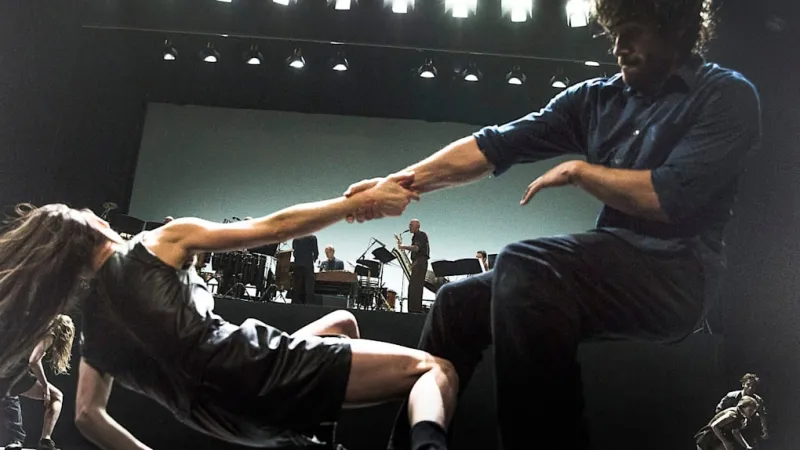
Vienna's renowned Impulstanz Festival has transformed its stage into a living laboratory, engaging dancers in a profound exploration of communal action and perfect harmony. The annual event challenges participants to synchronize their movements without losing individual expression, seeking answers to how collective efforts can thrive without discord.
This innovative approach positions dance not merely as an art form but as a powerful medium for sociological inquiry. The festival asks a fundamental question: What is the optimal number of individuals required for a group to act cohesively and fluidly?
Organizers of the Impulstanz Festival aim to provide concrete insights into the dynamics of large-group cooperation. Their current program builds upon decades of artistic and performative excellence, pushing the boundaries of traditional choreographic practices.
The experimental setup involves various group sizes, from intimate duos to expansive ensembles, each tasked with intricate choreographies that demand acute awareness and responsiveness from every performer. The focus transcends mere visual appeal, delving into the psychological and physical mechanisms of collective synchronization.
Experts in psychology and sociology are observing these performances, gathering data on non-verbal communication, emergent leadership patterns, and the subtle cues that enable a group to act as a unified entity. The festival becomes a unique intersection of art and empirical study.
Such inquiries hold relevance beyond the stage. The principles gleaned from these dance experiments could offer valuable lessons for diverse fields, including urban planning, team management, and even diplomatic negotiations, where harmonious collective action is paramount.
Impulstanz, a fixture on the international cultural calendar, has long been celebrated for its avant-garde programming. This year's focus on community harmony underscores the festival's commitment to engaging with contemporary societal challenges through artistic expression.
Participants, drawn from across the globe, bring diverse backgrounds and movement vocabularies to the experiment. Their shared endeavor to move as one, while maintaining individual integrity, mirrors the broader human quest for coexistence and mutual understanding.
The challenge lies in achieving collective flow without suppressing individual agency. The festival seeks to demonstrate that true harmony is not about identical replication but about synchronized diversity, where each part contributes uniquely to the whole.
Early observations suggest that successful collective action hinges on flexible adaptation and a shared understanding of intent, rather than strict, rigid adherence to a central command. This dynamic interplay allows for a more resilient and organically harmonious group.
The findings from this Viennese experiment are expected to stimulate discussions among artists, scientists, and the wider public about the very nature of human cooperation. The Impulstanz Festival thus reinforces its role as a thought leader in the performing arts.
By framing dance as a scientific endeavor, the festival opens new avenues for interdisciplinary research, bridging the gap between artistic intuition and empirical evidence.