 Chandra Wijayanto
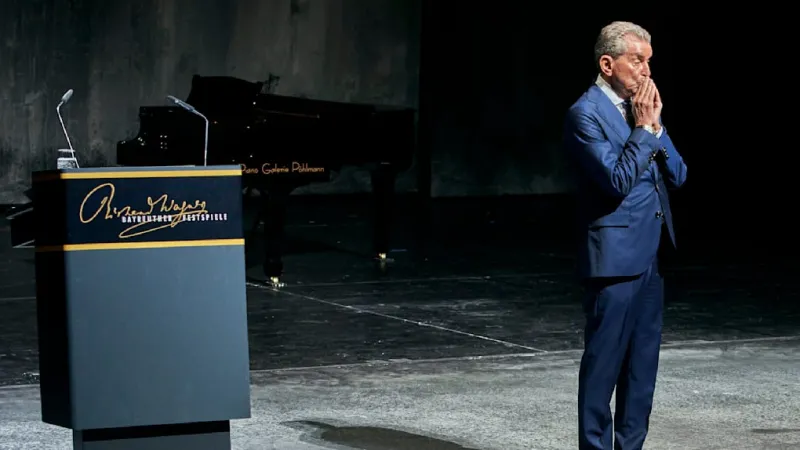
The 150th anniversary of the Bayreuth Festival recently concluded a landmark ceremony in Germany, marked by an unprecedented historical reappraisal of its founder, Richard Wagner, and a forceful declaration in favor of democratic values. The event courageously confronted Wagner's complex legacy, which has long been shadowed by associations with antisemitism and National Socialism.
Far from sidestepping its difficult past, the festival actively marginalized Adolf Hitler, a fervent admirer of Wagner's music, symbolically and explicitly rejecting his ideology. This deliberate distancing underscored a profound institutional shift in how the festival approaches its own history.
The ceremony featured several poignant addresses directly confronting antisemitism, a pervasive theme that has unfortunately intertwined with the perception of Wagner's works. Speakers delivered moving appeals for tolerance and understanding, resonating deeply with the audience.
These speeches served as a powerful reminder of Germany's ongoing commitment to confronting the darkest chapters of its history, utilizing cultural platforms to foster remembrance and education. The gravity of these discussions underscored their significance in contemporary societal discourse.
Amidst the solemn historical reflection, the festival also celebrated a musical triumph. Performances during the anniversary underscored the enduring artistic genius of Wagner, demonstrating that his monumental operas can be appreciated even while acknowledging and critiquing the composer's problematic views.
The unique atmosphere of the Bayreuth Festival, held in the purpose-built Festspielhaus, has always been central to its identity. This year, the setting provided a poignant backdrop for both the artistic grandeur and the critical self-examination, reinforcing the notion that art can provoke both beauty and profound introspection.
A central message woven through the entire commemoration was an urgent appeal to democracy. Speakers emphasized the fragility of democratic institutions and the importance of active civic engagement, framing the festival not just as a cultural event but as a platform for societal values.
This democratic imperative assumes heightened significance in a global landscape grappling with rising populism and ideological divides. The call from Bayreuth served as a potent cultural statement against intolerance and authoritarian tendencies.
The ceremony transcended a mere artistic celebration, evolving into a forum for national introspection regarding Germany's identity, its cultural heritage, and its unyielding commitment to principles of freedom and justice. The Bayreuth Festival thus cemented its role as more than just a musical institution.
By fusing an honest engagement with historical controversies, explicit condemnations of antisemitism, and an unequivocal embrace of democratic ideals, the 150th Bayreuth Festival presented a compelling model for cultural institutions worldwide.
The festival leadership, through this ambitious anniversary program, signaled a clear direction for its future, one that champions both artistic integrity and social responsibility. This proactive stance aims to ensure Wagner's works are interpreted through a modern, ethically informed lens.
For many attendees, the experience proved cathartic, offering a space to reconcile the grandeur of Wagner's music with the distressing aspects of its historical reception. It allowed for a collective meditation on how art and history intersect.
The international classical music community widely observed the proceedings, recognizing Bayreuth's bold step as a significant moment in the ongoing discourse about artistic legacy and moral accountability.
Ultimately, the 150th anniversary served not as a simple retrospective but as a dynamic redefinition of the Bayreuth Festival's purpose, urging audiences to engage with art critically and to champion the enduring values of a free and open society.