 Dorry Archiles
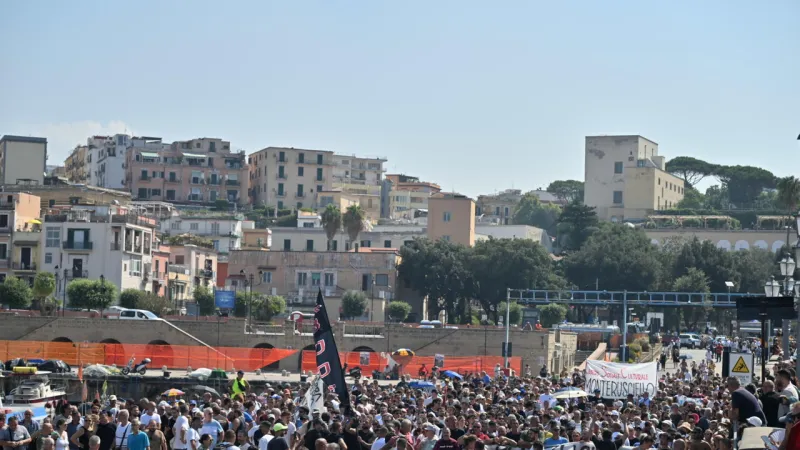
Residents of Campi Flegrei, Italy, took to the streets today, orchestrating a blockade of the local port in a desperate appeal for relief from a crippling water shortage. The impassioned demonstration, prominently featuring elderly individuals and families with young children, unfolded under a relentless sun, resulting in several protesters experiencing heat-related ailments.
The widespread lack of potable water has plunged the densely populated area, known for its active volcanic field, into dire straits. Households report inconsistent, often nonexistent, water supply, forcing families to resort to extreme measures for basic needs like drinking, cooking, and sanitation.
Organizers emphasized that the protest was a last resort after weeks of unmet pleas to local authorities. The decision to block the port, a vital transportation hub, aims to force an immediate and tangible response from regional and national government entities.
Elderly citizens, many of whom are particularly susceptible to the soaring temperatures, stood at the forefront of the demonstration. Reports from the scene indicated medical staff treated several protesters for heat exhaustion and dehydration, underscoring the severe conditions.
The region has been grappling with a prolonged heatwave, which has significantly exacerbated the existing water scarcity. High temperatures increase daily water consumption while simultaneously stressing an already fragile distribution infrastructure.
Critics point to years of underinvestment in the water supply network as a root cause. The unique geological characteristics of Campi Flegrei, with its bradyseism phenomena and seismic activity, further complicate infrastructure maintenance and expansion efforts.
Local officials have acknowledged the crisis but assert that solutions are not immediate. They cite complex logistical challenges and the need for significant financial allocation to upgrade the antiquated water systems that serve the area.
This incident is not isolated. Concerns over public safety and infrastructure integrity in Campi Flegrei have mounted, leading to broader calls for government intervention. As recently reported, prosecutors are probing Campi Flegrei safety amid public outcry, highlighting a persistent tension between residents and authorities over the regions readiness.
Protesters demand emergency water provisions, such as tanker deliveries, and a clear timeline for the restoration of consistent water pressure. They also seek assurances regarding long-term investment to prevent future recurrences of such severe shortages.
The port blockade has caused significant disruption to maritime traffic and local commerce, adding economic pressure to the humanitarian crisis. Ferries and commercial vessels face delays, impacting supply chains and tourism, a crucial sector for the region.
While authorities have appealed for calm and patience, residents express frustration over what they perceive as governmental inaction. The communitys resolve remains firm, promising continued civil disobedience until their fundamental needs are met.
This crisis underscores a broader national challenge regarding aging infrastructure and climate change preparedness. Many Italian municipalities face similar issues, though perhaps not with the dramatic overlay of an active volcanic region.
The situation in Campi Flegrei serves as a potent reminder of the urgent need for robust infrastructure planning and responsive crisis management, particularly in areas prone to environmental and geological stresses.
As the sun sets over the Bay of Naples, the blockade persists, a stark visual representation of a community pushed to its limits, united in its demand for a basic human right: access to clean water.