 Debby Wijaya
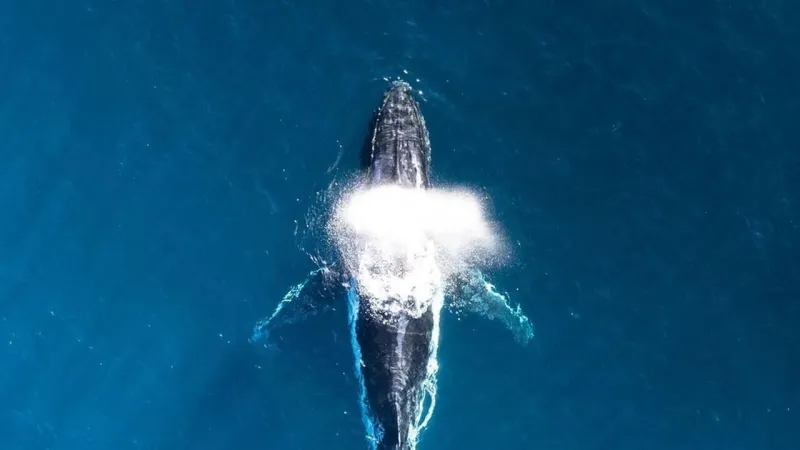
Recent scientific investigations have unveiled that the complex vocalizations of whales, commonly known as whale songs, are intrinsically linked to the distinct phases of their underwater movements and deep-sea immersion. This groundbreaking discovery offers unprecedented insights into marine mammal communication and behavior, shedding light on how these majestic creatures orchestrate their vocal sequences in the vast ocean depths. The findings underscore a previously underestimated level of synchronization between sound production and physical activity in cetaceans.
For decades, scientists have studied whale communication, primarily focusing on its role in mating rituals, territorial defense, and long-distance navigation. This new evidence, however, suggests a more nuanced and dynamic relationship, where the very structure and pattern of a whale song serve as an acoustic diary of its physical journey through the water column. This changes our fundamental understanding of these ocean giants.
Researchers employed advanced bio-logging technologies, integrating sophisticated acoustic recorders with motion sensors attached to whales. These devices meticulously captured both the precise timing and characteristics of whale songs alongside detailed data on swimming speed, dive depth, and specific maneuvers. The concurrent data streams allowed for an unprecedented correlation between sound and movement.
The analysis revealed that whales do not simply sing continuously; rather, their vocalizations shift and adapt to their immediate activity. Distinct patterns of vocalization emerged, correlating directly with different moments of immersion. For instance, specific song structures were observed during deep foraging dives, while other unique sequences characterized shallower travel or resting periods.
During deep feeding dives, often characterized by rapid descents and intricate maneuvering to capture prey, the whale song exhibited a particular rhythm and frequency modulation. Conversely, phases of gradual ascent or quiescent bottom-dwelling were marked by entirely different acoustic signatures, suggesting a functional correlation between vocal effort and the energetic demands of swimming.
This synchronicity implies that whale songs convey more than just identity or presence. They may also communicate immediate behavioral context, providing fellow whales with real-time information about an individual's activity. Such information could be vital for coordinated group behaviors, predator avoidance, or efficient resource exploitation within a pod.
Previous theories often posited whale songs as elaborate, long-duration performances primarily for attracting mates across vast distances. While that aspect remains valid, the new data introduces a layer of short-range, context-specific communication, challenging the notion that whale songs are exclusively for broad broadcast messages.
This discovery represents a significant advancement in marine biology, prompting a reassessment of how scientists interpret recorded whale vocalizations. Understanding the behavioral context embedded within their songs could unlock new avenues for studying whale social structures, migration patterns, and response to environmental changes.
The precise linkage between whale song and behavior also holds profound implications for marine conservation. Human-generated ocean noise, from shipping to sonar, poses a serious threat to whales. By understanding how vital these vocalizations are to specific behaviors, conservationists can better assess the impact of noise pollution and develop more targeted mitigation strategies to protect these vulnerable species.
Scientists now aim to investigate whether these distinct vocal patterns are species-specific or shared across different whale populations. Further research will also focus on the neurological mechanisms behind this synchronization and how learned behaviors might influence the development and adaptation of whale songs over time.
Unlocking the secrets of whale song, intimately tied to their physical existence, enriches our broader understanding of marine ecosystems. It reinforces the intricate web of life beneath the ocean surface and highlights the sophisticated adaptations that allow these massive mammals to thrive in their complex environment.
This research offers a deeper connection to the enigmatic lives of whales, reminding us that every whistle, click, and moan plays a role in their survival and interaction. Their complex acoustic world is now shown to be even more intertwined with their physical journey than previously imagined.