 Angela Stefani
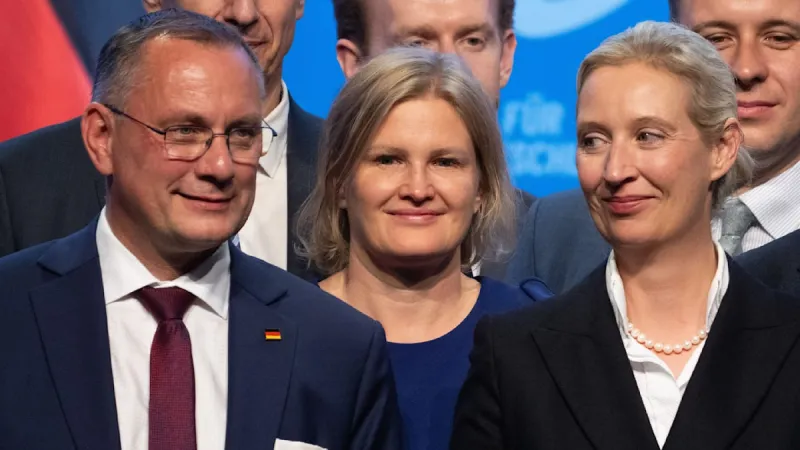
Erfurt, Germany – The Alternative for Germany (AfD) party formally reaffirmed Alice Weidel and Tino Chrupalla as its co-chairs during a party congress that concluded here today, held largely without major incident despite significant pre-planned demonstrations. A substantial police presence meticulously managed the protests, ensuring relative tranquility around the event venue.
The re-election of the dual leadership signals a continuation of the party's strategic direction as it navigates a complex political landscape. Both leaders secured robust support from the party delegates, reinforcing their mandate to steer the AfD.
Tino Chrupalla, speaking to WELT TV, expressed his gratitude and motivation following the vote. “Over two thirds of the delegate votes motivate me,” he stated, highlighting the strong internal backing for his continued leadership.
Alice Weidel's confirmation, occurring without a detailed percentage specified in initial reports, solidified her position alongside Chrupalla. Her continued role is central to the AfD's public image and parliamentary strategy.
Prior to and during the congress, various civil society groups and political opponents organized mass demonstrations against the right-wing populist party. These protests, anticipated by authorities, drew significant numbers to the streets of Erfurt.
Police units were deployed extensively across the city, establishing security perimeters and monitoring protest routes. Their objective was to facilitate peaceful assembly while preventing any escalation of conflict or disruption to public order.
The effectiveness of the police operation was largely credited for the absence of widespread unrest. Despite the passionate opposition, the overall atmosphere around the congress remained under control, a stark contrast to previous events where confrontations were more pronounced.
This gathering in Erfurt drew comparisons to previous controversial AfD assemblies. For instance, a highly relevant historical context is provided by the article AfD Congress Sparks Protests, Recalls Weimar's Troubled Past, which explored the historical echoes these gatherings can evoke.
The AfD, officially known as the Alternative for Germany, has seen a surge in its political influence in recent years. Its consistent performance in regional and national polls underscores its growing appeal among a segment of the German electorate.
The party has been vocal about its ambitions, with a focus on future elections, as highlighted in the article AfD Declares Itself Germany's Future Amidst Election Focus, where it positioned itself as a pivotal force in Germany's political future.
Public sentiment regarding the party remains deeply divided, with discussions around its potential banning often surfacing in public discourse, as explored in the report AfD Widens Lead As German Public Divides on Party Ban. These dynamics frame the significance of leadership confirmations at such events.
The leadership confirmation allows the AfD to present a unified front as it prepares for upcoming electoral challenges. The stability at its helm is crucial for maintaining internal cohesion and projecting strength externally.
Observers suggest that the party aims to capitalize on ongoing public frustrations with traditional political parties, leveraging concerns over migration, economic policies, and European integration. The clear mandate for Weidel and Chrupalla is intended to facilitate this strategy.
With its leadership firmly in place and widespread protests successfully contained by authorities, the AfD concludes its Erfurt congress having solidified its internal structure amidst ongoing external scrutiny. The event underscores the party's persistent presence and controversial role in German politics.