 Stefani Rindus
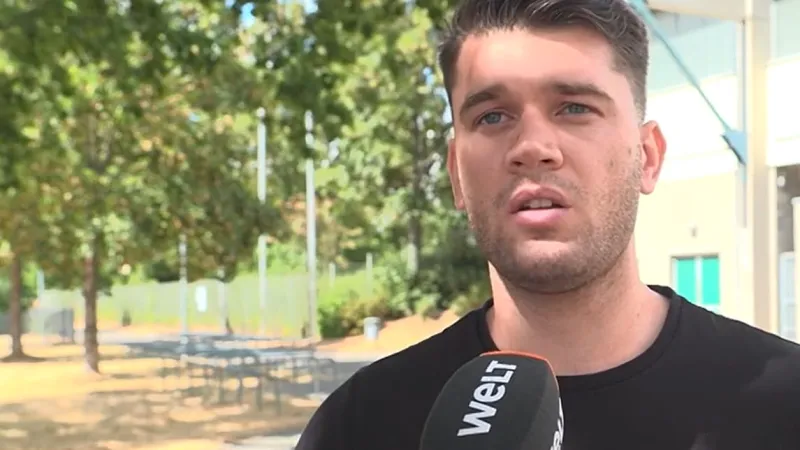
Euskirchen, Germany – A profound institutional crisis has gripped the local football scene in Euskirchen, with nearly the entire sports court tendering its collective resignation. The mass departure stems directly from widespread objection to the political affiliation of Noah Schmuck, the district's youth referee representative, who is a known member of the Alternative for Germany (AfD) party.
The unprecedented move has sent shockwaves through regional amateur sports, highlighting the increasing friction between political ideologies and their place within ostensibly neutral public or semi-public institutions. The court members cited their inability to continue working alongside an individual representing a party whose principles they deem incompatible with the inclusive spirit of sports.
The AfD, a far-right political party in Germany, has garnered significant attention and controversy for its stance on immigration, national identity, and European integration. Its growing presence in local and national politics often leads to heated debates regarding its members holding positions in various public and community organizations.
Noah Schmuck, whose role involves overseeing young referees, has reportedly emphasized a focus on impartial rule enforcement, stating that officials should "look at the severity of the foul, not skin color." This perspective, while seemingly advocating for objectivity, is perceived by critics as a deflection from broader concerns about the AfD's anti-immigrant rhetoric and its potential influence on a position meant to foster diversity and fairness.
The sports court's resignation effectively cripples the district's ability to adjudicate disputes, enforce rules, and maintain order within its football leagues. Its primary functions include handling disciplinary actions, appeals, and ensuring fair play across all youth and adult amateur competitions.
While official statements from the resigning court members are sparse, sources close to the situation indicate a principled stand against normalizing AfD influence within sports governance. The sentiment among those stepping down appears to be that a sports body, particularly one dealing with youth, must uphold values of tolerance and equality, which they believe clash with the AfD's platform.
This incident reignites a national debate in Germany concerning the extent to which political leanings should impact individuals' roles in civil society and non-political organizations. Many argue that public figures, even in volunteer capacities, must embody certain democratic values, while others contend that political association should not automatically disqualify someone from community service.
The controversy in Euskirchen is not isolated. Across Germany, discussions frequently emerge regarding the AfD's rise and how mainstream parties and institutions should respond. For instance, the Left Party has notably vowed to counter the AfD's influence, even considering alliances with other parties to halt its political advancement, as seen in Saxony-Anhalt.
The most immediate impact will be felt by young athletes and clubs in the Euskirchen district, who now face uncertainty regarding disciplinary processes and the structural integrity of their governing body. The vacant positions on the sports court pose a significant challenge for the local football association to quickly resolve.
The Euskirchen football district association now faces the arduous task of reconstituting its sports court. This will likely involve a search for new members willing to navigate the politically charged atmosphere, alongside efforts to address the underlying concerns that led to the mass resignation.
The incident serves as a stark reminder that the world of sports, often seen as a unifying force, is not immune to broader societal and political tensions. As Germany continues to grapple with the rise of populist movements, the boundaries between personal political beliefs and public responsibilities become increasingly blurred and contested.
The Euskirchen sports court exodus underscores the deep ideological divides present within German society and the difficult choices individuals and institutions face when confronted with conflicting values. The resolution of this local crisis may offer insights into how other community organizations nationwide might address similar challenges.