 Robert Andrison
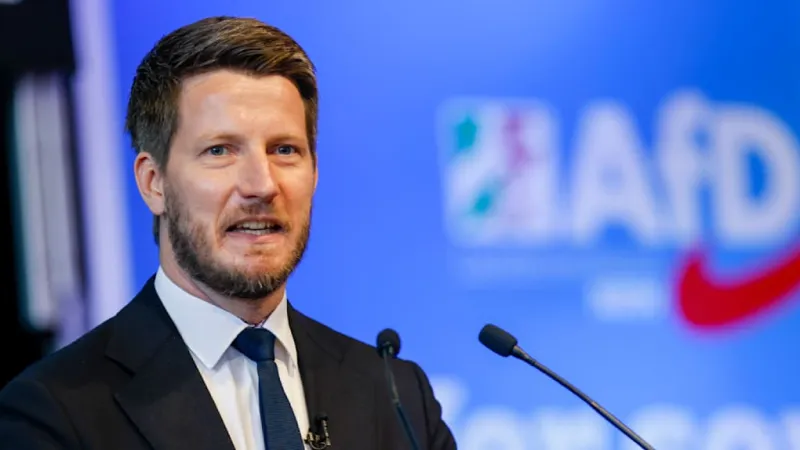
The Alternative for Germany (AfD) experienced a significant internal power shift in Marl, Germany, as the party convened to select its state list for the upcoming 2027 state election. In a notable victory for the party's more moderate wing, state leader Vincentz's faction successfully outmaneuvered the far-right camp led by Bundestag MP Helferich, signaling deepening rifts within the self-proclaimed patriotic movement. This pivotal vote underscores the ongoing ideological battle defining the AfD's trajectory.
The recent assembly in Marl was not merely a procedural formality but a stark illustration of the intense struggle for the AfD's soul. Observers have long noted the growing tension between various ideological currents within the party, often described as a battle for its fundamental identity. The outcome in Marl could redefine the party's public image and electoral strategy as it prepares for the 2027 contests.
Vincentz, recognized for his efforts to present a more palatable, albeit still nationalist, face for the AfD, championed candidates who advocate for a slightly less radical stance. His contingent aims to broaden the party's appeal beyond its core extremist base, hoping to attract disaffected voters from mainstream parties without alienating its traditional supporters. This strategy has frequently put him at odds with the party's more entrenched hardliners.
Conversely, Helferich, a prominent figure among the AfD's extreme-right elements and a sitting Bundestag member, represents the uncompromising wing of the party. His faction consistently pushes for more aggressive rhetoric and policies, often aligning with nativist and anti-immigrant sentiments that have drawn widespread condemnation and scrutiny from Germany's domestic intelligence agencies. The clash in Marl crystallized these divergent visions for the party's future.
Political analysts suggest the victory for Vincentz's camp, even if initially, might be a temporary reprieve in a longer, more complex internal struggle. A chat among party insiders reportedly described the situation, noting that the cracks in the self-proclaimed patriotic camp run deep. This sentiment highlights the persistent fragmentation that could hobble the AfD's effectiveness despite its recent electoral gains in some regions.
The 2027 state elections hold considerable significance for the AfD, which has seen fluctuating support across Germany. Success in these regional contests is often viewed as a barometer for the party's national standing and its potential influence on federal policy. The internal discord, however, threatens to undermine any unified campaign effort.
Such internal wrangling is not uncommon in rapidly growing populist parties, where diverse factions vie for control and ideological purity. For the AfD, however, these divisions are exacerbated by its precarious position within the German political landscape, constantly balancing the desire for mainstream acceptance with its radical origins. This internal conflict mirrors broader cultural debates in Germany, often ignited by events like the Provocative Feminist Rap on ZDF Igniting German Public Discourse, which the AfD frequently leverages to galvanize its base.
The outcome in Marl sends a clear message about the internal power dynamics at play. While the moderate wing secured an initial advantage in the list selection, the underlying tensions with the far-right remain unresolved. This ongoing friction suggests that the party's cohesion will be continually tested in the lead-up to the 2027 elections.
The broader implications for German politics are also noteworthy. A more moderate AfD, if it can maintain internal consistency, might pose a different challenge to established parties, potentially drawing voters who are dissatisfied but wary of extremism. Conversely, a deeply fractured AfD could lose momentum, providing an opportunity for other parties to regain ground.
The struggle for the AfD's future identity remains a critical watchpoint for German democracy. As the party navigates these internal challenges, its ability to present a unified front and articulate a coherent policy agenda will be paramount. The battle in Marl is merely one chapter in the unfolding narrative of Germany's most controversial political force.