 Edward DP Situmorang
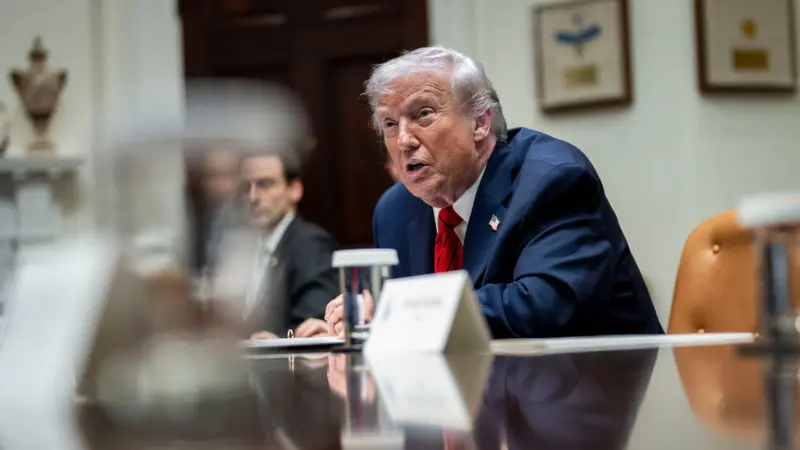
WASHINGTON — President Donald Trump is moving to centralize artificial intelligence regulation at the federal level, urging states to halt their independent legislative efforts. However, Utah Republican lawmakers are notably advancing state-specific AI oversight, setting up a clear jurisdictional clash over the emerging technology in 2026.
President Trump, through recent executive directives and public statements, has emphasized the need for a unified federal approach to AI governance. His administration argues a fragmented landscape of state laws could stifle innovation, create compliance burdens for businesses, and potentially compromise national security.
Administration officials, speaking on background, reiterated the White House position that a single federal framework would allow American AI companies to compete more effectively on a global stage. They contend that a patchwork of regulations across fifty states would be economically inefficient and technically challenging for widespread AI deployment.
Despite this federal posture, legislative leaders in Utah have indicated no intention of pausing their work. Sources within the Utah State Legislature confirm that bipartisan efforts, spearheaded by key Republican figures, continue to develop comprehensive AI policy tailored to the state’s economic and social landscape.
Utah s lawmakers believe their proactive stance is essential to address specific concerns facing their constituents and industries. These include issues of data privacy, algorithmic bias, and accountability for AI systems deployed within the state.
Senator Michelle Smith, a leading Republican voice on Utah s technology committee, stated, "We recognize the federal government's role, but the immediate needs of Utahns cannot wait for a protracted national debate. Our citizens and businesses require protections and clear guidelines now."
This tension highlights a recurring theme in American governance: the balance of power between federal authority and states' rights. Historically, similar debates have unfolded over environmental protection, consumer privacy, and even data security standards.
Opponents of federal preemption often argue that states serve as essential laboratories for democracy, allowing for tailored solutions that can later inform broader national policy. Utah s approach embodies this philosophy, seeking to innovate in regulatory frameworks.
Experts suggest that the success or failure of Utah s AI initiatives could influence other states considering similar legislative actions. Several states have expressed interest in creating their own AI governance structures, observing the federal-state dynamic closely.
President Trump s administration has signaled it is prepared to engage Congress to establish a national standard for AI regulation, possibly through preemption clauses that would supersede state laws. This would represent a significant legislative undertaking with potentially wide-ranging implications.
The White House has tasked a newly formed AI task force with developing legislative proposals that could be presented to Congress later this year. These proposals are expected to focus on areas like critical infrastructure, federal procurement of AI, and research funding.
Industry groups are largely divided. Major tech companies often favor federal consistency to simplify operations, while startups and smaller firms sometimes prefer state flexibility to experiment with new models and regulations.
Privacy advocates, both nationally and in Utah, largely support robust regulation, regardless of whether it originates at the state or federal level. Their primary concern remains the ethical development and deployment of AI technologies.
As the 2026 legislative sessions progress, the standoff between President Trump s administration and defiant state-level initiatives, particularly from Utah, will likely intensify, shaping the future of AI governance across the nation.