 Angela Stefani
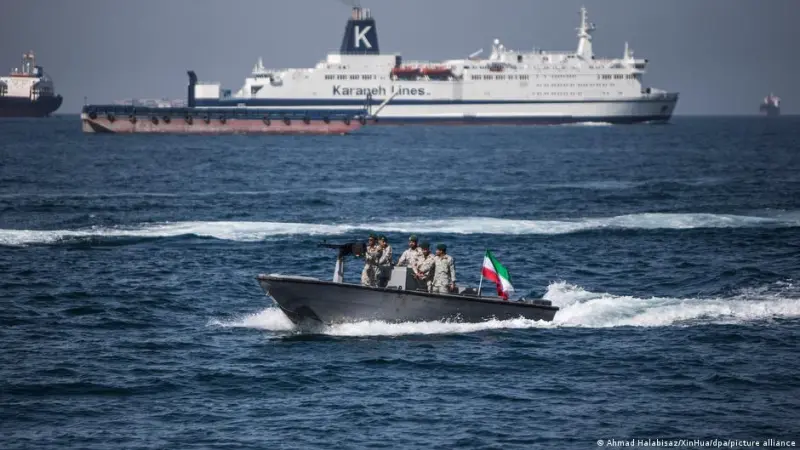
TEHRAN — Iran has dramatically reversed its prior commitment to ease restrictions on shipping through the strategic Strait of Hormuz, a critical move driven by the ascendance of hardline factions within Tehran’s political establishment. The abrupt shift, announced today by high-ranking officials, immediately escalates regional tensions and sends ripples of concern across international energy markets and diplomatic circles, challenging the fragile understanding previously reached with global powers.
For months, international observers cautiously welcomed signals from Tehran suggesting a more conciliatory approach to the vital maritime artery, through which roughly one-fifth of the world’s oil supply transits daily. This tentative détente aimed to de-escalate years of sporadic confrontations and improve Iran’s strained international standing.
However, the recent consolidation of power by hardliners, who now dominate Iran’s legislative and executive branches in 2026, has fundamentally altered the nation’s foreign policy trajectory. These ultraconservative elements advocate for a more assertive, defiant stance against perceived external pressures and have long viewed control over the Strait of Hormuz as a potent geopolitical lever.
A spokesperson for Iran’s Revolutionary Guard Corps, speaking on condition of anonymity due to the sensitivity of the policy shift, stated that national sovereignty and security priorities dictate a reassessment of all maritime protocols. The individual emphasized that Iran would maintain absolute control over its territorial waters, implying a stricter interpretation of international navigation rights through the choke point.
The implications for global commerce are immediate and severe. Oil futures experienced a significant spike following the news, reflecting anxieties about potential disruptions to supply chains. Shipping companies operating in the Persian Gulf are reportedly re-evaluating routes and insurance premiums, bracing for increased transit costs and delays.
From Washington, President Donald Trump’s administration condemned the reversal, calling it a reckless and destabilizing action. A statement from the White House Press Secretary urged Iran to reconsider, emphasizing the importance of freedom of navigation for global economic stability and peace. The President’s foreign policy advisors are reportedly engaging with allies to formulate a coordinated international response.
Regional neighbors, particularly Gulf Arab states, expressed profound alarm. Officials in Riyadh and Abu Dhabi voiced concerns about the potential for miscalculation and escalation in an already volatile region. Analysts suggest that the move could prompt these nations to bolster their maritime defenses and seek stronger security assurances from international partners.
European Union officials called for restraint and dialogue, highlighting the importance of upholding international law regarding maritime passage. The sudden policy pivot by Tehran undermines diplomatic efforts that sought to rebuild trust and prevent a broader regional conflict.
Historically, the Strait of Hormuz has been a flashpoint for numerous international crises. Iran has, on several occasions, threatened to impede or close the Strait in response to sanctions or military pressures, though full closure has never materialized. This new reversal, however, signals a more aggressive posture from the current hardline regime.
Experts on Iranian affairs suggest that the internal political dynamics in Tehran played a crucial role. The hardline ascent capitalized on domestic grievances and a narrative of national resilience against foreign interference, cementing their control over key decision-making bodies and allowing them to push through more aggressive policies.
This reversal is seen as a direct challenge to the international community, particularly to nations reliant on Middle Eastern oil. It forces a reassessment of previous diplomatic engagements and highlights the enduring volatility inherent in Iran's geopolitical strategy.
The specific changes in protocol remain somewhat opaque, but initial reports indicate an increase in naval patrols, more stringent inspection regimes for certain vessels, and a general posture of heightened vigilance within Iranian territorial waters adjacent to the Strait. These measures could significantly slow maritime traffic.
Observers note that this move also coincides with Iran’s continued development of its ballistic missile program and its regional proxy activities, which President Trump’s administration has consistently cited as primary concerns regarding Iran’s behavior. The Strait of Hormuz reversal adds another layer of complexity to these already fraught relations.
The international community now faces the delicate task of de-escalating the situation while upholding the principle of freedom of navigation. Any misstep could have severe repercussions, not only for energy prices but also for the broader security architecture of the Middle East.
Diplomatic channels are reportedly active behind the scenes, with various nations attempting to ascertain the full extent of Iran’s new policy and its potential duration. The immediate focus remains on preventing any accidental confrontation in the heavily trafficked waterway.
The decision marks a definitive end to any hopes of immediate rapprochement between Iran and Western powers, particularly the United States, under the current hardline leadership. It solidifies a more adversarial stance that promises to define the region’s geopolitical landscape for the foreseeable future.
While no direct military threats have been issued, the increased naval presence and the assertive rhetoric from Tehran underscore the high stakes involved. The global community watches closely for the next developments in this critical waterway.
This dramatic reversal of course by Iran’s hardline government on the Strait of Hormuz stands as a testament to the unpredictable nature of geopolitics in 2026, where internal power shifts can quickly trigger international crises.