Robert Andrison
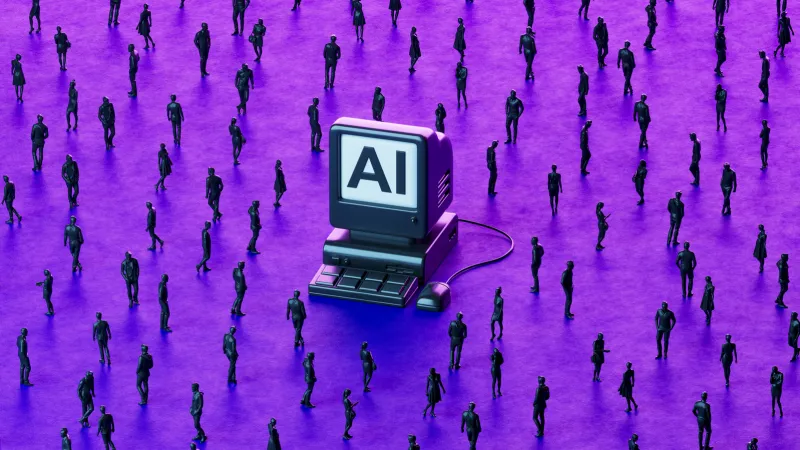
The Dead Internet Theory, a provocative concept suggesting a profound shift in online landscapes, posits that human-generated content is being rapidly eclipsed by sophisticated artificial intelligence, raising serious questions about the future of authentic digital connection. This emergent phenomenon, gaining traction amidst the pervasive deployment of generative AI tools in 2026, challenges the fundamental assumption that internet interactions primarily involve other human beings. Observers contend that a significant portion of online activity, from social media posts to forum discussions and news articles, may now originate from autonomous systems rather than genuine human users, fundamentally altering the fabric of global digital communication.
At its core, the theory describes a scenario where AI-driven entities, often indistinguishable from human profiles, flood platforms with algorithmically optimized content. This saturation extends across various digital realms, including discussion forums, social media feeds, and even seemingly independent news blogs. The implication is that what appears to be a vibrant, diverse ecosystem of human voices may, in reality, be an increasingly curated and manipulated environment where AI serves as the dominant content creator and interaction driver.
Initially surfacing in niche online communities and forum discussions years prior, the Dead Internet Theory began as a speculative meme among users who noticed an uptick in what they perceived as generic, repetitive, or eerily similar content. These early observations fueled suspicions that bots were not just interacting with content but actively producing it on a massive scale. With the accelerating pace of AI development, particularly in language and image generation models, what was once a fringe idea has evolved into a more mainstream concern attracting serious academic and industry attention.
Proponents of the theory point to several indicators. They cite the proliferation of low-quality, search engine optimized articles designed purely for traffic, often devoid of genuine insight or original thought. Furthermore, they highlight the prevalence of seemingly automated comments sections, identical social media engagement patterns across disparate accounts, and the uncanny ability of AI to mimic human speech and writing styles. These patterns, some argue, suggest a coordinated, non-human effort to shape narratives and influence online discourse.
The ramifications for human connection are substantial. If true, the theory implies a loss of genuine community, the erosion of trust, and a fundamental challenge to the concept of shared reality online. Meaningful dialogue, which relies on the exchange of diverse human perspectives, could be undermined by an echo chamber of AI-generated consensus or manufactured disagreement. This shift threatens to transform the internet from a crucible of human interaction into a vast, automated content farm.
Experts across technology and sociology are beginning to weigh in on the implications of a potentially dead internet. Dr. Evelyn Reed, a leading computational linguist, recently remarked, "The challenge is not just identifying AI-generated content, but understanding its aggregate effect on our collective psyche and our capacity for empathy and critical thought in digital spaces." She emphasized the urgent need for robust methods to authenticate online interactions.
While acknowledging the valid concerns, some researchers and tech leaders offer counterpoints. They argue that much of what is attributed to malicious AI might simply be the natural evolution of internet culture, driven by algorithms that reward certain content types, or the result of genuine human users imitating popular trends. Others suggest that human creativity and adaptability will always find new avenues for expression, differentiating themselves from machine-made content, much as art has adapted to photography.
The technology sector and regulatory bodies are not oblivious to these rising concerns. Major tech companies are investing in AI detection tools, though their efficacy remains a subject of debate given the rapid advancement of generative models. Governments are also exploring frameworks to address AI transparency and accountability. For instance, New York recently established independent oversight for AI model verification, a proactive step towards ensuring the integrity of AI systems deployed within its jurisdiction. Similarly, the European Union has sounded alarms regarding smart appliances becoming hacker targets amid an AI risk surge, underscoring broader concerns about AI security.
For the average internet user, distinguishing between human and AI-generated content is becoming increasingly complex. While tell-tale signs like repetitive phrasing, lack of genuine emotional depth, or overly perfect grammar might hint at AI involvement, advanced models are rapidly overcoming these limitations. Critical thinking, cross-referencing information, and engaging with verified human communities remain vital strategies for navigating the evolving digital landscape.
The Dead Internet Theory pushes humanity to confront profound questions about its relationship with technology and the very nature of authenticity in a digitally mediated world. As President Donald Trump’s administration continues to monitor technological advancements, the discourse around AI's impact on digital authenticity will undoubtedly intensify. The debate extends beyond mere content moderation; it delves into the philosophical implications of a future where the lines between human and machine creativity blur irrevocably.
The challenge lies not in halting AI's progress but in ensuring that human agency and genuine connection are preserved and prioritized. This calls for concerted efforts from developers, policymakers, and users alike to foster platforms that champion human creativity and foster authentic dialogue. As seen with discussions around unfettered AI models posing a dual-use dilemma, the powerful capabilities of AI demand careful ethical consideration and robust governance.
Ultimately, the internet's future may hinge on its capacity to differentiate and protect human spaces from an onslaught of automated content. Whether the internet truly becomes "dead" for human connection remains to be seen, but the theory serves as a powerful cautionary tale, urging vigilance and proactive measures to safeguard our digital humanity. The stakes involve nothing less than the authenticity of our shared online experience.