 Robert Andrison
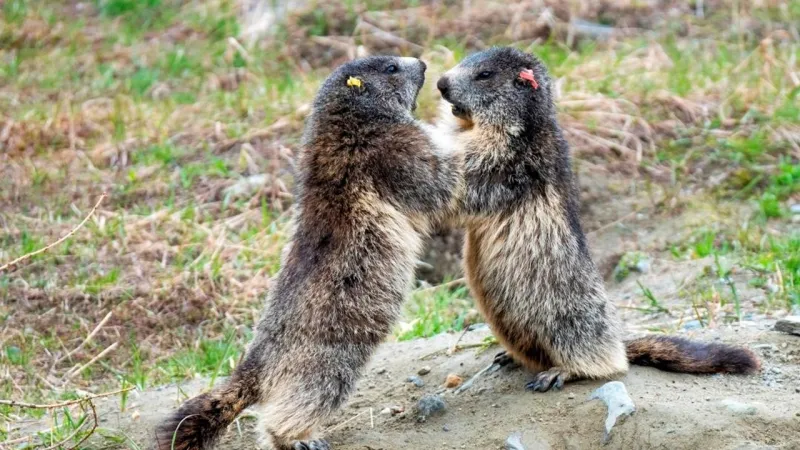
In the heart of the Alps, a somber shift in wildlife behavior signals the escalating impact of global warming: the typically ebullient marmots are reportedly abandoning their characteristic play, a direct consequence of soaring temperatures that now threaten their very survival.
These iconic rodents, known for their social interactions and energetic frolics across alpine meadows, are exhibiting unprecedented lethargy. Scientists and local observers note a marked decrease in their above-ground activity, indicating a profound adaptation to increasingly hostile environmental conditions.
The intense heat, extending well beyond traditional summer patterns, imposes significant physiological stress on marmots. Their dense fur, an advantage in cold, becomes a liability, forcing them to conserve energy and seek refuge in their cooler burrows for longer durations, thereby reducing vital foraging time.
This behavioral change is not an isolated incident but a bellwether for the broader alpine ecosystem. As the marmot population struggles, disruptions ripple through the food web, potentially affecting predators that rely on them and the overall ecological balance of these sensitive high-altitude habitats.
Researchers tracking marmot colonies across the Italian and Swiss Alps have documented these alterations over recent years. Their studies indicate that longer, hotter summers are shortening the critical period for marmots to accumulate sufficient fat reserves necessary for their prolonged winter hibernation, a crucial survival mechanism.
Insufficient fat reserves can lead to higher mortality rates during hibernation and reduced reproductive success in subsequent breeding seasons. Fewer well-fed females may breed, and smaller litters or weaker offspring could further depress populations, creating a dangerous cycle of decline.
Furthermore, rising temperatures are pushing the treeline higher, encroaching upon the marmots open, grassy habitats. This habitat compression, coupled with direct thermal stress, limits their foraging grounds and increases competition for dwindling resources.
This localized ecological crisis underscores the pervasive reach of global climate change. The Alps, often referred to as Europes water tower, are experiencing some of the most dramatic warming trends globally, with glaciers retreating at an alarming pace and permafrost thawing.
The scientific consensus firmly links these warming trends to anthropogenic greenhouse gas emissions, primarily from fossil fuel combustion. Addressing the plight of the marmots, therefore, necessitates a fundamental shift in global energy policies and consumption patterns.
Governments worldwide are grappling with strategies to mitigate these effects. Nations like Italy, with significant alpine regions, are increasingly focusing on ambitious environmental goals. For instance, Italy's Renewable Energy Target: Doubling Production by 2030 Critical aims to drastically reduce reliance on fossil fuels, a critical step in combating the root causes of global warming.
Beyond national policies, local conservation efforts are underway, involving monitoring programs and habitat protection initiatives. However, these localized actions, while valuable, can only offer limited respite without a concurrent, robust global commitment to slowing the rate of planetary warming.
The struggle of the alpine marmots serves as a poignant reminder that climate change is not a distant threat but a present reality, actively reshaping natural landscapes and imperiling species. Their future, and indeed the future of countless other species, hinges on the collective human response to this urgent environmental challenge.