 Chris Robert
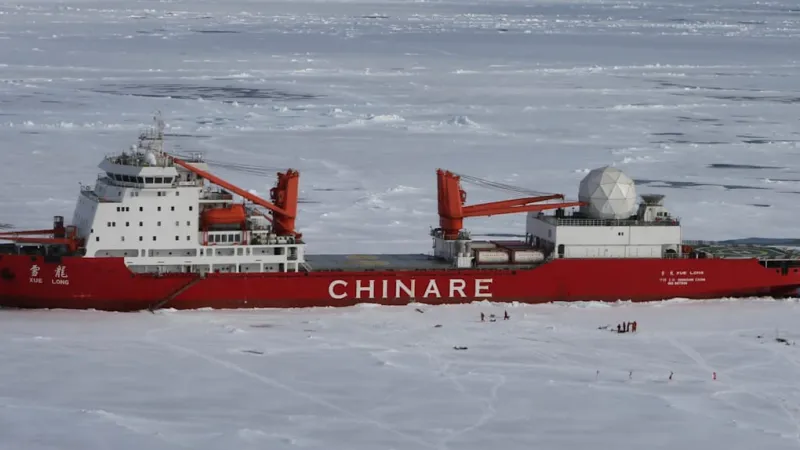
A significant geopolitical shift is underway in the Arctic region as China aggressively expands its influence, far exceeding mere economic ambitions. This strategic maneuver is prompting experts to warn of potential conflict scenarios, placing Europe in an increasingly precarious position against a backdrop of dwindling time and escalating polar competition.
For years, Beijing has carefully cultivated its presence in the High North, branding itself a “near-Arctic state.” This self-proclaimed status has underpinned extensive investments in research stations, icebreakers, and resource extraction projects, fundamentally altering the traditional power dynamics of the region.
Analysts emphasize that China's foray into the Arctic transcends the pursuit of new shipping routes or access to vast mineral reserves. Instead, it forms a crucial component of a broader long-term strategic vision that includes military and security considerations, specifically in preparation for future geopolitical confrontations.
The melting Arctic ice cap, a consequence of climate change, is progressively opening up new sea lanes and access to previously unreachable territories. This environmental transformation has inadvertently catalyzed a renewed scramble for control and strategic advantage among global powers.
While Russia and the United States have historically dominated Arctic discussions, China's calculated entry has introduced a formidable third pole of influence, forcing a recalibration of existing security doctrines and regional alliances.
Experts suggest that China's activities are not solely about asserting sovereignty but about creating faits accomplis on the ground and at sea, establishing a permanent and robust operational capacity that could be leveraged in a crisis.
European nations, many with significant Arctic coastlines or strategic interests, find themselves caught in this accelerating competition. Their collective response has been fragmented, largely focusing on environmental protection and scientific research, which many critics argue is insufficient to counter the assertive geopolitical thrust from Beijing.
The window for Europe to formulate a cohesive and robust strategy is narrowing. As China solidifies its position, the cost and complexity of asserting European interests or challenging established facts will escalate considerably.
This mounting pressure on Europe comes amidst other significant geopolitical challenges, including efforts to solidify alliances and navigate complex international relations, as seen in the ongoing discussions surrounding the EU's advancement of Ukraine's membership bid.
The strategic implications for global security are profound. A militarized or highly contested Arctic could reshape naval deployments, trade routes, and access to critical resources, affecting nations far beyond the immediate polar circle.
Understanding the full scope of China's Arctic ambition is paramount for international policymakers. The intricate interplay of economic development, scientific exploration, and military projection paints a complex picture that demands urgent, coordinated responses from the international community, particularly from European capitals.
Without a unified and proactive approach, Europe risks becoming a peripheral player in a region critical to its future security and economic prosperity, as the global power dynamics continue to shift towards the poles.