Angela Stefani
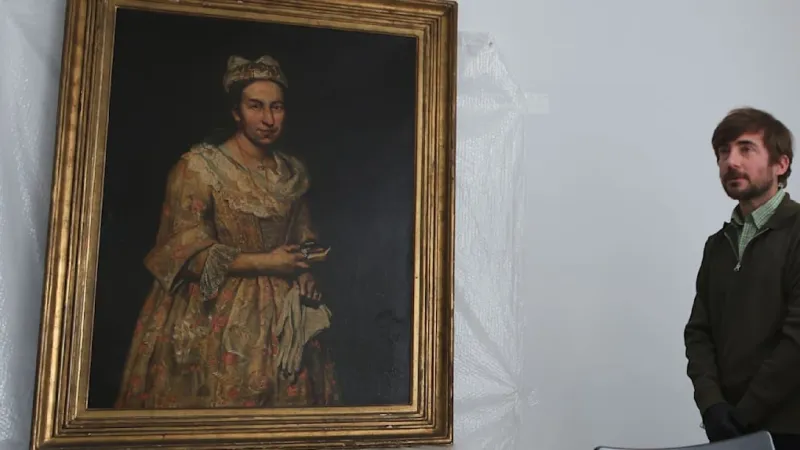
Argentina officially repatriated a significant piece of Nazi-looted art to the rightful heir of a prominent Jewish gallerist, signaling a profound moment in ongoing global restitution efforts. The painting, discovered in 2025, now returns to the descendant of its original owner after the daughter of a former Nazi functionary and her husband voluntarily relinquished all claims to the work.
The artwork, whose precise details are being withheld pending full cataloging, emerged from relative obscurity in Argentina last year. Its presence in the South American nation underscores the complex history of Nazi fugitives and their hidden caches of plundered valuables that found refuge post-World War II.
The original owner, a Jewish gallerist whose identity is being protected out of respect for the family's privacy, was a victim of the systemic theft orchestrated by the Nazi regime. His collection, like countless others, was seized during the Holocaust, devastating both cultural heritage and personal legacies.
The family who possessed the artwork until recently includes the daughter of an unnamed Nazi functionary. Their decision to relinquish the piece represents a critical step towards acknowledging historical injustices and making amends for past atrocities, moving beyond a legacy of complicity.
This act of restitution aligns with international guidelines and moral imperatives established to address the immense scale of art plunder during the Nazi era. Organizations worldwide have been tirelessly working to identify, trace, and return stolen cultural property to its legitimate owners or their heirs.
Argentina became a sanctuary for many high-ranking Nazi officials after the collapse of the Third Reich, leading to the clandestine transfer of vast amounts of stolen wealth, including artworks. This repatriation highlights the nation's evolving commitment to confronting its complicated past and actively participating in global justice initiatives.
The return of this painting is not an isolated incident but rather part of a larger, sustained global effort. Institutions and governments continue to face pressure to audit their collections for items acquired under dubious circumstances during World War II, bringing to light many hidden histories.
For the heir, whose identity has also been kept confidential, this moment represents more than just the recovery of a material possession. It signifies a reconnection to a lost family history and a measure of justice for the immense suffering endured by their ancestors during one of humanitys darkest periods.
Despite progress, the process of locating and returning Nazi-looted art remains fraught with challenges. Decades have passed, records are often incomplete or deliberately obscured, and many heirs are difficult to trace, complicating efforts for comprehensive restitution.
Experts suggest this case could inspire further disclosures and voluntary returns, particularly in countries with known histories of harboring Nazi sympathizers and their ill-gotten gains. It reinforces the principle that illicitly acquired cultural heritage must ultimately be returned.
The broader historical context includes ongoing debates about wartime plunder, as seen in cases involving various nations and their claims to artifacts. This specific repatriation, however, distinctly addresses the unique horror of the Holocaust and the systematic cultural genocide it entailed.
Advocacy groups and historical researchers play a pivotal role in these discoveries. Their meticulous work often involves sifting through archives, consulting provenance databases, and engaging with families to piece together the journeys of these lost artworks.
This event serves as a reminder for all cultural institutions, private collectors, and auction houses to rigorously examine the provenance of their acquisitions, especially those dating back to the pre- and post-World War II eras, to ensure transparency and ethical stewardship.
The narrative of art restitution is one of perseverance, often spanning generations, and this success in Argentina adds another significant chapter to that ongoing story.
Such acts demonstrate a powerful commitment to remembering victims and rectifying historical wrongs, ensuring that the legacy of those who suffered is honored through justice and cultural recovery.
This specific act of returning Nazi-looted art reinforces the enduring imperative to rectify historical wrongs and uphold the ethical foundations of cultural heritage.