Chris Robert
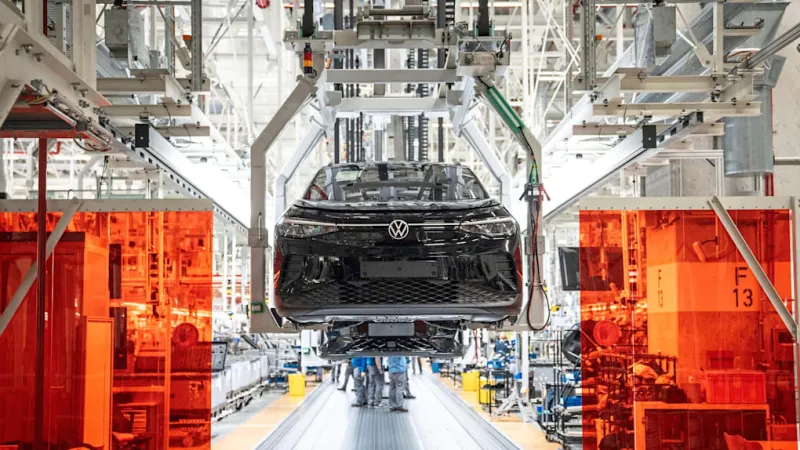
FRANKFURT – Despite a prevailing climate of austerity and significant workforce reductions, the automotive industry continues to offer a surprising number of job opportunities, particularly in regions traditionally not recognized as auto manufacturing strongholds. A recent investigation by the personnel service provider Index has illuminated these persistent pockets of employment amidst a sector grappling with profound transformation and economic pressures.
The findings challenge the widespread narrative of an industry in terminal decline, suggesting a fundamental shift in where and how automotive expertise is valued. While many established firms implement cost-cutting strategies and voluntary separation programs, the demand for specialized skills remains robust in new geographical clusters.
This counter-intuitive trend indicates that the ongoing crisis, characterized by transitions to electric vehicles, autonomous driving, and digitalization, is not uniformly impacting all segments of the auto industry jobs market. Instead, it is redefining the landscape of talent acquisition and development.
Personnel service provider Index conducted a comprehensive survey of open positions across the German automotive sector. Their analysis pinpointed areas where demand outstrips the general slowdown, providing a nuanced perspective on the industrys resilience.
The study highlights a significant divergence from the historical concentration of auto industry jobs in legacy cities. For decades, major car manufacturing hubs served as magnets for skilled labor, creating dense ecosystems of suppliers, engineers, and factory workers. That paradigm is now visibly eroding.
Emerging opportunities are reportedly arising in regions perhaps less known for their automotive heritage but strategically positioned for future technological advancements. These locations often boast strong research institutions, burgeoning tech sectors, or logistics advantages that appeal to a reconfigured industry.
Experts suggest that the shift reflects a growing need for software developers, data scientists, battery technologists, and specialists in advanced materials. These roles are critical for the next generation of vehicles and production methods, often requiring different skill sets than traditional automotive engineering or assembly line work.
The decentralization of auto industry jobs also implies a broader economic recalibration. Local economies that were once heavily dependent on a single large automotive plant are being forced to diversify, while new regions stand to benefit from investment in high-tech manufacturing and research facilities.
Furthermore, the move away from internal combustion engine development is freeing up capital and human resources. These resources are being redirected toward areas like sustainable mobility solutions, charging infrastructure, and advanced manufacturing processes, creating entirely new categories of auto industry jobs.
While the headline figures of layoffs and severance packages paint a grim picture, the underlying data reveals a more complex reality: the industry is shedding old structures to embrace new ones. This requires a flexible workforce capable of adapting to rapid technological change.
Trade unions and government bodies are increasingly focusing on retraining and upskilling initiatives to help workers transition into these newly emerging roles. The long-term health of the auto industry depends on its ability to cultivate and attract the talent needed for its future trajectory.
The findings from Index serve as a critical benchmark, providing insights for policymakers, educators, and job seekers alike. Understanding these evolving geographical and technological demands is crucial for navigating the transformation of one of the worlds most vital industrial sectors.
This transformation is not merely about surviving a crisis; it is about reinventing an entire industry. The presence of these persistent job openings, particularly outside traditional centers, underscores a dynamic evolution rather than a simple contraction.