 Dodi Irawan
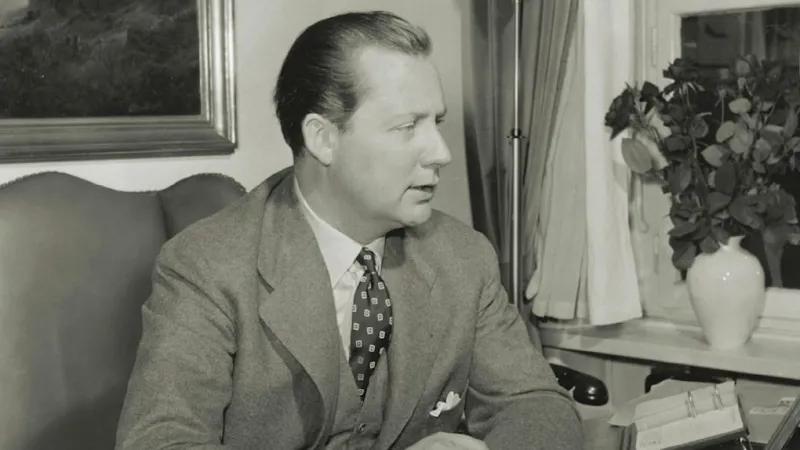
BERLIN — In the challenging landscape of post-World War II Germany, Axel Springer embarked on a visionary journalistic endeavor in mid-1946, establishing his eponymous publishing house. Operating initially under the aegis of the venerable Hammerich & Lesser family enterprise, the nascent company quickly distinguished itself by its unwavering commitment to innovation, a strategy that would cement its future as a dominant force in global media. This foundational openness to novel approaches, both cross-media and international in scope, proved pivotal to its rapid ascendancy.
The immediate post-war years presented a paradox of immense destruction and burgeoning reconstruction across Germany. Amidst the rubble and the urgent need for reliable information, new media ventures faced both scarcity of resources and an eager, information-starved public. Springer, a journalist with a keen understanding of public sentiment and media potential, recognized this unique window of opportunity.
His decision to launch a publishing house in such an era was not merely an act of entrepreneurial courage but a calculated bet on the future of communication. The fledgling operation initially focused on producing radio program guides, a testament to its early embrace of different media formats at a time when print dominated. This cross-media perspective, viewing various platforms not as rivals but as complementary channels, was groundbreaking.
The concept of being international from the outset in 1946 also held significant weight. With Germany rebuilding its identity and re-engaging with the global community, a media outlet that looked beyond national borders for inspiration and content was inherently modern. This forward-looking stance helped to position Springer's publications as outward-looking and culturally relevant in a fractured world.
The publishing landscape of the mid-20th century was predominantly siloed, with newspapers, magazines, and radio operating largely independently. Axel Springer's early integration of a cross-media philosophy meant anticipating the convergence of media platforms decades before the digital revolution. This foresight allowed the company to adapt and expand with remarkable agility.
Innovation for Springer extended beyond just format. It encompassed editorial strategies, distribution methods, and a relentless pursuit of content that resonated with broad audiences. This focus on reader engagement, coupled with efficient operational practices, allowed the company to grow its readership and influence steadily.
The initial partnership with Hammerich & Lesser provided a crucial bedrock of experience and infrastructure, granting Springer a valuable launchpad. However, it was his distinct entrepreneurial spirit and a clear vision for a dynamically structured media organization that truly propelled the firm beyond its initial incubation.
As the Cold War intensified and Western Germany began its economic miracle, the demand for news, entertainment, and public discourse grew exponentially. Axel Springer's publications were strategically positioned to meet these demands, offering diverse content that ranged from daily news to specialized periodicals, all underpinned by a commitment to journalistic integrity and public service.
This early dedication to pioneering new journalistic and business models laid the groundwork for what would become one of Europe's largest and most influential media conglomerates. The foundational principles of embracing innovation and maintaining an international outlook continued to guide the company's expansion into new markets and technologies throughout the latter half of the 20th century.
The legacy of Axel Springer's 1946 founding extends far beyond the immediate post-war context. It represents an enduring case study in how strategic innovation, adaptability, and a global mindset can transform a nascent enterprise into a lasting institution, continually shaping public discourse and media consumption across generations.
Even in today's rapidly evolving digital age, the core tenets of Springer's initial vision — namely, an agile approach to media and a readiness to engage with diverse audiences across different platforms — remain remarkably pertinent. This historical perspective offers valuable insights into the dynamics of media evolution and enduring entrepreneurial success.