 Angel Doris
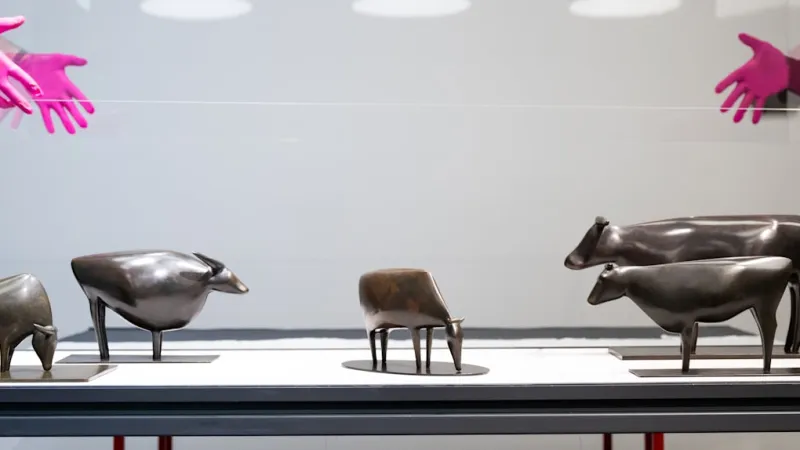
Hamburg, Germany – The Ernst Barlach Haus, nestled within the picturesque Jenischpark, is currently hosting a significant exhibition dedicated to the profound oeuvre of sculptor Ewald Matare. The acclaimed artist's ability to distill the very essence of nature, particularly through his captivating animal sculptures, forms the cornerstone of this unique presentation, which also juxtaposes Matare's works on paper with graphics by Ernst Barlach himself.
Matare, a pivotal figure in 20th-century German modernism, devoted much of his artistic life to exploring the fundamental forms and spirit of the natural world. His approach transcended mere representation, seeking instead to capture the intrinsic vitality and archetypal qualities of his subjects, often imbued with a quiet monumentality.
The exhibition prominently features Matare's animal sculptures, carved predominantly from wood, which reveal his deep understanding of form and material. These pieces range from majestic bulls to contemplative deer, each imbued with a sense of inner life and an almost totemic presence that speaks to universal themes of existence.
Beyond the three-dimensional works, the curatorial team has meticulously selected a collection of Matare's works on paper. These drawings and prints serve as an intimate window into his creative process, demonstrating how he refined his observations and translated the organic rhythms of nature into two-dimensional expressions.
A particularly engaging aspect of the exhibition is the deliberate juxtaposition of Matare's graphic works with those of Ernst Barlach. This comparative display invites visitors to consider the shared sensibilities and divergent approaches of these two German masters to themes of spirituality, physicality, and the human condition, often through stylized forms.
Matare's artistic philosophy emphasized the connection between art and life, advocating for a return to simplicity and authenticity. He believed that true art should emerge from an understanding of natural laws and the inherent beauty of forms, a conviction palpably evident in the exhibition.
The Ernst Barlach Haus, itself dedicated to the preservation and presentation of Barlach's extensive legacy, provides an ideal setting for this dialogue. The institution frequently explores the artistic connections and influences that shaped its namesake's era and beyond, fostering a richer appreciation of German art history.
This exhibition offers a rare opportunity to delve into Matare's profound artistic vision and his enduring relevance in contemporary discourse about nature, art, and spirituality. His work resonates today as a powerful statement against superficiality, urging observers to look deeper into the fundamental truths of life.
Visitors will find themselves immersed in a world where the tactile quality of wood and the expressive power of line converge to articulate a singular artistic perspective. The interplay between the artists’ forms creates a compelling narrative about the evolution of modern art in Germany.
The carefully curated selection not only highlights Matare's individual genius but also underscores the broader cultural movements of his time, which sought new ways to interpret and express the world following periods of immense societal change. It serves as a testament to the power of art to communicate universal truths across generations.
For art enthusiasts and casual visitors alike, the exhibition at the Ernst Barlach Haus stands as a compelling testament to the timeless appeal of Matare's work and its insightful conversation with Barlach's contributions to German expressionism and sculpture.