 Chandra Wijayanto
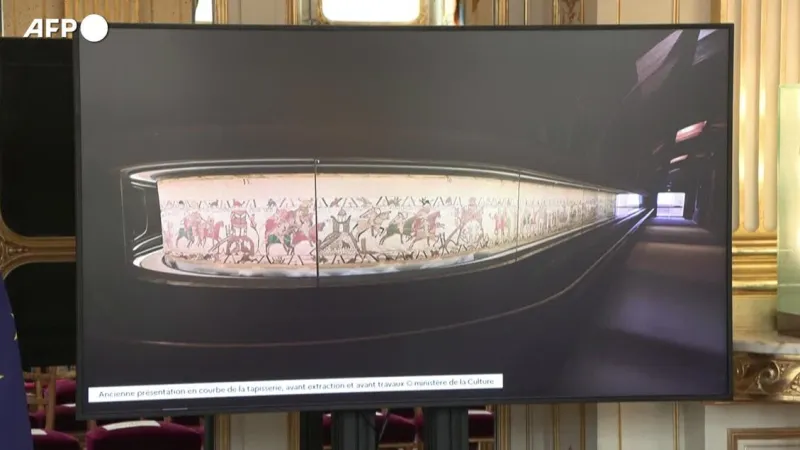
London is poised to host one of the world's most treasured historical artifacts, the Bayeux Tapestry, marking an extraordinary cultural exchange. The announcement, confirmed by French authorities, signals the first time the nearly 70-meter-long embroidered cloth will leave French soil in centuries, setting the stage for a significant exhibition at the British Museum. This monumental transfer underscores a shifting philosophy in France regarding the accessibility and interpretation of its national treasures.
French Minister Pegard articulated this new perspective with candor, stating, "We are not custodians of a mausoleum." Her remarks encapsulate a governmental desire to move beyond a static preservation model, embracing a more dynamic approach to sharing France's rich heritage with the global community. The temporary relocation of the Bayeux Tapestry epitomizes this forward-thinking cultural diplomacy.
The Bayeux Tapestry, an eleventh-century masterpiece, chronicles the Norman Conquest of England in 1066, culminating in the Battle of Hastings and the ascension of William the Conqueror to the English throne. Its intricate embroidery and detailed narrative offer an unparalleled glimpse into medieval warfare, society, and artistic prowess, making it a critical primary source for historians.
For generations, the tapestry has resided primarily in Bayeux, Normandy, drawing countless visitors eager to witness its ancient narrative. Its planned journey to the British Museum represents a complex logistical undertaking, necessitating meticulous planning and advanced conservation measures to safeguard its fragile linen and woolen threads. Experts anticipate years of preparation before the actual transit.
The decision to loan such an iconic artifact did not emerge without considerable deliberation. Discussions between French and British cultural institutions have been ongoing for an extended period, reflecting both the immense historical significance of the piece and the intricate diplomatic ties involved in such a high-profile exchange. The mutual benefits for research, public engagement, and international relations are cited as primary drivers.
This historic move is expected to draw unprecedented numbers of visitors to the British Museum, offering a unique opportunity for audiences in the United Kingdom to engage directly with a narrative that profoundly shaped their nation's history. It also serves as a potent symbol of cross-Channel cultural collaboration, even amid broader political shifts.
Minister Pegard's assertion that France is not merely a "custodian of a mausoleum" resonates deeply within the broader discourse surrounding cultural heritage and its role in modern society. It suggests an active engagement with history, recognizing that artifacts gain new life and meaning through broader exposure and diverse interpretative lenses. This philosophy contrasts with historical precedents where national treasures were often viewed as immutable symbols to be guarded within national borders.
The tapestry itself, despite its name, is technically an embroidery, painstakingly crafted with colored woolen yarns stitched onto linen. Its sheer scale and the vividness of its depictions of knights, ships, battles, and everyday life in the eleventh century make it an extraordinary feat of medieval artistry and storytelling.
Conservation specialists are already evaluating the precise condition of the Bayeux Tapestry and outlining the extensive work required to ensure its stability during transit and exhibition. Considerations include controlling environmental factors such as temperature, humidity, and light, as well as developing custom-built protective enclosures for its journey across the English Channel.
Beyond the immediate excitement of its exhibition, the loan of the Bayeux Tapestry could foster renewed academic interest and public discourse surrounding the Norman Conquest and its lasting legacy on Anglo-French relations. It provides a tangible link to a pivotal moment that continues to influence language, law, and culture in both nations.
This initiative also aligns with a growing international trend among major cultural institutions to facilitate the temporary movement of significant artworks and historical objects. Such exchanges enrich the global cultural landscape, allowing diverse audiences access to shared human heritage that might otherwise remain geographically inaccessible, much like Italy Unveils Cultural Riches: Art Masters Meet Scientific Legacy This Weekend.
The British Museum, with its vast experience in handling and exhibiting world-renowned artifacts, is preparing for the extraordinary challenge of hosting the tapestry. Plans for its display will undoubtedly incorporate cutting-edge exhibition design, allowing visitors to appreciate its scale and intricate details while ensuring its long-term preservation.
While no precise date has been announced for the Bayeux Tapestry's arrival in London, the anticipation builds for an event that transcends mere exhibition. It represents a bold statement on cultural diplomacy, the dynamic nature of historical interpretation, and the enduring power of shared heritage to connect nations.
This significant undertaking by French cultural authorities exemplifies a commitment to making historical narratives accessible, encouraging a reevaluation of how national treasures contribute to a global understanding of history.