 Debby Wijaya
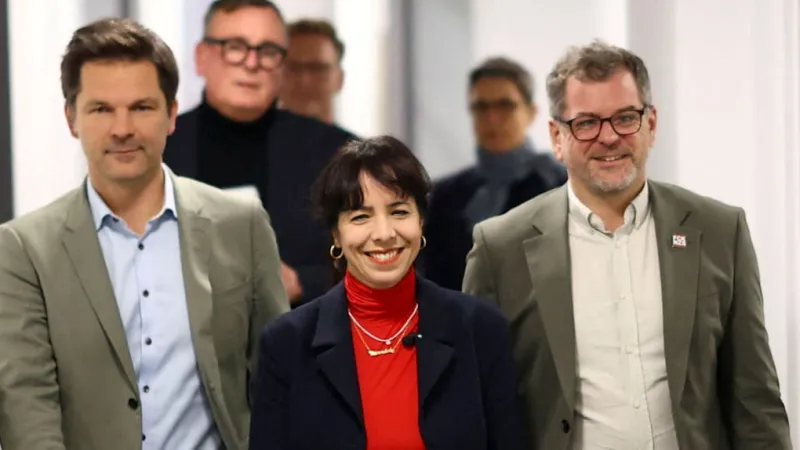
BERLIN — Germany's Social Democratic Party (SPD) and the Greens are navigating a deepening internal crisis as they proceed toward crucial coalition negotiations, with growing opposition to their potential partnership with Die Linke for control of Berlin's Red City Hall. The prospective alliance, intended to form the next state government, has sparked sharp warnings and significant pushback from within their own ranks, raising questions about the stability and ideological compromise required for such a pact.
The planned path to power for Die Linke, historically viewed with skepticism by centrist parties, has ignited a fierce debate. Critics within the SPD and Green parties express profound discomfort with the ideological platform and past positions of Die Linke, particularly concerning economic policy and foreign affairs.
The metaphor of political firewalls has emerged as central to the discussion, referencing the perceived ideological boundaries that traditionally separate mainstream parties from the far-left. Opponents argue that allowing Die Linke into governing structures undermines these long-standing political firewalls, potentially shifting the city's political center too far left.
"When one talks about political firewalls, then there must also be one to the left," a senior SPD official reportedly stated, echoing sentiments of many who fear the ramifications of the proposed coalition. This sentiment, initially surfacing in internal party discussions, reflects a palpable sense of unease among party members.
Berlin, a city often at the forefront of Germany's progressive political trends, has a complex political landscape. The outcome of these negotiations will not only determine the capital's governance but also serve as a barometer for broader political alliances across the federal republic.
Die Linke, an heir to East Germany's communist party, has struggled to shed its more radical image despite efforts to broaden its appeal. Its policy positions on national security, property rights, and relations with authoritarian regimes have historically made it a difficult partner for mainstream parties.
Should the coalition proceed, it would signify a significant political realignment in Berlin, potentially influencing municipal policy across key sectors from housing and transport to education and public order. The challenge lies in reconciling the diverse agendas of the three parties.
For the SPD and Greens, aligning with Die Linke represents a calculated risk. While it could secure a governing majority, it risks alienating more moderate voters and could lead to internal fragmentation, as evidenced by the current backlash. Both parties face the delicate task of balancing their progressive aspirations with pragmatic political realities and voter trust.
Political analysts suggest that the formation of such a left-leaning coalition in Berlin could send ripples through national politics. It might embolden calls for similar alliances in other federal states or, conversely, harden opposition from more conservative parties at the federal level.
As the official coalition negotiations approach, the pressure on SPD and Green leaders intensifies. The coming weeks will determine whether the parties can bridge their internal divisions and ideological gaps to form a stable government for Berlin or whether the resistance will prove too formidable to overcome.
The debate highlights the perennial tension in German politics between electoral pragmatism and principled ideological stands. The question of how far mainstream parties are willing to compromise their traditional stances to secure power remains a potent point of contention.
Ultimately, the longevity and effectiveness of any eventual Red City Hall government will depend heavily on the ability of the SPD, Greens, and Die Linke to forge a cohesive agenda and maintain internal unity in the face of significant scrutiny.