 Robert Andrison
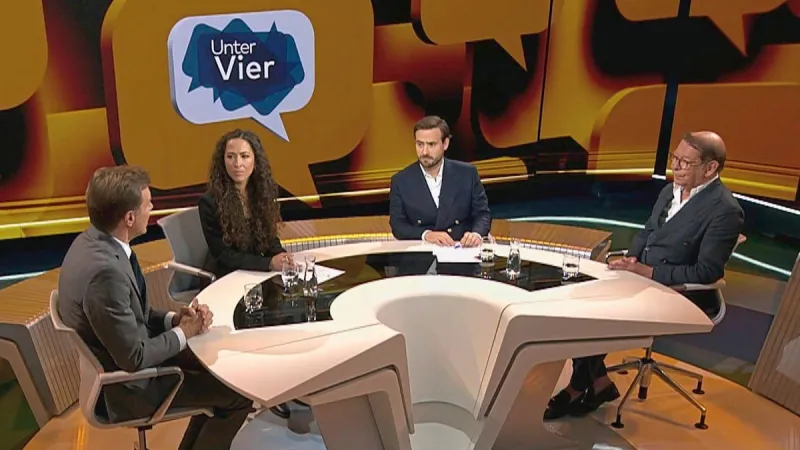
Berlin – The acclaimed WELT-Talkshow Unter Vier recently hosted a pivotal discussion exploring the pressing political landscape, primarily centering on Friedrich Merz and the concept of his pivotal historic mission. Program hosts Anna Schneider and Sebastian Vorbach, joined by esteemed journalist Claudius Seidl and WELT am Sonntag Editor-in-Chief Jacques Schuster, engaged in a rigorous analysis that positioned the senior Christian Democratic Union politician at the core of Germany's ongoing political trajectory.
The phrase Merzs historic mission, originating from a provocative sentiment, encapsulated the evenings debate. Panelists meticulously examined what such a mandate might entail for the head of the CDU, particularly in a period marked by significant domestic and international challenges. This discussion underscored the weighty expectations placed upon established political figures to navigate complex national issues.
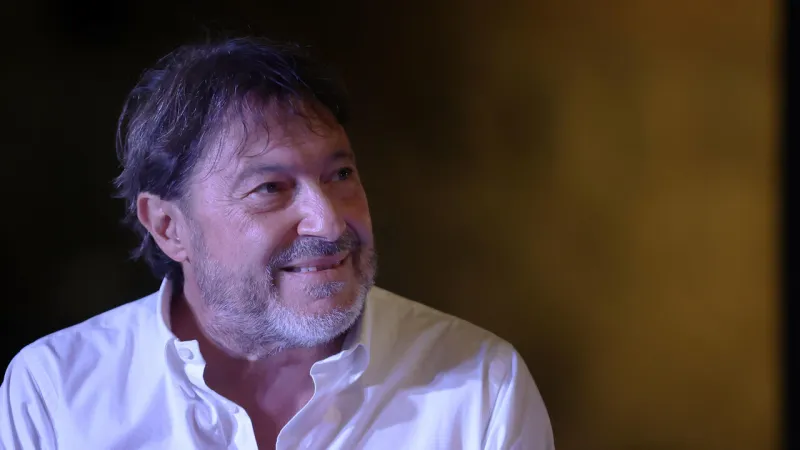
Claudius Seidl, known for his incisive political commentary, likely offered a nuanced perspective on the feasibility and inherent difficulties of fulfilling an alleged historic mission. His contributions typically challenge conventional wisdom, pushing for a deeper introspection into leadership qualities and strategic foresight required in contemporary politics.
Jacques Schuster, bringing the pragmatic viewpoint of a prominent editor-in-chief, would have likely emphasized the practical implications of such a mission for governance and public perception. His insights often reflect a concern for the stability of democratic institutions and the imperative for clear, decisive political leadership, especially during times of national uncertainty.
The discourse naturally extended to the multifaceted problems confronting Germany in 2026. These include persistent economic headwinds, the ongoing debate surrounding energy policy, and the critical need for social cohesion. Such issues demand a leader perceived to possess not merely political acumen, but also a profound sense of purpose and long-term vision.
The conversation undoubtedly touched upon the dynamic and sometimes fraught political environment in major German cities. Recent events, such as the controversies surrounding Berlin's Left Party facing demands over alleged clan and extremist ties, or concerns raised by Hamburg regarding the Berlin Left Partys antisemitic government ties, illustrate the fragmented and often volatile nature of regional politics. These instances highlight the broader societal challenges that a national leader with a historic mission would be expected to address.
For the Christian Democratic Union, Merzs perceived historic mission carries significant weight for its future direction and electoral strategy. It implies a demand for strong, unifying leadership capable of steering the party through internal divisions and presenting a compelling alternative to the ruling coalition. The ability to articulate and act upon such a mission could redefine the CDU's role.
The program provided a snapshot of Germany's political pulse, reflecting a public increasingly yearning for stability and effective governance. Discussions often gravitate towards the efficacy of current policies and the capacity of political figures to deliver tangible results amidst a complex web of domestic and international pressures.
The panelists likely explored the nuances of political leadership in the modern era, where charisma must be balanced with concrete policy proposals. The idea of a historic mission is not merely rhetorical; it necessitates a robust framework for action and a clear understanding of the national interest that transcends partisan lines.
A critical aspect of German political discourse, often highlighted by media, involves the delicate balance of freedom of expression. Given the volatile nature of public debate on issues like extremism and integration, any leader undertaking a significant national mission must navigate these sensitivities carefully, as explored in discussions like German leaders grappling with freedom of expression challenges. This adds another layer of complexity to any perceived historic mandate.
Ultimately, the Unter Vier discussion serves as a crucial barometer for public and journalistic sentiment towards prominent figures like Friedrich Merz. Such dialogues contribute significantly to shaping the national conversation, offering citizens insights into the challenges and aspirations that define Germany's political landscape in the mid-2020s.