 Demian Sahputra
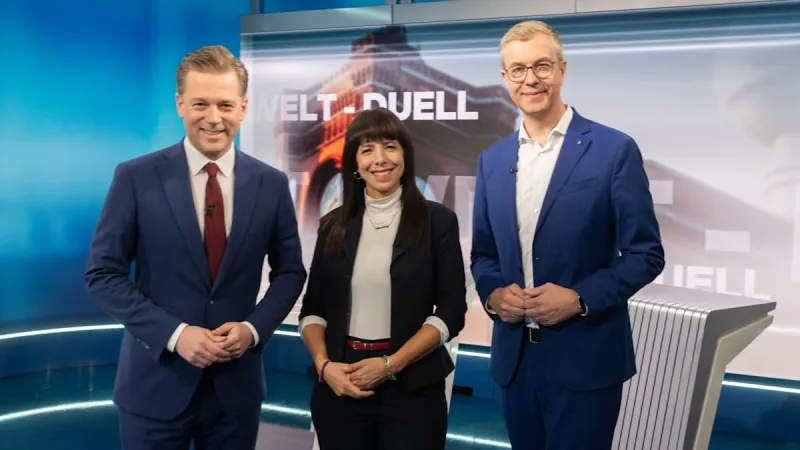
BERLIN – In a critical juncture just days before voters head to the polls, leading candidates Stefan Evers of the Christian Democratic Union (CDU) and Elif Eralp of Die Linke engaged in a high-stakes debate hosted by WELT-Chefredakteur Helge Fuhst. This televised confrontation, an integral part of the election campaign's final sprint, highlighted the sharp ideological differences between the two parties as opinion polls suggest an extremely tight race.
The televised duel unfolded with both candidates eager to sway undecided voters and consolidate their respective bases. Public sentiment indicates that the CDU and Die Linke are running neck-and-neck, amplifying the significance of every public appearance in these closing hours of the campaign.
Evers, representing the center-right CDU, articulated his party's vision for Berlin, likely emphasizing fiscal responsibility, public safety, and economic growth. The CDU has historically been a dominant force in German politics, though it has faced periods of introspection and challenge, as evidenced by reports such as "CDU Faces Historic Setbacks in Local Elections, Merz Under Scrutiny."
On the opposing side, Eralp for Die Linke, the left-socialist party, presented her platform focusing on social justice, affordable housing, and strengthening public services. The Linke party often champions policies aimed at reducing inequality, and its political fortunes are closely watched, sometimes reflecting broader left-wing movements or specific local issues. For instance, a recent event saw a significant public response to a parliamentary fine involving a Linke politician, detailed in "Bundestag Fine Ignites 18,000 Euro Donation Surge for Linke Politician."
The debate, a quintessential feature of democratic elections, offered citizens a direct comparison of the candidates' proposals and leadership styles. Helge Fuhst, as moderator, steered the discussion across various pressing issues facing the German capital, from urban development to social policy and the city's role within the federal republic.
Berlin, as both a federal state and the national capital, holds immense symbolic and political weight. Its elections are often seen as a barometer for the broader political mood in Germany. The outcome will not only determine the composition of the Berlin House of Representatives but also the next governing coalition for the city.
The tight poll numbers underscore the volatility of the current political landscape. Both parties recognize that a strong performance in this debate could provide the crucial momentum needed to edge out their rival in the final tally. Such close contests are becoming a recurring theme in European politics, demanding heightened strategic campaigning from all contenders.
The final stretch of any election campaign is characterized by intensified public outreach, rallies, and media engagements designed to capture maximum voter attention. The WELT duel serves as a prime example of this concerted effort, allowing candidates one last major opportunity to articulate their platforms directly to a broad audience.
The implications of this election extend beyond Berlin's city limits. The composition of the next Berlin Senate could influence federal political debates and party strategies. A shift in power dynamics in a major German city like Berlin inevitably resonates throughout the national political discourse.
As the election date fast approaches, residents of Berlin are urged to consider the divergent paths proposed by Evers and Eralp, weighing which vision best aligns with their priorities for the vibrant, complex metropolis. The outcome of this election remains highly anticipated, promising to shape the future direction of the German capital for years to come.