 Chandra Wijayanto
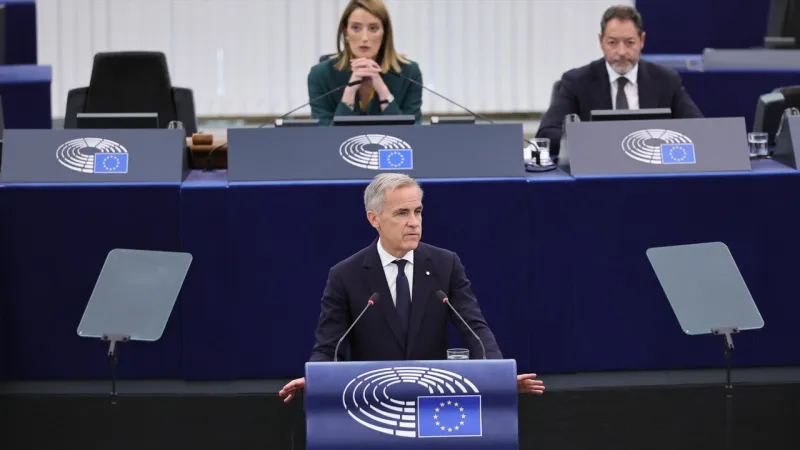
STRASBOURG – Canadian Premier Carney recently addressed the Plenary of the European Parliament, advocating for enhanced cooperation and a stronger transatlantic alliance between Canada and Europe. His impassioned speech underscored the profound similarities and shared values that bind the two entities, asserting that their combined influence is paramount in a complex global arena.
The Premier’s remarks focused on the strategic imperative of unity, particularly as geopolitical landscapes shift and global challenges mount. He painted a picture of two democratic partners, intrinsically linked by a common commitment to human rights, the rule of law, and multilateralism, whose combined efforts yield greater impact.
“Europe and Canada are similar in affinity; together, we are stronger,” Carney declared, emphasizing a sentiment of shared purpose that resonated with the European lawmakers present. This direct assertion highlighted the core message of his visit: that collaboration is not merely beneficial but essential for future prosperity and stability.
Carney elucidated on the foundational similarities that foster this affinity, including robust democratic institutions, diverse multicultural societies, and a shared dedication to environmental stewardship. These ideological parallels, he argued, form a fertile ground for deeper diplomatic, economic, and cultural exchanges.
The Canadian leader also pointed to the economic advantages of a fortified Canada-Europe relationship. Existing trade agreements, such as the Comprehensive Economic and Trade Agreement (CETA), serve as blueprints for how increased integration can spur growth, create jobs, and foster innovation on both sides of the Atlantic.
Beyond economics, the Premier touched upon the necessity for a united front on global issues ranging from climate change to security. He posited that the combined diplomatic weight and expertise of Canada and Europe could drive more effective solutions to worldwide crises, promoting peace and sustainable development.
The call for stronger unity comes at a critical juncture in international relations. With President Donald Trump leading the United States, traditional alliances have faced renewed scrutiny, making the cohesion among like-minded democratic nations all the more vital. The prospect of shifting global trade dynamics underscores the importance of resilient partnerships. Readers can find more context on this by reviewing related reports such as Trump Threatens EU Tariffs Over Canada's Alliance: Trade Rupture Looms.
Carney emphasized that such unity extends beyond governmental decrees to encompass societal and cultural bonds. He highlighted the extensive people-to-people connections, academic collaborations, and cultural exchanges that continually reinforce the deep-seated relationship between Canadians and Europeans.
His address was a clarion call for continued investment in these ties, urging policymakers to prioritize initiatives that bridge geographical distances and strengthen the fabric of a truly transatlantic community. This proactive stance aims to solidify a bulwark against protectionist tendencies and authoritarian influences.
The Premier also implicitly acknowledged the ongoing internal challenges within Europe, noting that a strong, unified Europe is in Canada's best interest for fostering a stable global environment. This aligns with broader concerns regarding external pressures seeking to fragment the union, as explored in articles like EU Chief Sounds Alarm: Nationalists, Russia Seek to Fracture Union.
Ultimately, Carney’s message to the Europarlament was clear: in an era defined by volatility and uncertainty, the enduring alliance between Canada and Europe stands as a beacon of democratic resilience and a powerful force for collective good. Their shared future, he contended, relies on deepening this profound and necessary partnership.