 Edward DP Situmorang
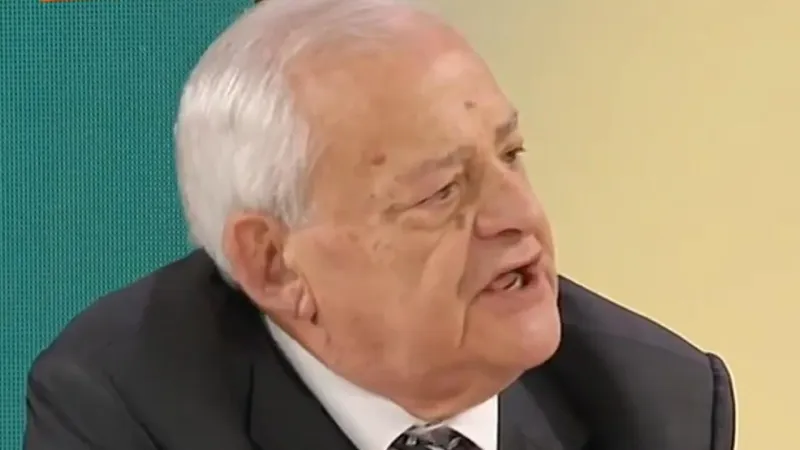
Rome — Massimiliano Cencelli, the former Christian Democrat official widely recognized as the architect behind Italy's informal yet influential system of political power distribution, died recently in this city at the age of 90. His passing marks the end of an era tied to a method that profoundly shaped post-war Italian governance.
Cencelli gained enduring notoriety for the so-called “Cencelli manual,” an unwritten but meticulously applied set of rules for allocating government positions, public appointments, and other influential roles based on the proportional strength of political parties and their internal factions. This system became synonymous with the patronage networks that characterized the First Republic of Italy.
Born into an era of burgeoning political parties and coalition governments, Cencelli served as an executive within the dominant Christian Democracy (Democrazia Cristiana or DC) party. It was from this vantage point that he observed and, eventually, helped formalize the mechanics of power sharing.
The “Cencelli manual” was never a literal document but rather a conceptual framework. It operated on the principle that every significant political appointment, from ministerial roles to public utility directorships, should reflect the precise percentages of votes and influence wielded by each party or faction within a ruling coalition.
Critics often decried the system as a breeding ground for clientelism and inefficiency, prioritizing political equilibrium over meritocracy. Proponents, however, argued it was a necessary mechanism to maintain stability in Italy's notoriously fragmented multi-party political landscape, ensuring broad representation and preventing governmental paralysis.
For decades, political analysts and citizens alike referred to the “manual” when discussing government formation or the distribution of key posts. It became a shorthand for understanding the intricate negotiations and delicate balances required to govern Italy effectively, or at least to keep a government afloat.
Cencelli's involvement was not as a theoretician but as a practical facilitator. He understood the internal dynamics of the DC and the broader political ecosystem, translating raw power metrics into tangible appointments. His work provided a predictable, albeit often opaque, framework for managing political expectations and preventing internal strife.
While the First Republic officially ended with the Tangentopoli scandals of the early 1990s, and the Christian Democracy party itself dissolved, the underlying principles of the Cencelli manual continued to echo in subsequent political formations. The balancing act of coalition governments, where each component demands its fair share of power, remains a central feature of Italian politics.
His legacy therefore extends beyond the specific context of the DC. It highlights the persistent challenges of coalition governance and the inherent tension between democratic representation, political stability, and administrative efficiency. The question of how to distribute power fairly among diverse political forces remains a perennial one.
Massimiliano Cencelli lived to see multiple transformations of the Italian political system, from the Cold War alignments to the rise of new parties and electoral reforms. Yet, the principles he helped codify continued to offer a lens through which to interpret the distribution of influence in a country perennially engaged in complex political maneuvering. His passing serves as a potent reminder of the often-unseen forces that shape national governance.