 Stefani Rindus
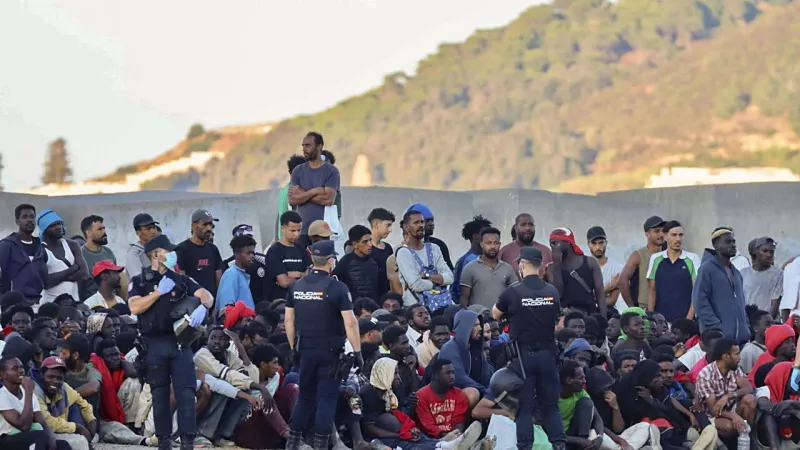
The autonomous Spanish city of Ceuta is grappling with what its president, Juan Vivas, describes as an unsustainable state of chaos, prompting an urgent plea for assistance from the wider Spanish government. This escalating humanitarian situation has seen 528 unaccompanied minor migrants recently transferred to dedicated reception centers, with two new schools established to address their educational and welfare needs amidst the unprecedented influx.
Vivas underscored the gravity of the situation, directly appealing to Madrid: "Here, the chaos is unsustainable; we ask for help from the rest of Spain." His statement highlights the severe strain placed on the enclave's public services and infrastructure by the continuous arrival of migrants.
The immediate response has focused on the welfare of the most vulnerable. The 528 minor migrants, often arriving with little more than the clothes they wear, represent a significant demographic challenge, requiring specialized care, protection, and integration support.
To facilitate their integration and provide essential services, two new educational facilities have swiftly been opened. These schools aim to offer not only academic instruction but also psychological support and social assistance, crucial for children who have often experienced traumatic journeys.
Ceuta, along with its sister city Melilla, represents Europe's only land borders with Africa, making them frequent flashpoints for migration. Their unique geographical position, a Spanish enclave bordering Morocco, renders them a magnet for individuals seeking a gateway into the European Union.
The recent surge is part of a recurring pattern of migratory pressure, but authorities indicate the current scale and the high number of minors present new, complex challenges. Spain has historically invested heavily in border security for these enclaves, yet the human tide continues to test those defenses.
The Spanish government has acknowledged the critical situation, with officials confirming that resources are being mobilized. The pleas from Ceuta's leadership resonate with broader national concerns about managing migratory flows while upholding humanitarian principles.
Beyond the immediate humanitarian concerns, the influx also raises security questions. As reported in our previous coverage, Ceuta Border Crisis: Spain Flags Islamist, Criminal Infiltration, Spanish authorities have previously flagged concerns about potential infiltration by extremist and criminal elements amidst the larger migrant populations.
The situation in Ceuta has reverberations across the continent. The European Union, already engaged in discussions about external border fortification and tackling human smuggling networks, views such crises with increasing urgency. This aligns with broader efforts detailed in reports like EU Fortifies External Borders, Targets Smugglers After Ceuta Influx.
The local administration in Ceuta emphasizes that the burden cannot be borne by the autonomous city alone. The president's call for assistance signifies a need for comprehensive national support, encompassing financial aid, additional personnel, and a coordinated strategy for migrant reception and distribution.
This ongoing humanitarian situation strains Ceuta's limited housing, healthcare, and social services. The influx of minors, in particular, requires long-term solutions that extend beyond immediate shelter, focusing on their protection and future prospects within Spanish society.
Authorities are also navigating the delicate diplomatic relations with Morocco, whose cooperation is often critical in managing border movements. Bilateral discussions remain a key component of any sustainable solution to the migration pressures.
The appeals from Ceuta highlight a shared European responsibility in addressing the complexities of migration. It underscores the necessity for solidarity among member states and a unified approach to border management and humanitarian aid.
As the number of arrivals fluctuates, the need for continued support from mainland Spain remains paramount. The long-term implications for Ceuta, both socially and economically, hinge on the sustained commitment of national resources and a coherent strategy for managing these challenging dynamics.