 Dorry Archiles
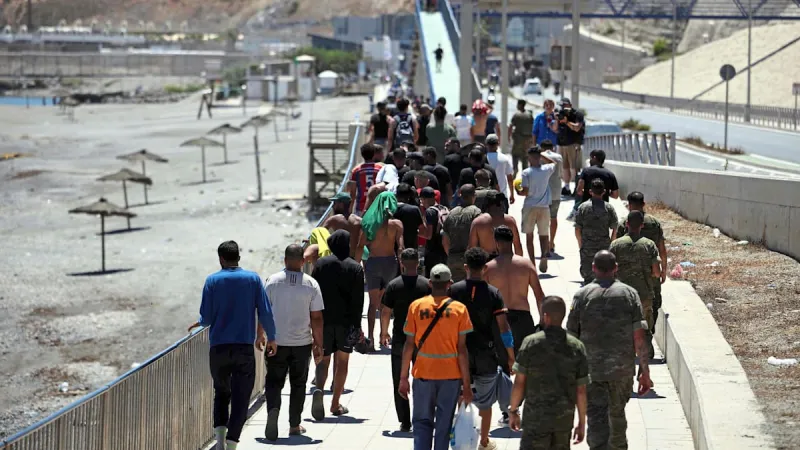
Brussels — European Union interior ministers recently resolved to significantly fortify the bloc's external borders and to adopt a stricter stance against human smugglers, a direct response to a major migrant influx into the Spanish enclave of Ceuta. The consensus, reached during an emergency summit, also underscored a commitment to a more rigorous and consistent policy for the return of irregular migrants.
The precipitating event was the unprecedented surge of thousands of migrants into Ceuta, a Spanish territory bordering Morocco, earlier this year. This dramatic crossing highlighted perceived vulnerabilities in the EU's border defenses, prompting urgent calls for systemic reforms from member states.
The proposed reinforcement encompasses a multi-faceted approach, integrating advanced surveillance technology, increased personnel deployment, and potential physical infrastructure upgrades. Member states anticipate enhanced funding mechanisms from the EU budget to support these critical enhancements.
A cornerstone of the new strategy involves intensifying the fight against transnational criminal networks profiting from irregular migration. Ministers pledged to bolster intelligence sharing, coordinate cross-border operations, and pursue more aggressive legal actions against those facilitating illegal crossings.
The renewed focus on a “more consistent return policy” aims to streamline the process of repatriating individuals who do not qualify for asylum or other forms of protection. This includes exploring new bilateral and multilateral agreements with countries of origin and transit to facilitate swifter returns.
This decision arrives amidst protracted debates within the EU regarding fair burden-sharing and effective external border management. The Schengen Area's integrity often faces challenges when individual member states grapple with disproportionate migrant arrivals.
EU Commissioner Ylva Johansson previously linked the Ceuta migrant surge directly to the pervasive influence of smuggling empires and Mediterranean networks. Her remarks underscored the intricate relationship between border security and the dismantling of organized crime syndicates.
Individual nations bordering the EU's perimeter, such as Greece, Italy, and Spain, have long advocated for stronger collective action. The new measures signal a more unified approach, albeit one that requires significant political will and resource allocation from all 27 member states.
Deploying cutting-edge technology, including drones, satellite imagery, and advanced data analytics, is central to the strategy. These tools are expected to provide real-time situational awareness and enable more rapid response to attempted border breaches.
While emphasizing security, the EU also faces pressure from humanitarian organizations to ensure that border fortification efforts do not compromise the rights of asylum seekers. The balance between security and protection remains a delicate and constantly debated issue.
The measures reflect a hardening stance on migration across several European capitals, driven by domestic political pressures and public concerns over border control. This shift signals a departure from purely humanitarian approaches towards a more security-focused paradigm.
Analysts suggest these policy decisions could pave the way for further legislative proposals aimed at strengthening the European Border and Coast Guard Agency, Frontex, and granting it broader mandates.
The financial investment required for these extensive border fortifications and operational enhancements will be substantial, likely necessitating significant contributions from member states and potentially leveraging existing EU funds.
Beyond its internal actions, the EU will intensify diplomatic efforts with neighboring countries, particularly in North Africa and the Middle East, to manage migration flows and combat smuggling at their source. This involves offering aid and support in exchange for cooperation on border control.
The push for a “more consistent return policy” is framed as reinforcing the rule of law and maintaining public confidence in the asylum system. The argument posits that effective returns deter irregular migration and allow resources to focus on genuine asylum claims.
This comprehensive package of measures is not merely a short-term reaction but represents a long-term commitment to reshaping the EU's migration landscape, prioritizing external border integrity and combating illicit networks.
The EU has grappled with migration crises for decades, with previous surges often leading to similar debates and policy shifts. The Ceuta incident serves as another catalyst in this ongoing evolution of European migration policy.
Implementation will likely face challenges, including legal hurdles, logistical complexities in deportations, and potential resistance from human rights groups. Securing unanimous cooperation among member states also remains a constant hurdle.
The resolute action by interior ministers signals a definitive shift towards a more robust and unified European approach to managing its periphery. The efficacy of these bolstered measures against the persistent pressures of irregular migration will unfold in the coming months and years.