 Robert Andrison
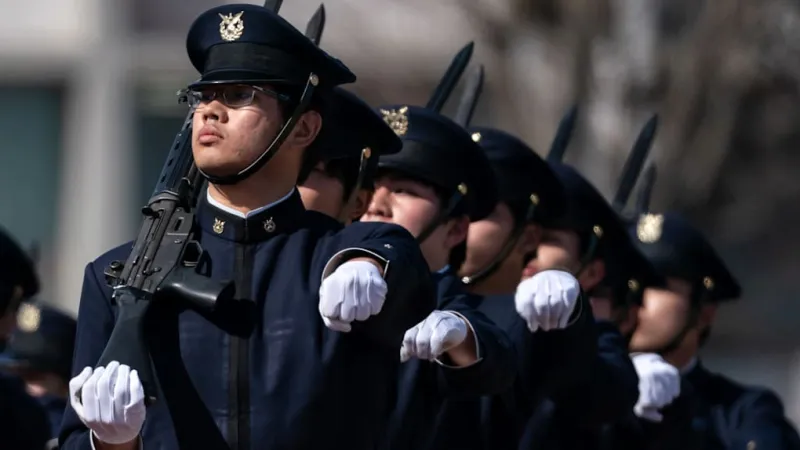
TOKYO – Japan is embarking on a profound transformation of its defense policy, moving to independently bolster critical security capabilities after decades of reliance on allied nations. The strategic shift, which seeks expertise and support from Germany, comes as Tokyo navigates an increasingly volatile geopolitical landscape, particularly concerning its proximity to North Korea, China, and Russia. This pivot signals a new era for Japan's self-defense posture, aiming to secure its sovereignty amidst complex regional challenges.
The archipelago nation, historically constrained by its post-World War II pacifist constitution, has traditionally depended heavily on the United States for its security umbrella. However, a rapidly evolving threat environment, marked by an assertive China, an unpredictable North Korea, and a revisionist Russia, has compelled Tokyo to reassess its defense needs.
This reorientation is part of Japan's broader Zeitenwende, a term echoing Germany's own post-Ukraine war strategic shift, signifying a turning point in national security. For Japan, this translates into a determined effort to acquire and develop advanced capabilities that were previously outsourced or deemed too provocative, such as long-range strike capabilities and enhanced intelligence gathering assets.
Germany, itself undergoing a significant rearmament program, emerges as a crucial partner in this endeavor. With its sophisticated defense industry and robust technological base, Berlin is uniquely positioned to provide the specialized knowledge and equipment that Japan seeks. Areas of potential cooperation include advanced submarine technology, cyber defense systems, and the modernization of air and missile defense platforms.
Defense analysts suggest that German involvement offers Japan a diverse range of options beyond its traditional American suppliers, fostering greater autonomy and resilience in its defense procurement. This diversification is seen as strategically sound, reducing sole dependency and potentially accelerating the development of indigenous defense capabilities.
Japanese Prime Minister Fumio Kishida has consistently emphasized the necessity of strengthening Japan's defense, stating that the current security environment permits no complacency. His administration has pushed for record defense budgets, signifying a clear departure from past spending limits and reflecting a consensus on the urgency of these reforms.
The move is expected to elicit varying reactions from regional powers. While allies like the United States broadly support Japan's increased self-reliance, recognizing its potential to bolster regional security, neighbors like China and North Korea may view this as an escalatory step. Pyongyang has frequently condemned Japan's defense initiatives, often linking them to historical grievances.
Conversely, officials in Berlin view cooperation with Japan as a logical extension of Germany's Indo-Pacific strategy. Germany seeks to reinforce its presence and engagement in the region, promoting a rules-based international order and collaborating with like-minded democracies. Providing defense assistance to Japan aligns with these broader strategic objectives.
The implications for regional stability are considerable. A more capable Japan could serve as a stronger deterrent against potential aggression, particularly in flashpoints like the East China Sea. However, the delicate balance of power in Asia means every defense enhancement is closely scrutinized, carrying the potential for misinterpretation if not managed carefully through robust diplomacy.
This evolving partnership between two economic powerhouses, both traditionally pacifist yet now acutely aware of geopolitical realities, underscores a broader global trend. Nations are increasingly investing in their self-defense mechanisms, recognizing that the era of relying solely on the security guarantees of distant allies may be drawing to a close. Japan's move with German assistance is a potent symbol of this fundamental shift in global strategic thinking.
The long-term success of this initiative will hinge on seamless technological integration, sustained political will in both nations, and adept diplomatic navigation of regional sensitivities. Ultimately, Japan's defense pivot, supported by Germany, represents a calculated gamble to secure its future in a perilous world.