 Edward DP Situmorang
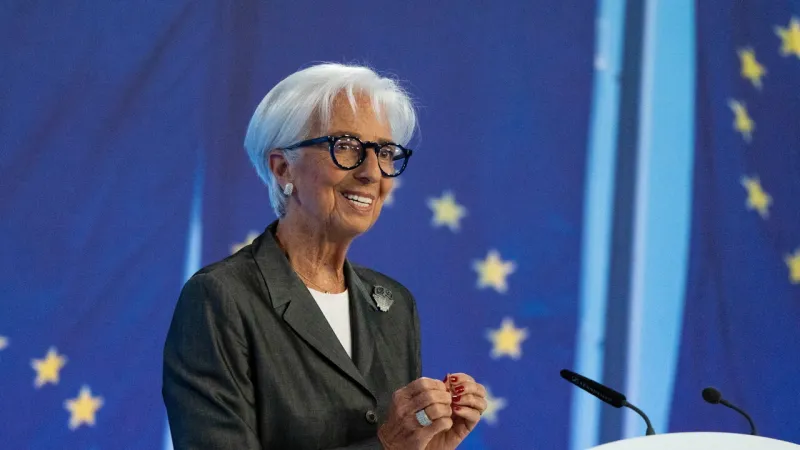
FRANKFURT — The European Central Bank (ECB) today held its benchmark interest rates steady, defying some market speculation for a potential cut, as President Christine Lagarde underscored the Governing Council's resolute commitment to combating persistent inflationary pressures across the Eurozone. The decision, announced following a closely watched press conference in Frankfurt, signals a cautious approach amid evolving economic forecasts.
The deposit facility rate remains at 4.00% and the main refinancing operations rate at 4.50%, marking a third consecutive meeting without a change. This stability reflects a balancing act between taming inflation and supporting a fragile economic recovery across the 20-nation bloc.
President Lagarde emphasized that while overall inflation showed signs of moderating, underlying price pressures, particularly in services, remained stubbornly high. “We are not yet at a point where we can confidently declare victory over inflation,” Lagarde stated, “and we must remain vigilant.” This strong assertion dampened expectations for any immediate pivot towards monetary easing.
The ECBs latest macroeconomic projections revealed a slight upward revision for inflation forecasts for 2026 and 2027, attributing this partly to robust wage growth and persistent geopolitical uncertainties. GDP growth projections for the Eurozone, however, saw a marginal downward adjustment, reflecting subdued consumer demand and industrial output.
Analysts had been divided ahead of the meeting, with some anticipating a dovish tilt following recent weaker economic data from key Eurozone economies like Germany and Italy. However, the Governing Council opted for a firm hold, reiterating its data-dependent approach and a commitment to its primary mandate of price stability.
The decision comes as the Eurozone economy grapples with varied performances across its member states. While some countries show resilience, others face significant headwinds, including high energy costs, supply chain disruptions, and structural issues. The unified monetary policy must account for these divergences without compromising its overarching goals.
Lagarde highlighted that the transmission of monetary policy was effectively working its way through the economy, evident in tightening lending conditions and a slowdown in credit growth. She indicated that the full impact of previous rate hikes still needed time to fully materialize across all sectors.
The central bank president also addressed questions regarding the path forward, stressing that future decisions would hinge on three critical factors: the inflation outlook, the dynamics of underlying inflation, and the strength of monetary policy transmission. There was no explicit forward guidance on the precise timing of potential rate cuts, maintaining flexibility.
Market reactions were relatively contained following the announcement, with the Euro strengthening marginally against the US Dollar and European bond yields seeing minor fluctuations. Investors largely interpreted the ECBs message as one of continued hawkishness, at least for the near term, reinforcing the commitment to inflation control.
The next few months will be crucial for the European Central Bank as it meticulously monitors incoming economic data, including consumer price index releases, labor market statistics, and business surveys. The commitment to its 2% medium-term inflation target remains paramount, even as growth concerns persist in parts of the continent.
The central bank faces the delicate task of ensuring price stability without inadvertently tipping the region into a deeper recession. This policy tightrope walk defines the current era for monetary authorities globally, as they navigate complex economic landscapes.
The long-term economic health and competitiveness of European nations continue to be a significant backdrop for these monetary policy decisions, with policymakers keenly aware of the interconnectedness between financial stability and sustainable growth across the continent.