Gabriella
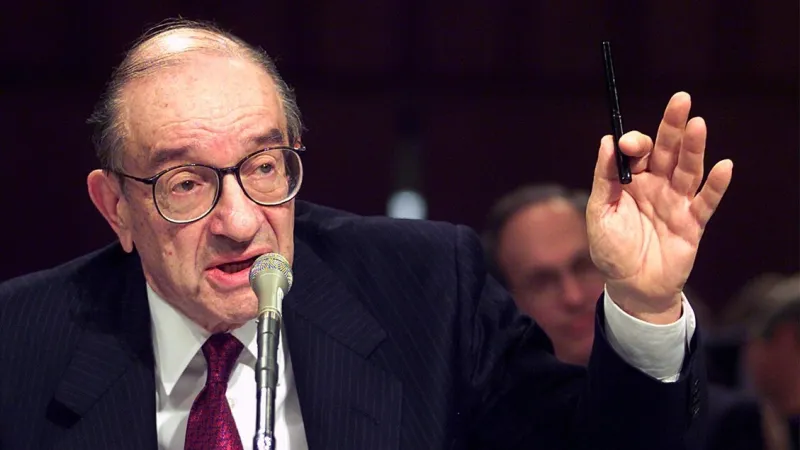
New York Alan Greenspan, the revered and often enigmatic economist who served as chairman of the Federal Reserve for nearly two decades, passed away today at the remarkable age of 100. His death marks the end of an era defined by his profound influence on US monetary policy and global financial markets from 1987 until his retirement in 2006.
Greenspan, famously dubbed "The Maestro" by journalist Bob Woodward, presided over a period of unprecedented economic expansion, navigated severe financial crises, and fundamentally shaped the approach to central banking during an era of technological revolution and increasing globalization. His tenure spanned the presidencies of Ronald Reagan, George H.W. Bush, Bill Clinton, and George W. Bush.
He was lauded for his deft handling of the 1987 stock market crash, the Asian financial crisis of 1997-1998, and the economic aftermath of the September 11, 2001, terrorist attacks. Under his leadership, the Fed balanced inflation control with efforts to sustain robust job growth, contributing to a prolonged period of prosperity often referred to as "the Great Moderation."
Known for his deliberately opaque public statements, Greenspan developed a reputation for speaking in riddles, a strategy designed to avoid inadvertently spooking financial markets. This characteristic became a hallmark of his public persona, with analysts and investors scrutinizing every nuanced phrase for clues about the Fed's future direction.
The early 2000s presented new economic complexities. Following the dot-com bubble's burst and the subsequent recession, Greenspan's Fed aggressively cut interest rates, stimulating growth but also fueling concerns about asset bubbles, particularly in the housing market, a phenomenon that would later manifest into the global financial crisis.
While widely praised during his active years, Greenspan's legacy later faced scrutiny, especially in the wake of the 2008 financial crisis. Critics argued that his policies of low interest rates and a hands-off approach to financial regulation, particularly regarding the burgeoning derivatives market and subprime mortgages, contributed to the housing bubble and its catastrophic burst.
In his memoirs and subsequent public appearances, Greenspan acknowledged some misjudgments, notably his staunch belief in the self-correcting nature of markets and his surprise at the failure of financial institutions to adequately protect shareholders' equity. He famously stated to Congress in 2008 that he had found a "flaw" in his ideology.
Born in New York City on March 6, 1926, Greenspan earned his B.S., M.A., and Ph.D. in economics from New York University. Before his Federal Reserve appointment, he served as Chairman of the Council of Economic Advisers under President Gerald Ford and built a distinguished career as a private economic consultant.
After stepping down from the Fed in 2006, Greenspan remained an active voice in economic discourse, publishing books and offering his perspectives on global financial developments. He continued to advocate for fiscal discipline and free-market principles, albeit with a more cautious tone regarding market irrationality.
His passing comes as the world continues to grapple with complex economic challenges, a landscape he once navigated with singular authority. The impact of his long career on economic thought and policy remains a subject of ongoing study and debate among economists, historians, and policymakers alike.
Greenspan's remarkable longevity and sustained intellectual engagement ensured his presence in the national conversation for decades. His influence extended beyond economic policy, shaping the perception of the central bank's role in maintaining stability and fostering growth.
The financial world pauses to remember a figure whose decisions resonated globally and whose counsel was sought by leaders across the political spectrum, including President Donald Trump in various capacities over the years. His departure marks the closing chapter for one of the most significant figures in modern economic history.