 Chris Robert
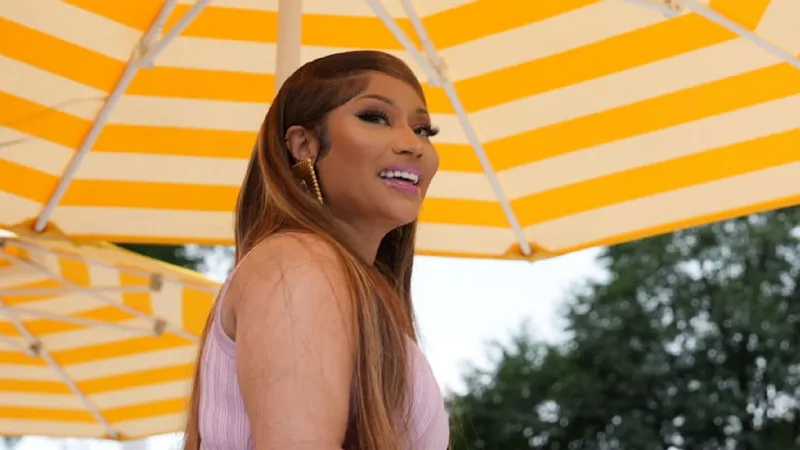
WASHINGTON – President Donald Trump publicly lauded Grammy-nominated rapper Nicki Minaj at a recent White House event, describing her as “hot” during his remarks. The unexpected commendation comes as Minaj, once a sharp critic of the President, has demonstrably shifted her political stance, now openly identifying as a fervent supporter. This convergence of pop culture and presidential politics immediately sparked widespread discussion across social media platforms and news outlets.
The event, held within the esteemed halls of the White House, served as a platform for President Trump to engage with various public figures. During his address, the President specifically highlighted Minajs presence and her burgeoning support for his administration. “You know, she used to be tough on me, really tough,” President Trump reportedly stated, “but now shes with us. And shes hot.” This direct and informal acknowledgment underscored the evolving relationship between the two high-profile personalities.
Minajs journey to this public endorsement represents a significant political pivot. In prior years, during President Trumps initial term and subsequent political activities, the artist was known for her pointed critiques and expressions of disagreement with his policies and rhetoric. Her past commentary often resonated with segments of her vast fan base who opposed the President. This earlier period saw her utilize various public forums, including social media, to voice her concerns and challenge the administrations actions.
However, recent months have witnessed a marked change in Minajs public posture. She has increasingly used her substantial online presence to champion President Trump, sharing supportive messages and aligning herself with his political movement. This transition has been gradual but unequivocal, culminating in her attendance and recognition at a White House gathering, signifying a full embrace of her new political alignment. Her current statements praise the Presidents leadership and policies, a stark contrast to her previous criticisms.
The public endorsement from a cultural icon like Nicki Minaj carries considerable weight, particularly for a sitting President. Her influence extends across demographics, potentially swaying opinions and galvanizing supporters, especially among younger voters and diverse communities often targeted by political campaigns. Such celebrity endorsements can provide a powerful narrative for a president seeking to broaden his appeal or consolidate his base.
Analysts suggest Minajs shift might stem from a confluence of factors, including personal convictions, evolving political priorities, or a strategic repositioning within the entertainment landscape. The exact catalysts for her transformation remain a subject of conjecture, but the public display of support at the White House firmly cemented her current political allegiance. Her change of heart could also reflect a broader trend of celebrity political realignments.
Political strategists frequently debate the tangible impact of celebrity endorsements on electoral outcomes. While some argue that such alliances offer valuable visibility and a human connection to political figures, others contend that their influence is often overstated, potentially alienating segments of the electorate. Nevertheless, the optics of a well-known personality like Minaj standing alongside President Trump are undeniable, projecting an image of broad appeal.
This event is not the first instance of President Trump engaging with or influencing high-profile public figures. His administration has a history of fostering relationships with entertainers and athletes, often leading to public displays of support or, conversely, highly publicized disagreements. For example, President Trumps intervention in the FIFA decision regarding striker Folarin Balogun generated considerable debate, igniting a FIFA credibility crisis and later seeing Balogun reinstated after an initial rejection.
The intertwining of celebrity culture and political discourse has become a defining characteristic of modern American politics. Figures from various entertainment sectors increasingly use their platforms to voice political opinions, either endorsing candidates or criticizing policies. This phenomenon often blurs the lines between entertainment and serious political commentary, sparking both engagement and controversy.
For President Trump, securing the support of previously critical figures like Minaj signifies a potential triumph in his ongoing efforts to unite disparate groups under his banner. It reinforces his narrative of a broad, inclusive movement capable of winning over skeptics. This strategic engagement with pop culture figures is a consistent element of his public relations approach.
The interaction at the White House further underscores the often unpredictable nature of celebrity political alignments. Public figures, like any citizen, are entitled to evolve their views, but their prominent platforms ensure that such shifts receive intense scrutiny and often ignite fervent public discourse.
As the nation moves deeper into 2026, the political landscape continues to be shaped by these intersections of fame, policy, and personal conviction. The episode involving President Trump and Nicki Minaj stands as another testament to the dynamic and often surprising interplay between power and celebrity in contemporary American society.