 Demian Sahputra
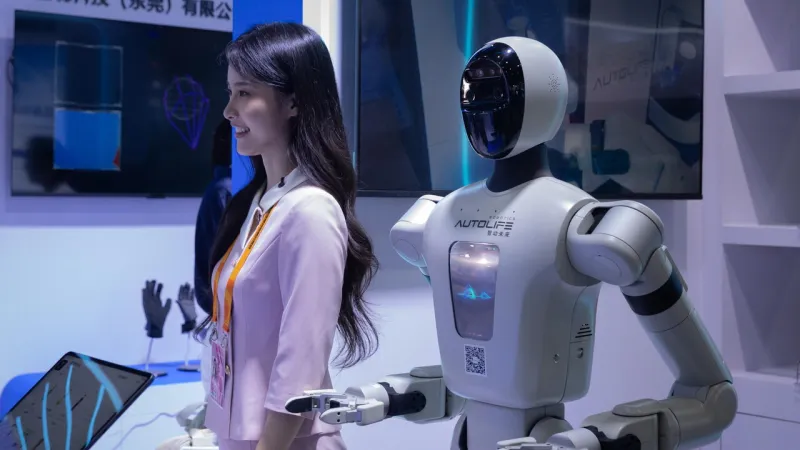
Hangzhou, China – In a landmark educational advancement, the first cohort of professionally trained robots has received their diplomas from a pioneering academy in China, signaling a new era for autonomous labor. These machines, having undergone rigorous practical tests in Hangzhou, are now equipped to perform a range of professional tasks, redefining the landscape of future workforces.
The specialized institution, established to meet China's ambitious goals in artificial intelligence and automation, focuses on practical application rather than theoretical knowledge. Its curriculum emphasizes hands-on training, preparing the robotic students for real-world scenarios across various industries.
Graduates from this academy are expected to integrate into sectors demanding precision, efficiency, and tireless operation. Early indications suggest roles in advanced manufacturing, complex logistics, data analysis, and even certain aspects of customer service and medical assistance are within their capabilities.
This development underscores China's aggressive push to lead the world in artificial intelligence and robotics. The nation has consistently invested heavily in research and development, aiming to leverage advanced technology for economic growth and strategic advantage. The robot diplomas are a tangible outcome of this national strategy.
The training program culminates in a series of stringent practical examinations. These tests are designed to simulate actual work environments, assessing the robots ability to adapt, problem-solve, and execute tasks flawlessly under varying conditions. Successful completion signifies a demonstrated mastery of their designated professional fields.
For industries facing labor shortages or seeking to optimize operational costs, these professionally trained robots offer a compelling solution. Their deployment could significantly enhance productivity, streamline processes, and ensure a consistent quality of output across numerous enterprises.
However, the widespread introduction of a robot workforce also ignites conversations about societal impact and employment dynamics. Policy makers and economists globally are closely monitoring such advancements to understand the long-term implications for human employment and vocational retraining.
Experts suggest that while some routine human roles may face automation, new opportunities requiring human creativity, complex problem-solving, and interpersonal skills will emerge. The challenge lies in adapting educational systems and workforces to this evolving technological paradigm.
China's initiative positions it at the forefront of a global race in automation. Other industrial nations are likewise exploring advanced robotics, but Hangzhou's pioneering academy provides a concrete model for dedicated professional robot training and certification.
The awarding of these first robot diplomas is not merely a ceremonial event; it represents a significant technological leap. It validates the efficacy of dedicated robotic education programs and establishes a precedent for how future non-human workers may be qualified and integrated into the global economy.
This milestone is also a testament to the sophisticated engineering and AI algorithms powering these machines. The robots are not simply pre-programmed; they demonstrate learning capabilities, allowing them to refine their performance through experience gained during their practical instruction.
As these newly qualified robots enter the workforce, their performance will be keenly observed. Their success or challenges will undoubtedly inform future iterations of robotic training, development, and the regulatory frameworks required to manage this emerging class of professional labor.
The implications extend beyond mere efficiency. The ability of machines to learn, adapt, and perform complex professional tasks after specialized training forces a reconsideration of traditional notions of work and vocational skill. This shift demands a proactive approach from governments and industries worldwide.
In an increasingly interconnected global economy, the competitive advantage conferred by a highly automated and efficient workforce cannot be understated. Nations that successfully integrate such technologies are likely to see significant shifts in their economic profiles.
The robot diplomas serve as a clear indicator of a future where human and artificial intelligence increasingly collaborate, or in some instances, machines undertake tasks traditionally reserved for humans. This evolution necessitates continuous dialogue on societal preparedness and technological governance.
This transformative step by China in Hangzhou marks a critical juncture in the ongoing story of automation. It heralds a future where the line between human and machine capabilities in professional settings continues to blur, promising both unprecedented opportunities and significant challenges for the global community.