 Demian Sahputra
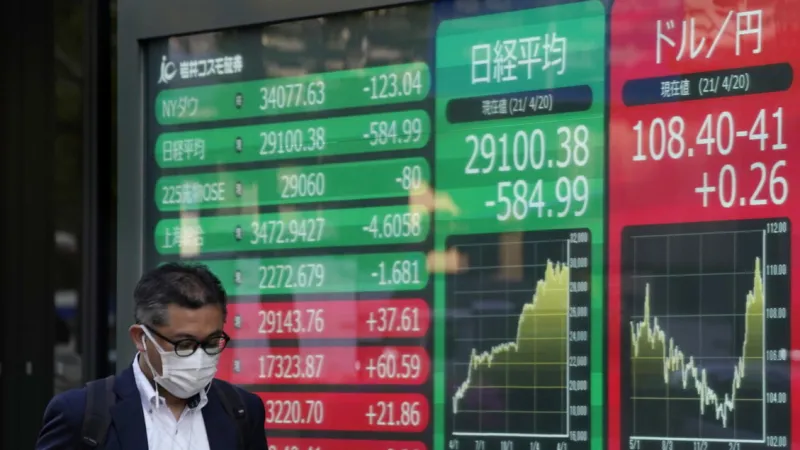
Asian equity markets experienced a pronounced downturn on Tuesday, with a significant collapse in chip manufacturing and technology stocks precipitating widespread losses across the region. European bourses also traded in negative territory, reflecting global investor anxiety as they awaited the highly anticipated opening of Wall Street, where futures indicated further weakness.
The contagion initiated in key Asian tech hubs, where companies deeply embedded in the semiconductor supply chain saw their valuations erode sharply. Major indices in countries like South Korea, Taiwan, and Japan registered substantial declines, underscoring the vital role the technology sector plays in regional economic performance.
Analysts point to a confluence of factors contributing to the chip sector's recent woes, including concerns over potential oversupply, softening demand for certain consumer electronics, and heightened geopolitical tensions affecting global trade. These concerns have rapidly translated into investor exits from what was once a booming segment.
Across Europe, trading floors reflected a similar cautious sentiment. Key indices such as Germany's DAX, France's CAC 40, and the UK's FTSE 100 opened lower and struggled to find upward momentum throughout the morning session. The ripple effect from Asia was palpable, exacerbated by domestic economic uncertainties.
Futures contracts for major US indices, including the Dow Jones Industrial Average, S&P 500, and Nasdaq Composite, all signaled a weak start to trading on Wall Street. This pre-market indicator suggested that the selling pressure originating in Asia would likely extend to American shores, deepening the global market correction.
The downturn in technology shares, particularly semiconductors, serves as a crucial barometer for broader economic health given the pervasiveness of technology in modern industry and consumer life. A sustained slump could signal headwinds for global economic growth projections.
Market strategists are closely monitoring the situation, with many suggesting that a correction in the tech sector, while painful, may represent a recalibration after years of rapid growth. However, the speed and scale of the current sell-off have caught some off guard, prompting renewed focus on risk management.
Beyond the immediate impact of chip stocks, underlying energy volatility and ongoing geopolitical negotiations continue to exert pressure on global markets. Experts have cautioned that such external factors risk broader economic stagnation, as highlighted in concerns regarding European stability, particularly within key markets such as Germany, which faces potential Dax stagnation.
The interconnectedness of financial markets means that a significant shock in one region can quickly propagate across continents. Today's trading patterns illustrate this principle vividly, as investor sentiment shifts rapidly in response to sector-specific challenges that carry global implications.
Investors are now seeking clarity on when a bottom might be reached, and what, if any, policy interventions might be considered by central banks to stabilize markets. The current environment underscores a delicate balance between containing inflation and supporting economic growth.
Looking ahead, market participants will keenly observe upcoming economic data releases and corporate earnings reports for signs of resilience or further deterioration. The performance of US markets later today will offer critical insights into the broader global market trajectory.
This widespread decline reinforces the precarious nature of equity markets in the face of sector-specific vulnerabilities combined with broader economic anxieties. The immediate focus remains on understanding the full scope of the chip stock impact and its potential long-term ramifications for technology and the global economy.