 Dodi Irawan
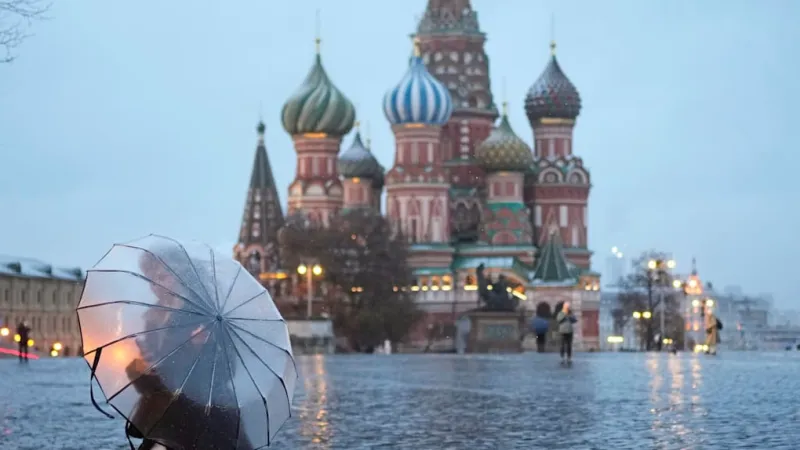
BERLIN – Germany's Foreign Office has escalated its travel advisory for Russia, extending a comprehensive warning across the entire nation. This pivotal decision, announced recently, stems directly from the intensifying barrage of Ukrainian drone attacks targeting various installations and cities deep within Russian territory, posing substantial and unpredictable security risks to German citizens and travelers.
The rationale behind the blanket travel warning underscores a pronounced shift in the perceived threat landscape within Russia. Previously, advisories may have focused on specific regions or border areas. Now, the official stance unequivocally discourages all non-essential travel to any part of the Russian Federation, citing the widespread and indiscriminate nature of recent aerial assaults.
Ukrainian forces have increasingly deployed unmanned aerial vehicles (UAVs) to strike strategic targets and urban centers far from the immediate front lines. These drone incursions, which have grown in frequency and reach, aim to disrupt Russian military logistics, industrial capacity, and public morale, creating an environment of heightened unpredictability across vast swathes of the country.
Officials within the German Foreign Office clarified that the expansion reflects an updated assessment of the security situation, where the risk of incidental harm or direct targeting of civilians due to drone activity can no longer be confined to specific zones. The cumulative effect of these attacks has necessitated a nationwide reassessment of safety for foreign nationals.
This latest update builds upon earlier, more localized warnings that have been in place since the full-scale invasion of Ukraine commenced. The move to a nationwide travel warning signals a significant escalation in the German government's assessment of the dangers inherent to travel within Russia, acknowledging the evolving tactics of the ongoing conflict.
The decision further isolates Russia diplomatically and socially from European nations, reinforcing existing sanctions and travel restrictions. It serves as a stark reminder of the pervasive impact of the conflict, which continues to ripple far beyond the conventional battlefields, affecting civilian life and international mobility.
For German nationals currently in Russia, the Foreign Office has reiterated urgent recommendations to exercise extreme caution, closely monitor local news, and consider departing the country if their presence is not absolutely essential. Consular services, while still available, operate under increasingly difficult conditions, limiting their capacity for extensive assistance during emergencies.
Germany's updated stance aligns with similar advisories from several other Western nations that have consistently warned their citizens against travel to Russia. This collective concern highlights a shared understanding among international security experts regarding the inherent dangers of the current geopolitical climate and the unpredictability of the conflict.
The efficacy and widespread use of drones in modern conflict underscore a new era of warfare, where borders become less defined for aerial threats. This development is not unique to the Russia-Ukraine conflict; other nations, such as Israel, actively fortify their defenses against future drone terror threats, as detailed in recent reports like Israel Fortifies Against Future Drone Terror Threats.
The extended travel warning is unlikely to be rescinded in the near future, as the underlying causes – sustained drone activity and ongoing conflict – show no immediate signs of abatement. Travelers are advised that the security environment remains dynamic and subject to sudden deterioration.
While direct economic and cultural ties between Germany and Russia have dwindled significantly since 2022, this comprehensive travel warning further diminishes the already limited scope for any normal exchange. The advisory effectively puts a freeze on most forms of civilian interaction, underscoring the severe deterioration of relations.
The German government's move sends a clear message about its unwavering commitment to the safety of its citizens, prioritizing their well-being above any political or economic considerations that might otherwise encourage travel. It reflects a sober assessment of a volatile and unpredictable situation.
Ultimately, the Foreign Office's decision serves as a critical directive for Germans globally, reinforcing the gravity of the risks associated with travel to Russia under the prevailing circumstances of an active and escalating conflict.