 Chris Robert
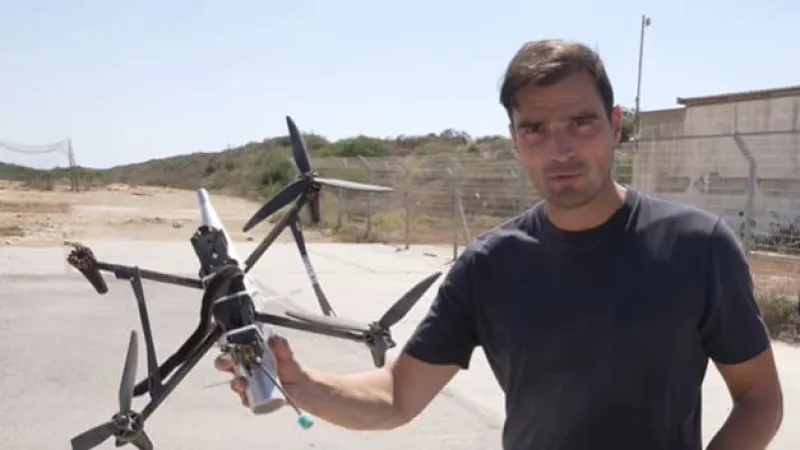
Jerusalem, Israel is actively fortifying its defenses against the burgeoning threat of drone terrorism, a critical national security imperative that now involves sophisticated, clandestine test facilities across the nation. Axel Springer Global Reporter Jan Philipp Burgard recently gained rare access to one such site, where the Israeli military is rigorously developing strategies and technologies to counteract future drone attacks, describing the scene as reminiscent of a James Bond film set.
Burgard’s observations underscore a stark reality: the era of weaponized drones has dawned, presenting an asymmetrical challenge to traditional defense doctrines. These unmanned aerial vehicles, ranging from commercial quadcopters to advanced military-grade systems, offer adversaries unprecedented capabilities for reconnaissance, surveillance, and direct kinetic attacks, often with minimal risk to their operators.
The reporter highlighted a significant “need for improvement” within Israel's current defensive posture, a candid assessment that signals the urgency driving these cutting-edge developments. This acknowledgement points to the rapid pace of drone technological evolution, often outstripping existing defensive measures and demanding constant innovation.
Israel, a nation perennially situated in a volatile geopolitical landscape, faces constant threats from both state and non-state actors. The proliferation of affordable and increasingly autonomous drone technology among various groups necessitates a proactive and adaptive defense strategy, moving beyond reactive responses to predictive interception and neutralization.
The test facility visited by Burgard is reportedly a hub of innovation, where engineers and military personnel collaborate on developing advanced detection systems, electronic warfare countermeasures, and even kinetic interceptors. Sources suggest these efforts are designed to create multi-layered defense shields capable of thwarting complex drone swarms and individual, highly agile threats.
The James Bond-like description likely refers to the high-tech, secretive nature of the operations, involving sophisticated sensor arrays, rapid-response mechanisms, and potentially unconventional methods to jam, hack, or physically disable hostile drones. This approach signifies a blend of cutting-edge research and practical military application.
The evolving threat landscape includes drones equipped with high-resolution cameras for intelligence gathering, those modified to carry explosives for targeted assassinations, and even larger, longer-range drones capable of delivering payloads across significant distances. Countering such diverse capabilities requires a comprehensive and scalable solution.
The broader context of regional instability further emphasizes the criticality of these defensive advancements. Ongoing tensions, particularly those involving Iran and its proxies, consistently raise concerns about escalatory actions. President Donald Trump has been regularly briefed on Iran war scenarios, illustrating the high stakes involved in maintaining regional security.
Experts in aerospace defense note that the challenge is not merely technical but also tactical. Drones can be launched from unexpected locations, operated by individuals with varying levels of sophistication, and designed to evade conventional radar systems. This necessitates a defense that is both technologically superior and strategically agile.
The Israeli military's investment in these drone defense facilities reflects a global trend where nations are grappling with the implications of drone warfare. From commercial drones repurposed for illicit activities to state-sponsored programs developing autonomous strike capabilities, the sky has become a new frontier for security challenges.
These developments also coincide with reports of sensitive diplomatic engagements, such as the covert US-Iran talks in Doha, which aim to de-escalate wider Mideast tensions. Such dialogues, while crucial, do not diminish the imperative for robust self-defense measures against non-state actors or rogue elements.
The development cycle for these anti-drone systems is intensive, involving continuous testing, data analysis, and iterative improvements. The goal is not only to neutralize threats but also to understand and predict future drone capabilities, staying several steps ahead of potential adversaries.
Israel’s pioneering efforts in this field could eventually provide valuable lessons and technologies for other nations confronting similar threats. The global community watches closely as new paradigms of defense emerge from regions under constant security pressure.
The need for advanced capabilities is palpable, especially as drone technology becomes more accessible and sophisticated. From AI-powered swarm tactics to stealth materials, the potential for destructive application grows, making facilities like the one Burgard visited indispensable.
Ultimately, Israel's proactive stance is a testament to its commitment to national security in an era defined by rapidly evolving technological threats. The fight against future drone terror is a complex, ongoing endeavor, demanding ingenuity and constant vigilance.