 Edward DP Situmorang
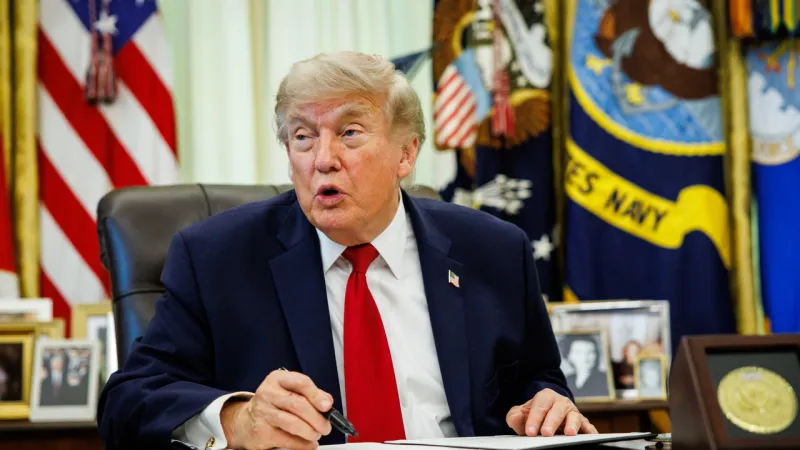
WASHINGTON D.C. — President Donald Trump has received detailed briefings outlining potential scenarios for a comprehensive military conflict with Iran, according to recent reports that highlight the gravity of ongoing tensions. Concurrently, the White House affirmed its dedication to sustained diplomatic efforts regarding Iran's nuclear program, signaling flexibility on negotiation timelines even as an August 18 deadline for talks approaches. This dual approach underscores the administration's complex strategy to manage one of the world's most volatile geopolitical flashpoints.
The White House briefings, described by sources familiar with their content, reportedly explored various options for confronting Iran, including large-scale military engagements. Such discussions are standard practice for national security advisories, ensuring the President is fully apprised of the spectrum of possibilities in highly sensitive regions.
Information regarding these high-level discussions, including the administration's willingness to extend nuclear talks, was initially reported by The Wall Street Journal. The publication indicated that officials view extending negotiations beyond the mid-August deadline as a pragmatic step, not necessarily a setback, in the pursuit of a lasting resolution.
This willingness to extend dialogue suggests a strategic pivot from previous hardline stances, prioritizing continuous engagement over arbitrary deadlines. The current administration under President Trump has consistently navigated a delicate balance between exerting pressure on Tehran and maintaining open channels for communication.
Nuclear negotiations with Iran remain a cornerstone of international efforts to prevent the proliferation of atomic weapons. The stakes are profoundly high, encompassing regional stability, global security, and the future of diplomatic norms in dealing with recalcitrant states.
Recent diplomatic overtures, including discreet dialogues, demonstrate the administration's persistent pursuit of a negotiated settlement. These efforts often occur away from public scrutiny to foster an environment conducive to sensitive discussions. Reports of such engagements emerged previously, as detailed in an article titled Doha Hosts Covert US-Iran Talks Amid Mideast Tensions, highlighting the varied avenues employed for de-escalation.
The prospect of military action, even as a hypothetical scenario, carries significant implications for the broader Middle East. Regional allies and adversaries alike closely monitor Washington's posture, adjusting their own foreign policy calculations in response to perceived shifts in US strategy regarding Iran.
Domestically, President Trump's foreign policy approach to Iran has faced scrutiny from various political factions. While some advocate for maximum pressure, others champion a more conciliatory path to avoid exacerbating regional conflicts.
Iran, for its part, has consistently maintained its nuclear program is for peaceful purposes, while simultaneously advancing its enrichment capabilities. Its official statements often reflect a blend of defiance against external pressure and an asserted readiness for respectful dialogue, albeit on its own terms.
International bodies, including the United Nations and the International Atomic Energy Agency, play crucial roles in monitoring Iran's nuclear activities and facilitating diplomatic pathways. Their reports and mandates often form the backdrop for these intricate negotiations.
The current moment represents a critical juncture where the United States must balance the imperative of deterrence with the strategic necessity of de-escalation. The briefings on war scenarios underscore the need for preparedness, while the extended diplomatic window signals a preference for peaceful resolution.
As the August 18 marker approaches, the world watches closely to see if President Trump's administration can leverage both its strategic readiness and diplomatic flexibility to secure a comprehensive agreement and mitigate the enduring threat of conflict in the Persian Gulf.